
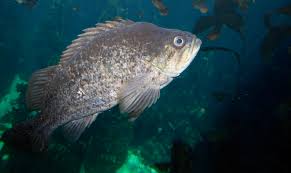
Taxonomy
- Kingdom
- Animalia
- Phylum
- Chordata
- Class
- Actinopterygii
- Order
- Salmoniformes
- Family
- Sebastidae
- Genus
- Sebastes
- Species
- atrovirens
Habitat
Kelp rockfish primarily inhabit rocky reefs and kelp forests along the eastern Pacific Ocean, from central California to Baja California, Mexico, at depths ranging from 10 to 150 meters. They prefer areas with abundant kelp cover for protection and hunting. These environments provide shelter among rocks and vegetation.
Diet
Kelp rockfish feed mainly on small fish, crustaceans such as shrimp and crabs, and other invertebrates like worms and mollusks. They are ambush predators that hunt during the day, hiding among kelp and rocks to surprise their prey. Feeding activity peaks in the morning and late afternoon.
Behavior
Kelp rockfish are generally solitary or found in small groups, exhibiting territorial behavior around their rocky habitats to defend feeding areas. They are diurnal, active during the day for hunting and resting at night among kelp fronds. These fish can change color slightly for camouflage and are known to be cautious, often fleeing quickly when threatened.
Fishing
Kelp rockfish provide rewarding recreational fishing in the eastern Pacific, particularly along California's rocky reefs and kelp forests from Pacific Grove to Baja California, at depths of 10 to 150 meters, where anglers can target them as ambush predators using effective bottom fishing techniques like jigging or bait fishing to mimic their diet of small fish and crustaceans. Use light to medium tackle, such as a 7-foot rod with a sensitive tip, paired with a reel spooled with 15-20 pound monofilament line to handle structure without snagging, and opt for bait like live shrimp, crabs, or small fish imitators, or lures such as jigs and soft plastics that replicate their prey for better strikes. The best seasons are spring through fall when water temperatures rise and feeding activity peaks, with optimal times during daylight hours, especially morning and late afternoon when they are most active; always check local tides for easier access to kelp-covered areas. Record sizes include catches up to 2 pounds and 20 inches, with IGFA all-tackle records for related rockfish species highlighting the potential for impressive hauls. Conservation efforts, supported by angler license fees that fund habitat restoration and population monitoring, include state regulations like bag limits and seasonal closures as effective tools to maintain stable populations and promote catch-and-release practices, ensuring kelp rockfish thrive in their vital ecosystems for sustainable fishing.
Conservation Status
Listed as Not Evaluated by IUCN.