
Overview
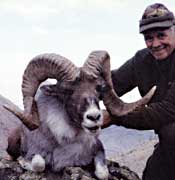
More information needed for its distinguishing characteristics from other argali subspecies. Argali have relatively long legs. Females are considerably smaller, sometimes weighing less than half as much as males.
Taxonomy
- Kingdom
- Animalia
- Phylum
- Chordata
- Class
- Mammal
- Order
- Artiodactyla
- Family
- Bovidae
- Genus
- Ovis
- Species
- Argali, ammon
Habitat
Argali inhabit higher elevations. Habitat varies according to geographic location, but includes mountains, steppe valleys and rocky outcrops and open desert. Endemic to Kazakhstan.
Diet
Argali eat 35-42 lbs (16–19 kg) of food a day. The vegetation preferred by the species varies based on elevation and area. In higher elevations, they predominantly eat grasses, sedges, and forbs. At midelevation habitats, they more regularly feed on bushes and mesophyte grasses. In the lowest ranges and the spurs of deserts, grasses and sedges again predominate, but often of different species than the high-elevation ones. Water is needed by argali, which is rarely a problem for animals living at high elevation, where melting snow and small waterways are regularly encountered. In drier climes, argali may travel several kilometers in search of water. When available, argali readily consume saline soil.
Behavior
Argali live in herds typically numbering up to 150 animals, segregated by sex, except during the breeding season. Some rams are solitary, but most are seen in small herds numbering between up to 30 individuals. Females and their young live in larger groups, regularly up to 90 individuals and sometimes up to 200 animals. Migrating herds, especially those made up of males, have been reported. Most migration appears to be related to seasonally decreased food sources, an overabundance of biting insects (especially gadflies), severe drought or fires, poaching by humans, and competition with domestic livestock. With their long legs, these animals can travel quickly from place to place. Argali tend to live at higher elevations during the summer. These sheep are calm and gregarious with one another. They are fast runners.
Hunting
There is currently no hunting of this animal.
Conservation Status
A truly endangered argali that requires immediate conservation efforts. It is endangered (Category I), and its population size is declining. The total population of this species has gradually declined from approximately 150 individuals in 1976 to about 100 at present. The limiting factors are poaching, predation by wolves and cattle grazing in the core habitat areas.