
Overview
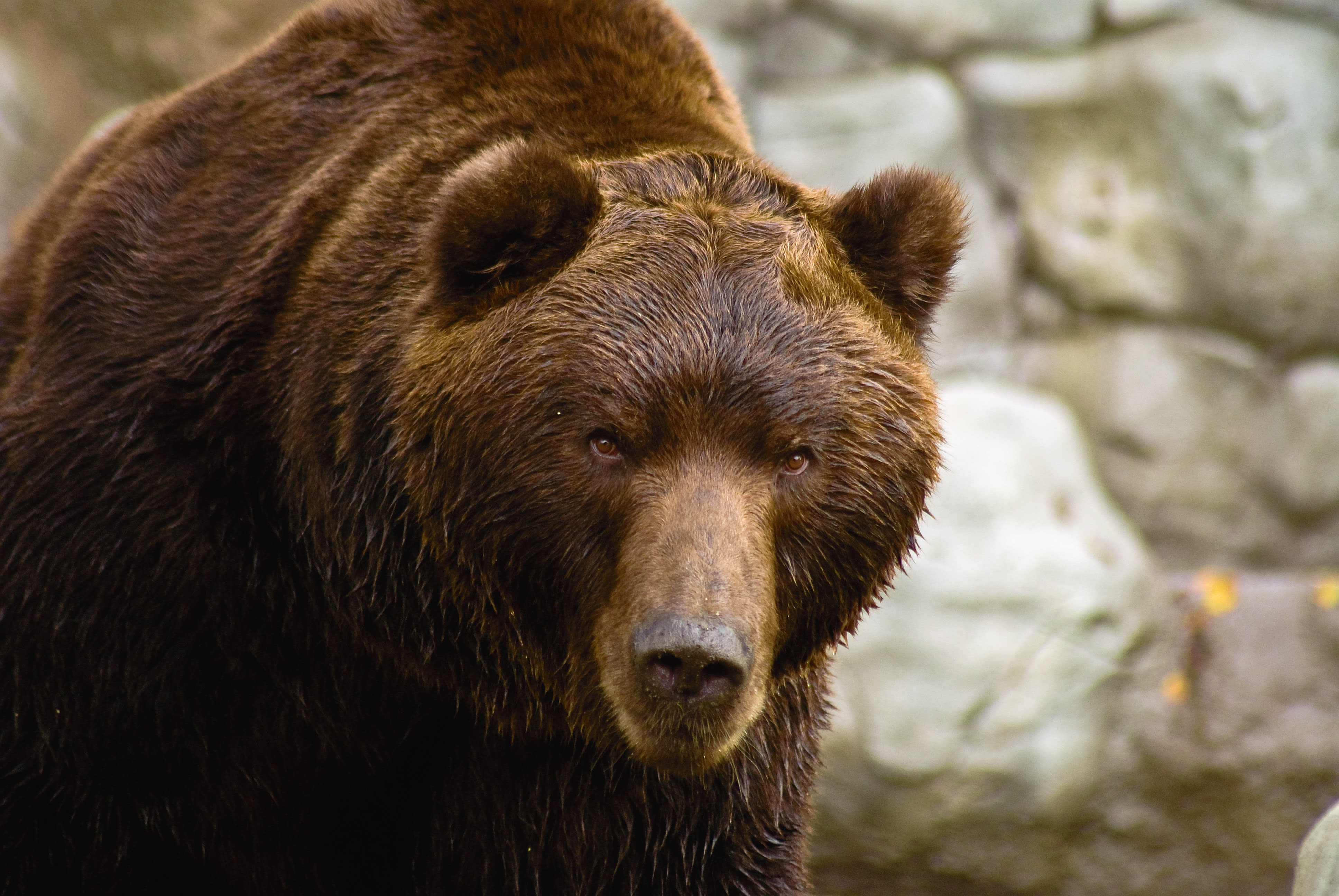
As with the Alaska brown bear, the Kamchatka brown bear grows large because of its abundant and protein-rich diet of spawning salmon and other anadromous fish in the coastal rivers, and from the comparatively mild climate that permits a shorter period of hibernation. It is a very large, dark bear with a large, massive skull. The forehead is broad and rather steeply elevated over the relatively short nose. The coat is long, dense and soft. Its color varies from pale yellow to blackish-brown and dull black, but dark individuals predominate. The legs are usually the same color as the body. The claws are dark brown, sometimes with light yellowish streaks at the tips, and are up to 4 inches (10 cm) in length.
Taxonomy
- Kingdom
- Animalia
- Phylum
- Chordata
- Class
- Mammal
- Family
- Ursidae
- Genus
- Ursus
- Species
- Ursus arctos
Habitat
These bears inhabit coastal mountainous regions. Distribution- Far eastern Siberia, where it is found on the Kamchatka Peninsula, Karaginskiy Island, and northward throughout the Koryak Autonomous District. Also in the coastal strip west of the Sea of Okhotsk and east of the coastal mountains as far south as Uda Bay. Also on the Shantar Islands and the northern and southern Kuril Islands, as well as Sakhalin Island.
Diet
Omnivorous, it eats grasses, sedges, roots, bulbs, berries, rodents, salmon and also carrion.
Behavior
Unsociable and usually solitary except when mating or when forced by circumstances to share a salmon fishery with other bears. With no enemies other than humans, it is active at all hours. Breeding takes place during May and June. The female mates every second or third year, producing a litter of cubs (1-4, but usually two), which are born in the den in January or February. She is an excellent mother, the cubs remaining with her at least two years, and often three or four. An Alaska brown bear is full grown at 10-11 years and has a life expectancy, barring accidents, of 25-30 years. Individuals have lived more than 36 years in captivity. Eyesight is only fair, but hearing and sense of smell are very acute. Usual pace is a slow walk, but capable of running fast. Unable to jump. An excellent swimmer. Cubs can climb trees, but adults, with their long foreclaws and heavy bodies, cannot. Normally silent, but can growl, grunt, roar, sniff and cough. Extremely strong and highly alert. Usually cautious and unaggressive toward man, but there are exceptions. Retires to its den during the cold of winter and sleeps for months. A sleeping bear can come to life with little provocation. A bear will often leave its den in late winter to briefly wander outside.
Hunting
Wearing hipboots and rain gear and carrying a heavy rifle, the hunter must wade rivers and negotiate muskeg swamps, tag alder thickets, steep mountainsides and soft snow. Should he find a good bear after long hours of glassing and waiting, he must get within range quickly because bears seldom remain in one place for long. He must shoot well, for a wounded brown bear is a very serious matter. He should be prepared to spend as many as half his allotted hunting days confined to his tent (or cabin, if he is lucky) in weather too foul to hunt in. He can count on being wet, cold, and bone-tired much of the time. And he should use enough gun, for the brown bear is very large and tough.
Conservation Status
The species as a whole is listed as Least Concern by IUCN, but the classification does not distinguish this subspecies. More information is needed to ascertain the current population dynamics of the Kamchatka Brown Bear.