
Overview
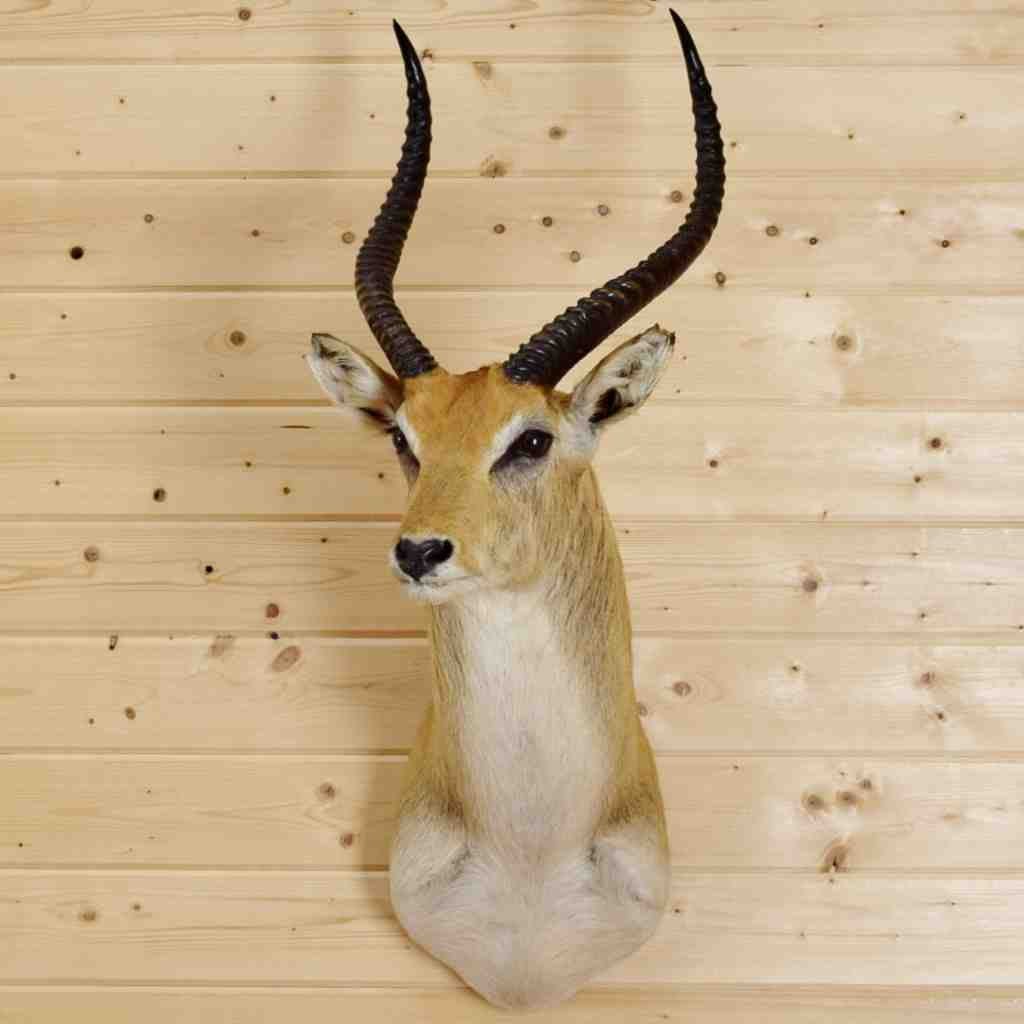
Somewhat larger in body than the red lechwe, with considerably longer horns and a lighter overall color-actually a fulvous or tawny chestnut. The adult male has distinctive dark patches on its shoulders.
Taxonomy
- Kingdom
- Animalia
- Phylum
- Chordata
- Class
- Mammal
- Order
- Artiodactyla
- Family
- Bovidae
- Genus
- Kobus
- Species
- Kobus leche
Habitat
Marsh land. Distribution- The Kafue River Flats in Zambia.
Diet
Aquatic plants.
Behavior
They use the knee-deep water as protection from predators. Their legs are covered in a water-repellant substance which allows them to run quite fast in knee-deep water. Lechwe are diurnal. They gather in herds which can include many thousands of individuals. Herds are usually all of one sex, but during mating season they mix.
Hunting
This race has by far the most spectacular horns of any common lechwe, and is well worth going after. The hunt is normally a one-day affair from Lusaka, with the approach made either at Lochinvar or Blue Lagoon. With very little cover available, the hunter must be prepared for long shots, with shooting sticks advisable, and a good deal of wading.
Conservation Status
Listed as Endangered by IUCN, with the following justification: The population of this subspecies has undergone an estimated continuing decline of 69% over 19 years (three generations; 63% absolute decline between 1999 and 2015) due to poaching, changes to water management, disease, agricultural encroachment and invasive species of vegetation. The entire population is restricted to a single location (Kafue Flats). Maintenance of a seasonal flooding regime is critically important to its survival and significant alteration to the current hydrological status could prove catastrophic. (IUCN)