
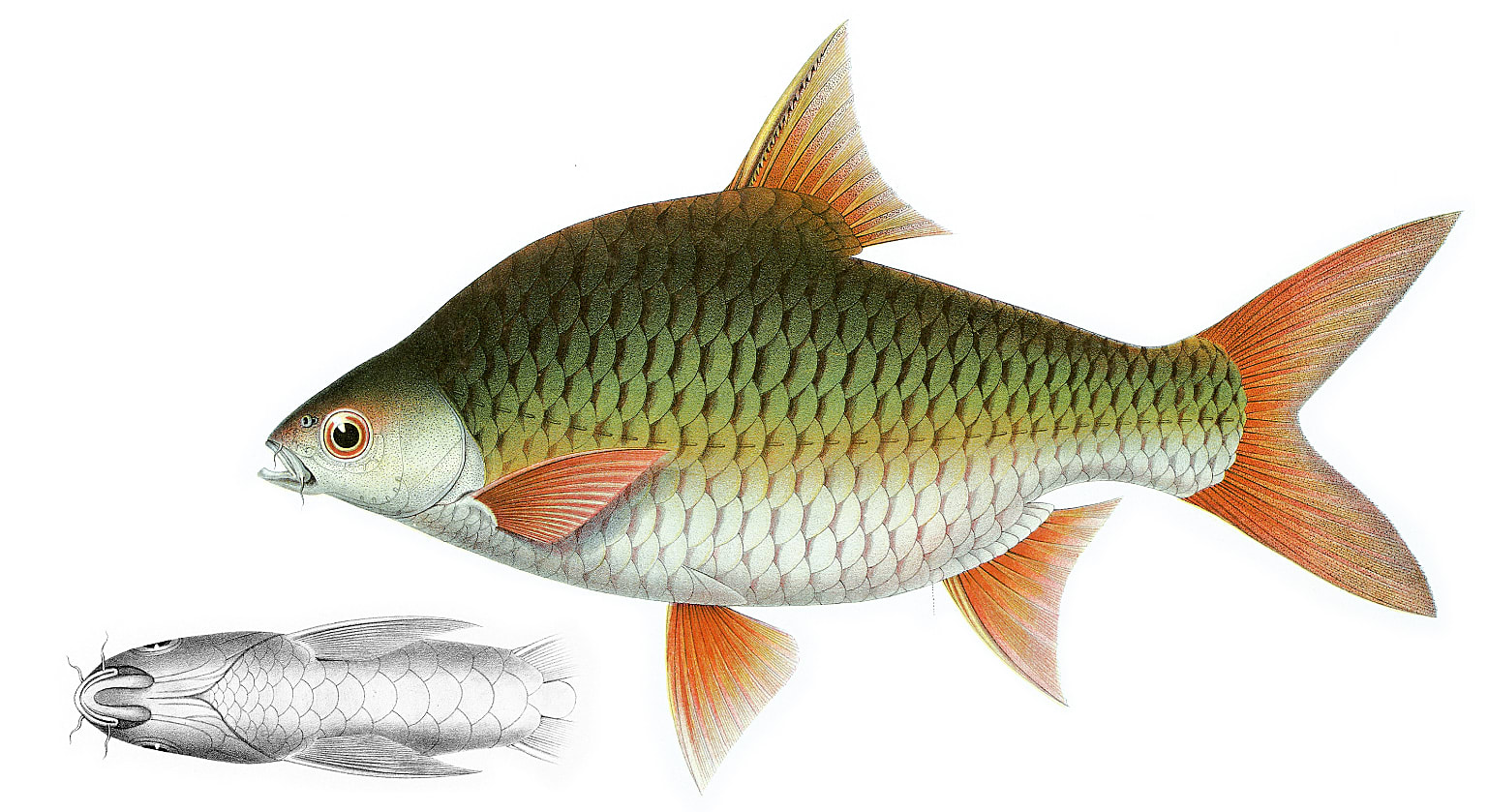
Taxonomy
- Kingdom
- Animalia
- Phylum
- Chordata
- Class
- Actinopterygii
- Order
- Labriformes
- Family
- Cyprinidae
- Genus
- Barbonymus
- Species
- gonionotus
Habitat
Java barbs inhabit freshwater rivers, streams, floodplains, and lakes in Southeast Asia, preferring slow-moving or standing waters with abundant vegetation. They are commonly found in the Mekong and Chao Phraya basins, as well as in Borneo and Sumatra, thriving in warm, tropical environments with muddy or sandy substrates.
Diet
Java barbs are omnivorous, feeding on algae, aquatic plants, insects, and small invertebrates like crustaceans. They forage primarily during the day, often in schools near the water's surface or among vegetation.
Behavior
Java barbs are schooling fish that form groups for protection and feeding, making them more active in larger numbers. They are diurnal, spending daylight hours foraging and hiding in vegetation at night, and can exhibit territorial behavior during spawning seasons.
Fishing
The Java barb, a popular target in Southeast Asian freshwater fisheries, offers exciting angling opportunities that support conservation through regulated practices and license fees funding habitat protection in rivers like the Mekong and Chao Phraya. Best techniques include bait fishing with a bobber or bottom rig to target their schooling behavior, using light tackle for a fun fight—opt for a 6-10 lb test line on a medium-light spinning rod with size 6-10 hooks to handle their strength in slow currents. Recommended bait and lures are live worms, small insects, or plant-based options like dough balls to mimic their omnivorous diet of algae and invertebrates, while brightly colored soft plastics can entice strikes in vegetated areas. The best season is during the rainy months from May to August when they spawn in flooded zones, with peak activity in the early morning or late afternoon when they forage actively; target them in tropical rivers, floodplains, and lakes with abundant vegetation in regions like Vietnam, Thailand, Cambodia, and Indonesia for the highest success. Record sizes reach up to 9 pounds 9 ounces, with IGFA all-tackle records highlighting their potential as a challenging catch. Conservation efforts, such as catch-and-release in managed areas, help maintain stable populations classified as Least Concern by the IUCN, with angler-supported programs in the Mekong Basin ensuring healthy waterways through stocking and monitoring that balance fishing pressure with ecosystem preservation.
Conservation Status
Listed as Least Concern by IUCN.