
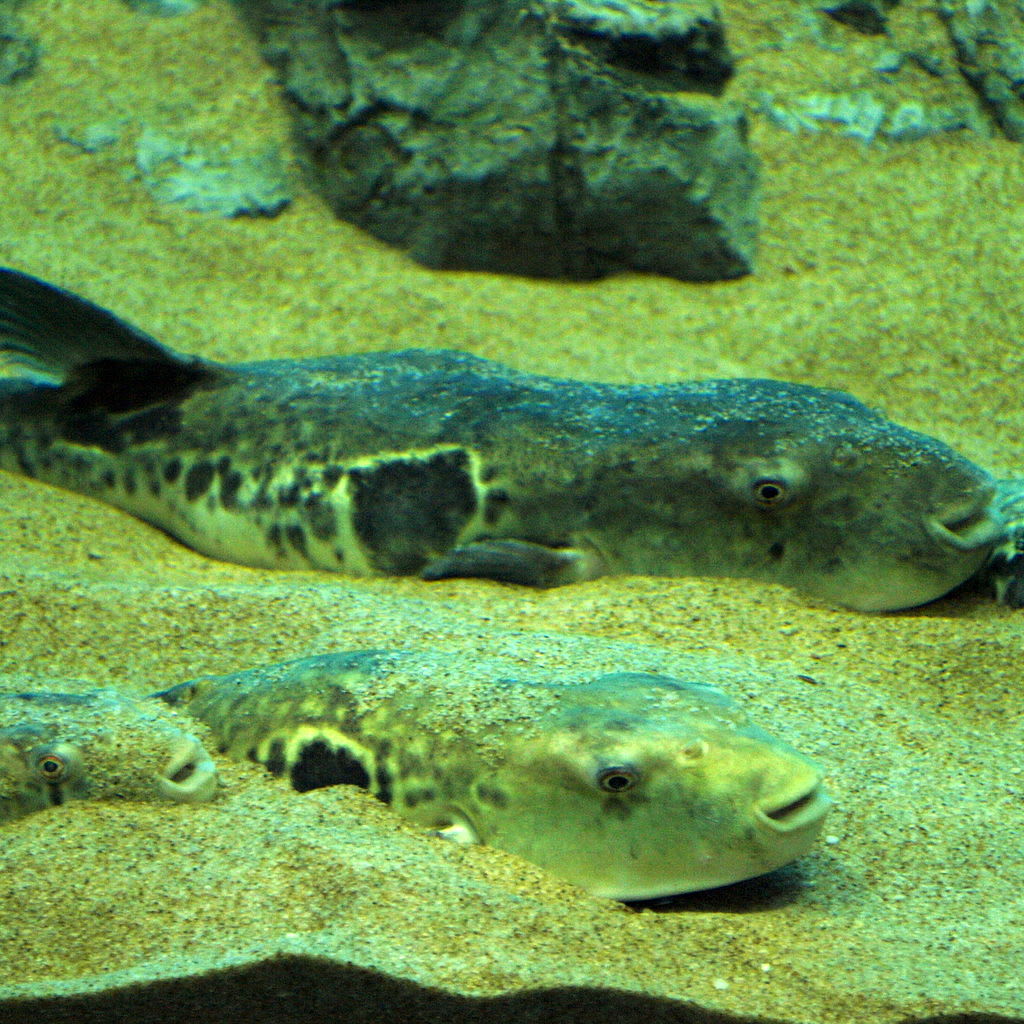
Taxonomy
- Kingdom
- Animalia
- Phylum
- Chordata
- Class
- Actinopterygii
- Order
- Tetraodontiformes
- Family
- Tetraodontidae
- Genus
- Takifugu
- Species
- rubripes
Habitat
This species inhabits coastal waters, estuaries, and sandy or muddy bottoms in the temperate Northwest Pacific, including areas like the Sea of Japan and East China Sea. They prefer depths from shallow inshore zones to about 100 meters, often near rocky or vegetated substrates for hiding.
Diet
Japanese pufferfish primarily eat mollusks, crustaceans, and polychaete worms, using their strong jaws to crush shells. They are opportunistic bottom-feeders, foraging mainly at night or during low light conditions to avoid predators. Feeding behavior includes scavenging along the seafloor for buried prey.
Behavior
Japanese pufferfish are generally solitary and territorial, defending small areas around their hiding spots in rocks or sand. They are active during twilight hours, using camouflage and inflation to deter threats. This species exhibits a unique defense mechanism by rapidly ingesting water to swell up, making them difficult for predators to swallow.
Fishing
Target the Japanese pufferfish, a prized food fish in regions like Japan, using bottom fishing techniques with a medium-action rod and reel setup spooled with 10-20 pound test line, paired with a strong hook to handle their powerful jaws—opt for bait like live crabs, shrimp, or worms that mimic their diet of mollusks and crustaceans for the best results. Cast in shallow coastal waters, estuaries, or over sandy and muddy bottoms in the Northwest Pacific, such as the Sea of Japan or East China Sea, focusing on depths up to 100 meters near rocky or vegetated substrates; prime times are during twilight hours or night when they forage actively, with the best season being spring and early summer when they spawn in shallow areas. This species can reach weights up to 8 pounds 11 ounces, and while specific IGFA records may vary, it underscores the thrill of angling for this fish. Conservation-wise, as a Near Threatened species per IUCN, angler-funded programs in Japan support habitat protection and population monitoring through regulated fishing practices like size limits and catch quotas, ensuring sustainable harvests that fund restoration efforts and maintain healthy waterways for future generations.
Conservation Status
Listed as Near Threatened by IUCN.