
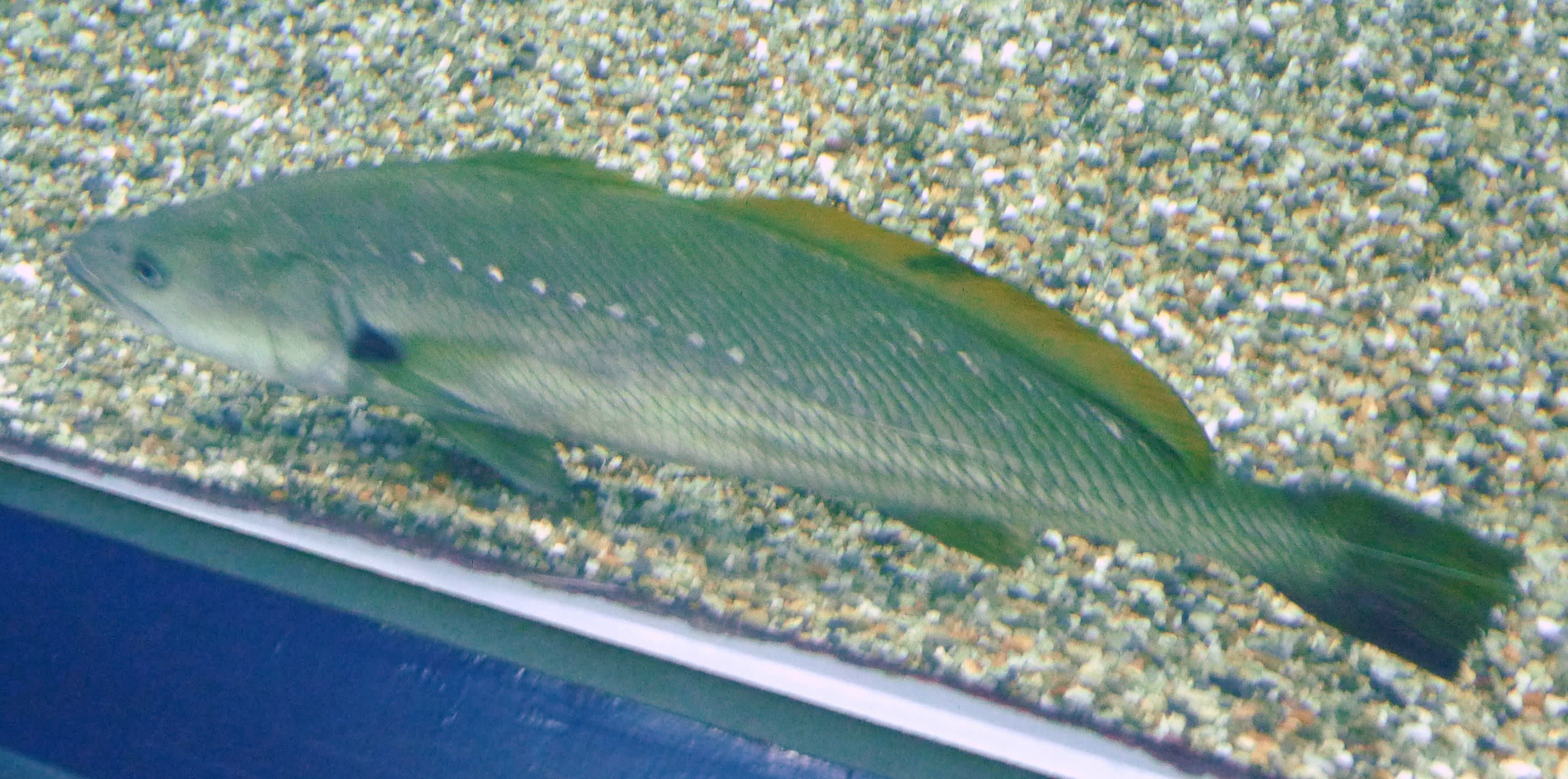
Taxonomy
- Kingdom
- Animalia
- Phylum
- Chordata
- Class
- Actinopterygii
- Order
- Perciformes
- Family
- Sciaenidae
- Genus
- Argyrosomus
- Species
- japonicus
Habitat
Japanese meagre inhabit coastal waters, estuaries, and bays in the Indo-West Pacific region, preferring sandy or muddy bottoms. They tolerate a wide range of salinities, from marine to brackish environments, and are commonly found at depths up to 100 meters. Geographic preferences include areas from South Africa to Australia and northern regions like Japan and Korea.
Diet
Japanese meagre primarily feed on fish, crustaceans such as crabs and shrimp, and mollusks like squid. They are nocturnal predators that hunt in schools, using their sensitive lateral lines to detect prey in low-light conditions. Feeding activity peaks at night in shallow coastal areas.
Behavior
Japanese meagre are schooling fish that form groups for migration and feeding, often exhibiting nocturnal activity patterns. They are territorial in certain habitats, defending feeding areas, and produce drumming sounds using their swim bladders for communication. These fish undertake seasonal migrations to spawn in warmer waters.
Fishing
Anglers targeting the Japanese meagre, a hard-fighting sport fish in the Sciaenidae family, should focus on bottom fishing or trolling techniques to capitalize on their nocturnal feeding habits, using strong, sensitive rods with 20-50 lb test line, heavy-duty reels, and large hooks to handle their size and power in currents. Effective baits and lures include live baitfish, crabs, shrimp, or metal jigs and soft plastics that mimic their primary prey like fish and crustaceans; cast near structures in shallow coastal waters for the best results. The prime season is summer, with peak activity at night in warmer waters, making dusk to dawn the optimal time for bites in estuaries, bays, and sandy or muddy bottoms up to 100 meters deep across the Indo-West Pacific, including hotspots like Australia's North West Cape or South Africa's Cape of Good Hope. The IGFA all-tackle world record is 97 pounds, though larger individuals up to 147 pounds have been documented, highlighting their trophy potential. Conservation-wise, angler-funded programs through license fees support habitat restoration and population monitoring, with effective management tools like slot limits and catch-and-release practices in regions such as Australia ensuring sustainable stocks and protecting these migratory fish for future generations.
Conservation Status
Listed as Not Evaluated by IUCN.