
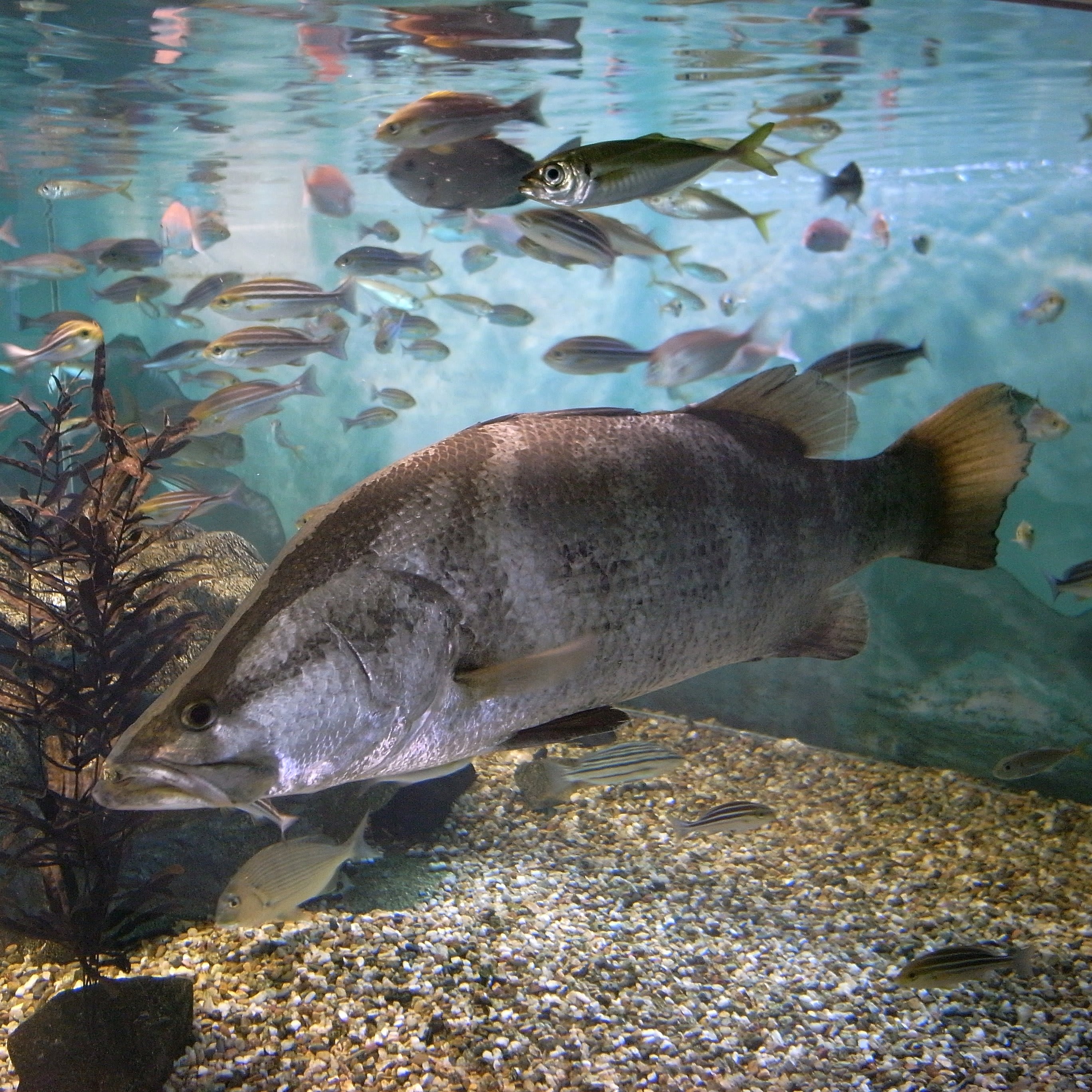
Taxonomy
- Kingdom
- Animalia
- Phylum
- Chordata
- Class
- Actinopterygii
- Order
- Perciformes
- Family
- Latidae
- Genus
- Lates
- Species
- japonicus
Habitat
Japanese lates inhabit coastal marine waters, estuaries, and lower reaches of rivers in the Northwest Pacific, particularly around Japan. They prefer brackish environments with sandy or muddy bottoms and can tolerate a range of salinities, often found in bays and river mouths like those in Kochi and Shikoku.
Diet
Japanese lates are carnivorous predators that primarily feed on smaller fish such as anchovies and sardines, as well as crustaceans and squid. They employ an ambush feeding strategy, often hunting at dusk or night in deeper waters. Feeding activity peaks during low light conditions to avoid competition.
Behavior
Japanese lates are generally solitary and territorial, particularly in estuarine habitats where they establish home ranges. They are primarily nocturnal, actively hunting at night and resting during the day in deeper waters or under cover. This species exhibits migratory behavior seasonally, moving between riverine and marine environments for feeding and spawning.
Fishing
Japanese lates, a powerful sport fish prized in Japan's coastal waters, are best targeted with trolling or casting techniques using live bait or lures that mimic their preferred prey like anchovies, sardines, or squid, as they are ambush predators. Use heavy saltwater tackle for these fighters, including a stout rod (7-9 feet) with a high-capacity reel, 20-50 lb test line, and strong hooks to handle fish up to 85 lbs 15 oz; focus on subsurface lures or bait rigs for their nocturnal feeding habits. The optimal season is summer during spawning migrations, with peak activity at dusk and night in brackish environments like estuaries, river mouths, and bays such as Urado Bay, Tosa Bay, and the lower Shimanto and Ohyodo Rivers in Kochi and Shikoku regions. Target sandy or muddy bottoms in these areas for the best results, as they provide ideal ambush spots. Record sizes reach up to 150 cm and 85 lbs 15 oz, with the IGFA all-tackle world record reflecting their impressive growth—check local regulations for details. Conservation efforts, including catch-and-release practices and angler-funded programs, help sustain stable populations in the Northwest Pacific, ensuring these waters remain healthy through effective management like seasonal migrations and habitat protection.
Conservation Status
Listed as Not Evaluated by IUCN.