
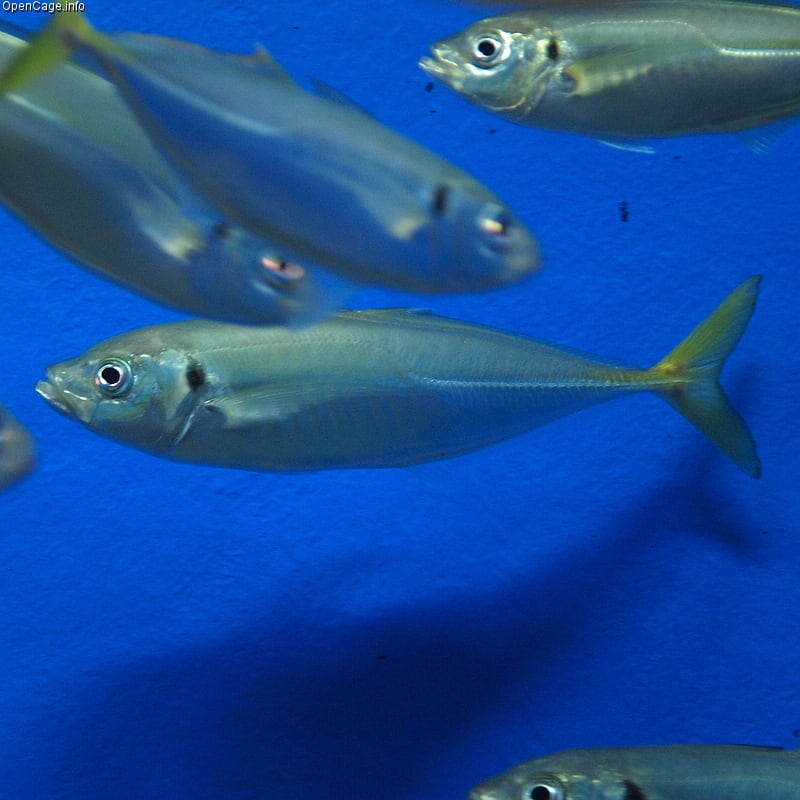
Taxonomy
- Kingdom
- Animalia
- Phylum
- Chordata
- Class
- Actinopterygii
- Order
- Perciformes
- Family
- Scombridae
- Genus
- Trachurus
- Species
- japonicus
Habitat
Japanese jack mackerel primarily inhabit pelagic waters over continental shelves in the Northwest Pacific, including areas around Japan, the Korean Peninsula, and the East China Sea. They prefer depths of 50 to 300 meters, often near the surface in coastal and offshore environments. These fish are commonly found in temperate to subtropical seas with moderate currents.
Diet
Japanese jack mackerel feed mainly on smaller fish like anchovies and sardines, as well as krill and zooplankton. They hunt in schools during the day, using their speed to chase prey in open water. Feeding activity peaks in warmer months when food is abundant.
Behavior
Japanese jack mackerel are highly schooling fish, forming large groups for protection against predators and coordinated feeding. They are active swimmers with diurnal patterns, being most active during the day, and undertake seasonal migrations to follow food sources or spawning grounds. They exhibit evasive maneuvers when threatened, relying on their speed and group dynamics.
Fishing
Targeting Japanese jack mackerel in the Northwest Pacific, including waters around Japan, the Korean Peninsula, and the East China Sea, offers exciting recreational fishing opportunities that support conservation through angler-funded programs like license fees, which help maintain healthy marine ecosystems. Use effective techniques such as trolling with flashy lures or jigging in mid-water columns to mimic their prey, as these fish form large schools and respond well to fast-moving presentations; cast-and-retrieve methods with metal jigs or spoons also work great in depths of 50 to 300 meters. Opt for light to medium spinning or trolling outfits with 10-20 pound test line, paired with lures like silver spoons, soft plastics imitating krill or small fish, or live bait such as anchovies and sardines for the best results. The prime season runs from spring through summer when they spawn and feeding activity peaks, with the best times being during daylight hours, especially early morning or late afternoon in temperate to subtropical seas over continental shelves. Focus on pelagic, offshore environments with moderate currents, using fish finders to locate schools near the surface. The IGFA all-tackle world record stands at around 2 pounds 9 ounces, showcasing the thrill of landing these agile fighters. Conservation efforts, including slot limits and catch-and-release practices in some areas, ensure sustainable populations, with fishing regulations acting as proven tools to protect waterways and support stocking programs that bolster marine biodiversity.
Conservation Status
Listed as Not Evaluated by IUCN.