
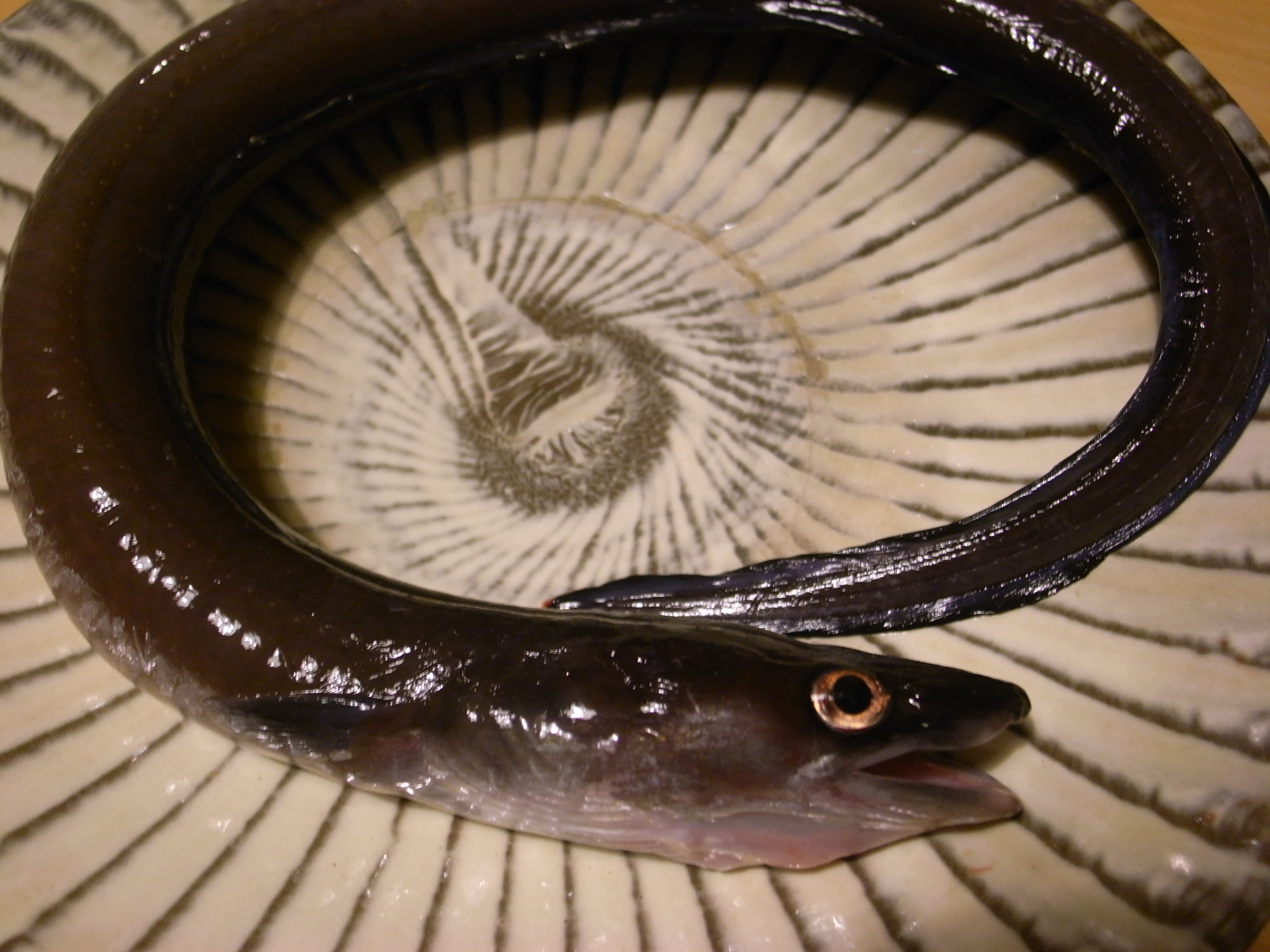
Taxonomy
- Kingdom
- Animalia
- Phylum
- Chordata
- Class
- Actinopterygii
- Order
- Istiophoriformes
- Family
- Congridae
- Genus
- Conger
- Species
- japonicus
Habitat
Japanese conger eels primarily inhabit coastal waters, rocky reefs, and sandy or muddy bottoms in the Northwest Pacific Ocean, including areas around Japan, the Korean Peninsula, and Taiwan. They prefer depths from shallow intertidal zones to about 100 meters, often hiding in crevices or burrows during the day.
Diet
Japanese conger eels are carnivorous, feeding mainly on smaller fish, crustaceans like shrimp and crabs, and occasionally cephalopods such as squid. They are nocturnal hunters, ambushing prey from hiding spots in rocks or reefs, and use their strong jaws to capture and swallow food whole.
Behavior
Japanese conger eels are solitary and nocturnal, spending the day hidden in rocky crevices or burrows to avoid predators and emerging at night to hunt. They exhibit territorial behavior, defending their hiding spots aggressively, and can be quite aggressive if threatened or handled, potentially biting with their powerful jaws. They are strong swimmers, using undulating movements to navigate through complex reef environments.
Fishing
Targeting Japanese conger eels in the Northwest Pacific, particularly around Japan, the Korean Peninsula, and Taiwan, is a rewarding pursuit that supports conservation through angler-funded programs enhancing marine habitats. Use bottom fishing techniques with strong, abrasion-resistant lines to handle their aggressive runs and burrowing habits, focusing on night-time angling when they emerge from rocky crevices or sandy/muddy bottoms at depths up to 100 meters. Opt for medium-heavy tackle, including a 20-30 pound test line, robust rods with fast action, and reels with strong drag to manage their powerful fights, paired with effective baits like live shrimp, crabs, or small fish to imitate their carnivorous diet. The prime season runs from summer through early fall, coinciding with their spawning periods in offshore waters, making dusk to dawn the best times for bites in coastal reefs and bays. Record sizes reach up to 12 pounds 11 ounces, underscoring their status as a challenging sport fish, with IGFA records highlighting the thrill of ethical angling. Conservation efforts, such as voluntary catch-and-release and adherence to local regulations, ensure sustainable populations, as fishing license fees fund critical habitat protection and stocking programs in these biodiverse regions.
Conservation Status
Listed as Not Evaluated by IUCN.