
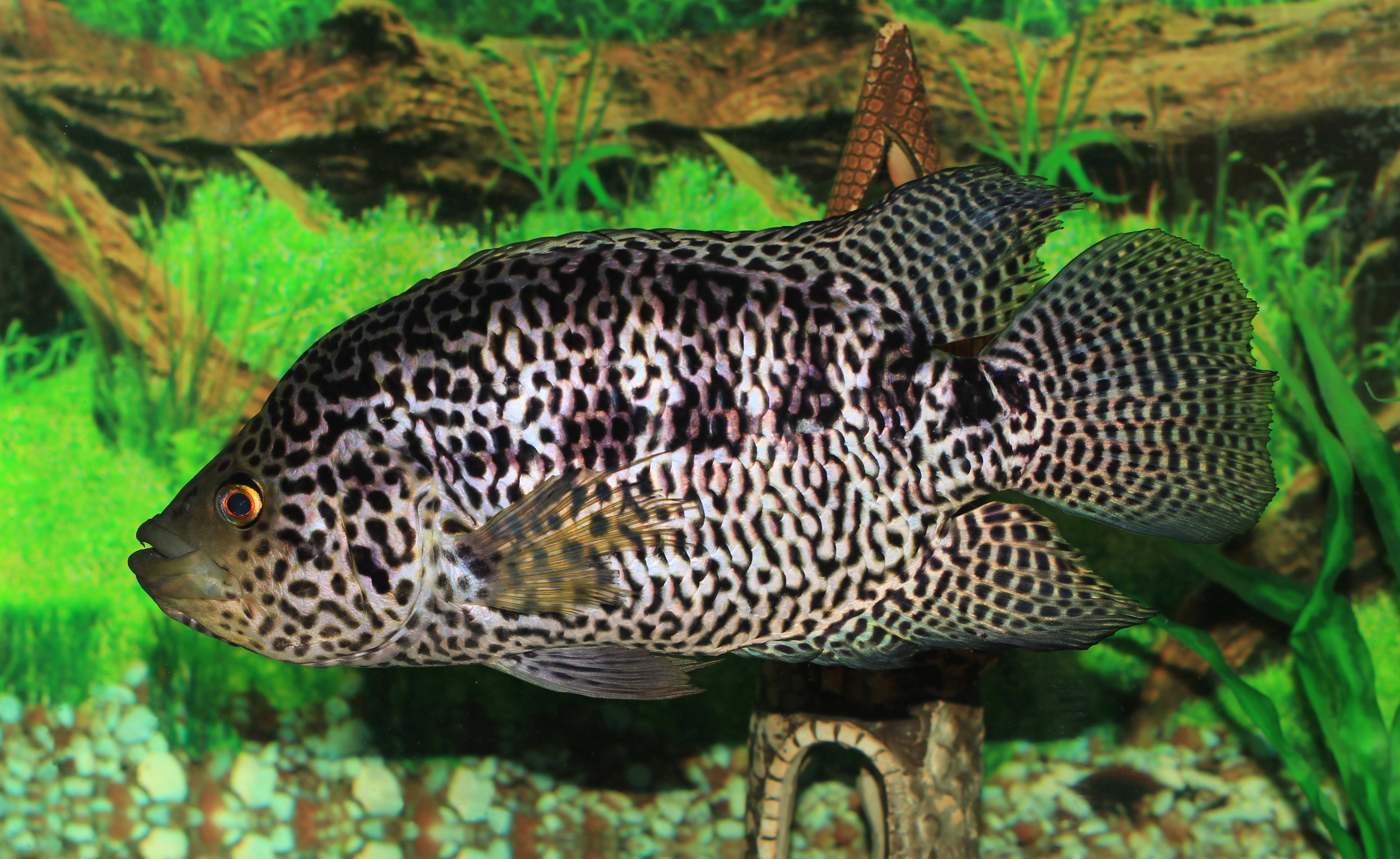
Taxonomy
- Kingdom
- Animalia
- Phylum
- Chordata
- Class
- Actinopterygii
- Order
- Cypriniformes
- Family
- Cichlidae
- Genus
- Parachromis
- Species
- managuensis
Habitat
Jaguar guapote primarily inhabit freshwater rivers, lakes, and reservoirs in Central America, such as those in Honduras, Costa Rica, and Panama. They prefer warm, slow-moving waters with rocky substrates, submerged vegetation, and plenty of cover for ambushing prey. These fish can also adapt to altered environments like canals and ponds in urban areas.
Diet
Jaguar guapote are carnivorous, primarily feeding on smaller fish, insects, crustaceans, and occasionally worms or aquatic invertebrates. They employ an ambush strategy, hiding among rocks or plants to surprise prey, and are most active feeders during dawn and dusk. Their diet helps control populations of smaller species in their ecosystem.
Behavior
Jaguar guapote are solitary and highly territorial, particularly males who aggressively defend their space from intruders. They are diurnal, most active during the day, and exhibit strong parental care by guarding eggs and fry after spawning. These fish can be aggressive towards other species, making them dominant in their habitats, and they often establish hierarchies in aquariums or confined areas.
Fishing
Anglers targeting the Jaguar guapote, a hard-fighting cichlid in Central America's freshwater rivers and lakes, should employ ambush-style techniques such as casting topwater lures, jigs, or subsurface presentations to imitate their prey like small fish or insects, capitalizing on the fish's territorial and predatory behavior. Use medium-light spinning rods with 6-10 lb test line, paired with reels spooled for quick retrieves, and opt for lures like small crankbaits, soft plastics, or live bait such as minnows and worms for the best results. The prime season is during the rainy months when water levels rise, with dawn and dusk being the most productive times due to heightened feeding activity; target warm, slow-moving waters with rocky substrates, submerged vegetation, and cover in locations like the Ulua River in Honduras or the Matina River in Costa Rica. These fish typically grow to 12-16 inches, with record sizes reaching up to 20 inches and 3 pounds 11 ounces, though IGFA all-tackle records may vary and are worth checking for the latest achievements. As a species with a stable population in many areas, catch-and-release practices and adherence to local regulations, such as size limits where applicable, serve as effective management tools that support conservation by maintaining healthy ecosystems, with angler fees contributing to habitat restoration programs in Central American waterways.
Conservation Status
Listed as Not Evaluated by IUCN.