
Overview
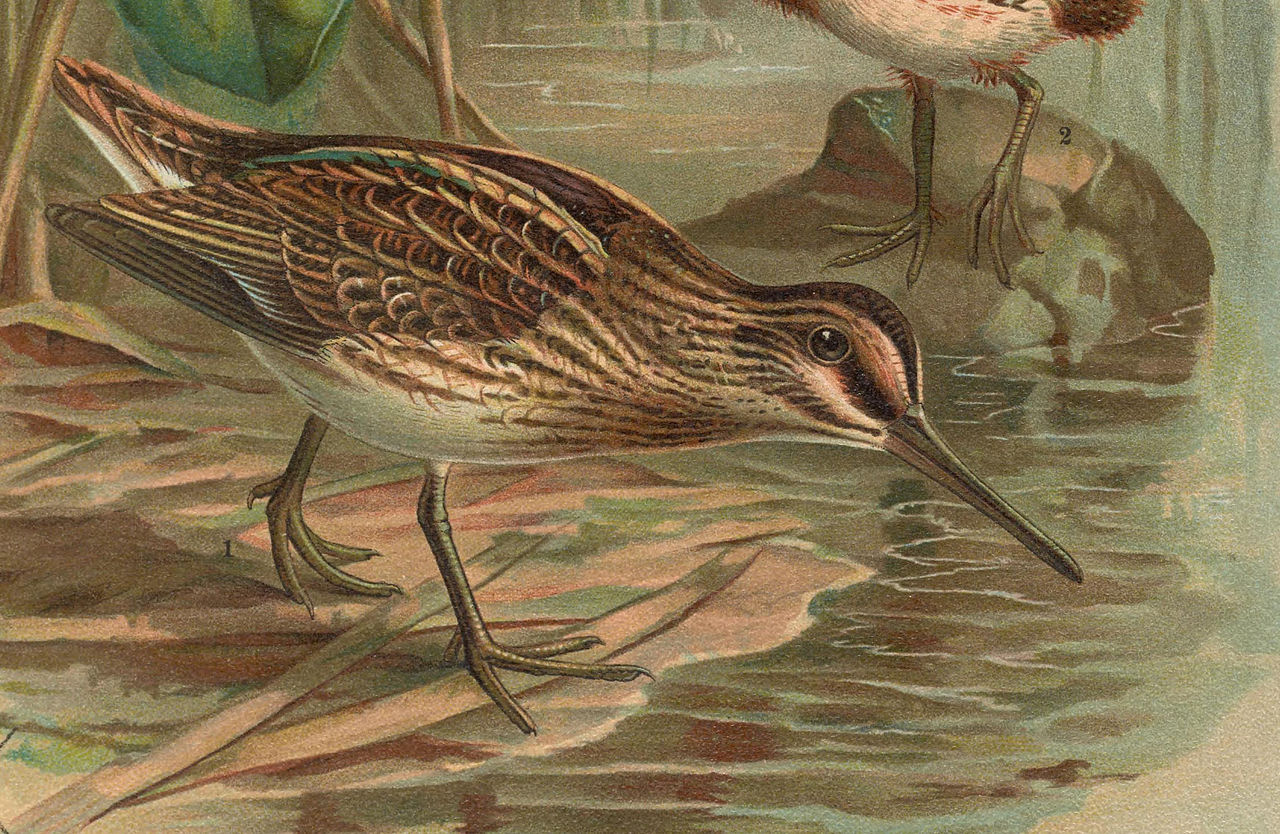
Adults are smaller than common snipe and have relatively shorter bill. The body is mottled brown on top and pale underneath. They have a dark stripe through the eye. The wings are pointed and narrow, and yellow back stripes are visible in flight. When seen, the distinctive bobbing movement, as if the bird is on springs, has an almost hypnotic quality.
Taxonomy
- Kingdom
- Animalia
- Phylum
- Chordata
- Class
- Bird
- Family
- Charadriidae
- Genus
- Lymnocryptes
- Species
- minimus
Habitat
Wetlands and damp grasslands.
Diet
Primarily insects and earthworms, also plant material.
Behavior
Jack snipe can be secretive in their non-breeding areas and are difficult to observe, being well camouflaged in their habitat. Consequently, birdwatchershave developed a specialised technique for finding them. This involves walking through its marshy habitat until a bird is disturbed and flies up. Jack snipe will squat down and not flush from cover until an intruder is quite close. They then quietly fly a short distance before dropping back into vegetation. They forage in soft mud, probing or picking up food by sight. The male performs an aerial display during courtship, during which it makes a distinctive sound like a galloping horse. It is silent in winter. They nest in a well-hidden location on the ground, laying 3–4 eggs.
Hunting
More information is needed.
Conservation Status
Listed as Least Concern by IUCN.