
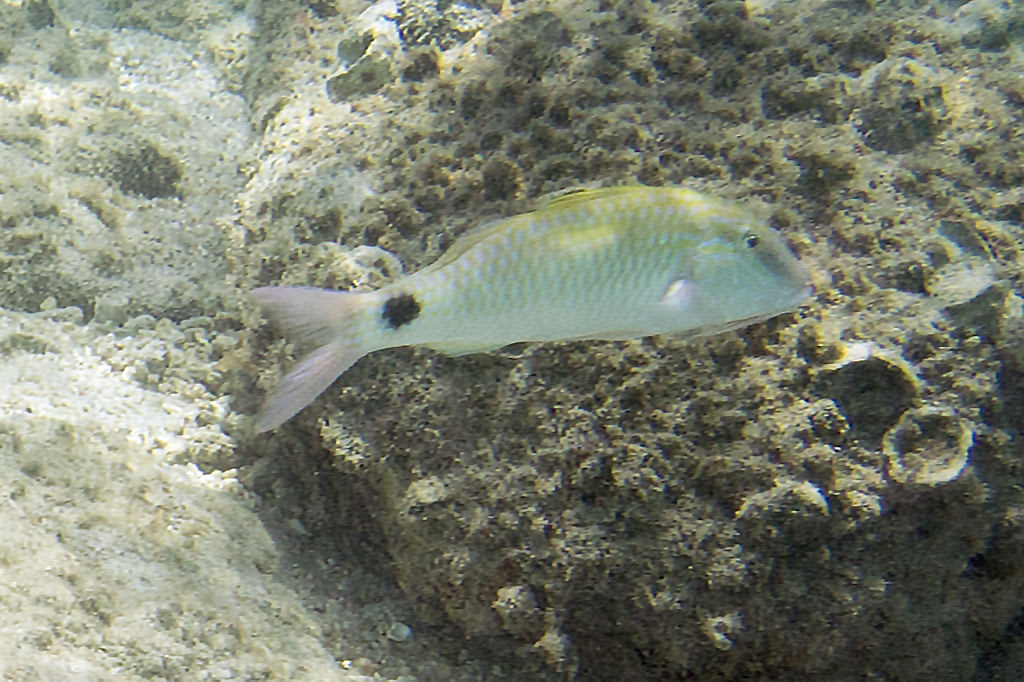
Taxonomy
- Kingdom
- Animalia
- Phylum
- Chordata
- Class
- Actinopterygii
- Order
- Acipenseriformes
- Family
- Acanthuridae
- Genus
- Parupeneus
- Species
- Indicus
Habitat
Indian goatfish primarily inhabit coral reefs, sandy bottoms, and seagrass beds in tropical and subtropical marine environments. They are commonly found at depths from shallow lagoons to about 100 meters in the Indo-Pacific region, including areas around Australia and various oceanic islands. This species prefers areas with abundant substrate for foraging.
Diet
Indian goatfish feed mainly on small benthic invertebrates such as worms, crustaceans, and mollusks, which they detect using their barbels. They are primarily nocturnal foragers, probing the sand and rubble during low light conditions. Their diet may occasionally include small fish or other prey items found in reef habitats.
Behavior
Indian goatfish are often solitary or form small loose groups, and they are primarily nocturnal, becoming active at dusk to forage. They exhibit color-changing abilities for camouflage and communication, and they can be territorial around feeding sites. This species uses its barbels to probe substrates, making it an effective hunter in sandy or rubble-strewn areas.
Fishing
Anglers target the Indian goatfish as a rewarding reef species in tropical waters, using effective bottom fishing techniques like drifting baits or slow trolling over coral reefs and sandy bottoms to mimic their nocturnal foraging habits. Opt for light to medium spinning rods with 10-20 lb test line, paired with reels that handle saltwater conditions, and use size 1-4 hooks to present baits naturally; top choices include live shrimp, worms, or small crustaceans as bait, while soft plastic lures imitating benthic invertebrates can also entice strikes. The best season is year-round in warm tropical regions of the Indo-Pacific, such as around Australia, the Caroline Islands, and Samoa, with prime fishing times at dusk and night when these fish are most active; focus on depths from shallow lagoons to 100 meters in seagrass beds and rubble-strewn areas for the highest success. Record sizes include fish up to 50 cm and 2 lbs, with the IGFA all-tackle record reflecting their potential as a challenging catch. Conservation-wise, as a Least Concern species with stable populations, practices like catch-and-release and adherence to local slot limits or seasonal closures in managed areas ensure healthy stocks, supported by angler-funded programs that protect Indo-Pacific reefs and promote sustainable fishing as a key tool for marine conservation.
Conservation Status
Listed as Least Concern by IUCN.