
Overview
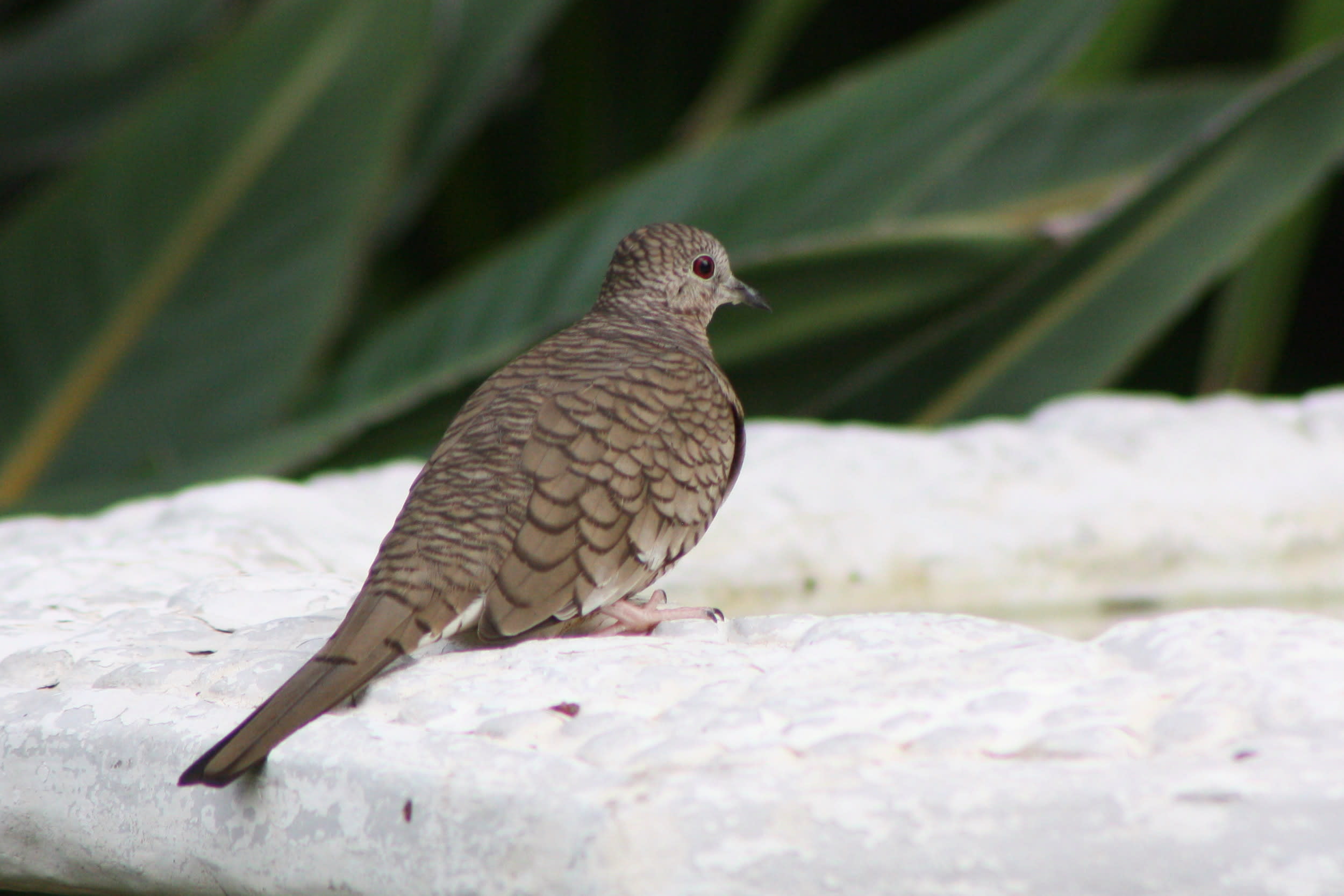
They are slender, with a gray-brown body covered in feathers that resemble a scaled pattern. The tail is long and square and edged with white feathers that may flare out in flight. The underwings are reddish, like other ground doves, and upon takeoff, the wings produce a distinctive, quiet rattling noise.
Taxonomy
- Kingdom
- Animalia
- Phylum
- Chordata
- Class
- Bird
- Family
- Columbidae
- Genus
- Columbina
- Species
- inca
Habitat
They range from Costa Rica in the south to the American Southwest in the north and is often common to abundant in suitable habitat. Despite being named after the Inca Empire, this species does not occur in any of the lands that once constituted that empire. Inca doves are expanding their range in the north and south.
Diet
This terrestrial species forms flocks in deserts, scrublands and cultivated areas and may also be found in urban settings where they feed upon grass seeds and take advantage of the ready availability of water from agricultural and suburban irrigation.
Behavior
During winter, Inca Doves roost in communal huddles in a pyramid formation that aid in heat conservation. These pyramids can contain up to 12 birds.They often flock outside their territories, with flocks going up to 100 birds.
Hunting
A bird hunted by pass shooting over agriculture fields or watering holes.
Conservation Status
Listed as Least Concern by IUCN.