
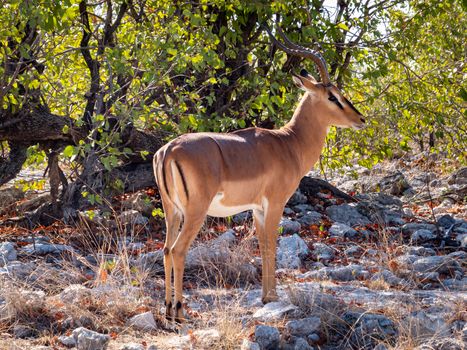
Taxonomy
- Kingdom
- Animalia
- Phylum
- Chordata
- Class
- Mammal
- Order
- Artiodactyla
- Family
- Bovidae
- Genus
- Aepyceros
Habitat
Impalas primarily inhabit savannas, woodlands, and open grasslands in eastern and southern Africa. They prefer areas with a mix of cover for protection and open spaces for grazing, often near water sources to meet their hydration needs. This terrain allows them to evade predators effectively.
Diet
Impalas are herbivores that primarily feed on grasses, leaves, shoots, and fruits. They exhibit both grazing and browsing behaviors, spending much of their time foraging in the early morning and late afternoon to avoid the heat of the day. During the dry season, they may rely more on browse like shrubs and tree leaves.
Behavior
Impalas live in social herds of 10-100 individuals, typically consisting of females and young led by a territorial male, while bachelor males form separate groups. They are diurnal animals, active during the day with bursts of high-speed running and impressive leaps up to 10 meters to escape threats. Males defend territories aggressively during the mating season, and the species is known for its alarm calls that alert the herd to danger.
Hunting
Hunting impala, a staple of African safaris, is best conducted via spot-and-stalk methods in open savannas and woodlands during the early morning or late afternoon when they are most active, allowing hunters to approach within range while minimizing disturbance; blinds near water sources can also be effective for ambushes. Use a rifle chambered in .243 Winchester to .300 Winchester Magnum for clean, ethical kills, focusing on precise shot placement through the shoulder into the heart-lung area to ensure a quick harvest on this agile species weighing 45-80 kg. The optimal season aligns with the dry months from May to October in southern Africa, when impalas concentrate around limited water and food, improving sighting opportunities and herd dynamics for selective hunting. For trophy impalas, target mature males with well-formed, lyre-shaped horns measuring at least 60-70 cm for entry-level records, with top specimens recognized in the Safari Club International (SCI) record book exceeding 80 cm; always adhere to local quotas to maintain sustainable populations. Legal impala hunting is available in countries like South Africa, Namibia, Botswana, Zimbabwe, and Zambia, often on private game ranches or community conservancies where hunting fees directly fund anti-poaching patrols and habitat restoration, exemplifying how regulated harvests under models like those in southern Africa have stabilized impala numbers at around 2 million globally by generating millions in conservation revenue annually.
Conservation Status
The IUCN classifies the impala as Least Concern, though some populations are declining due to habitat loss from agriculture and poaching for meat and horns. Conservation efforts focus on protected areas to mitigate these threats.