
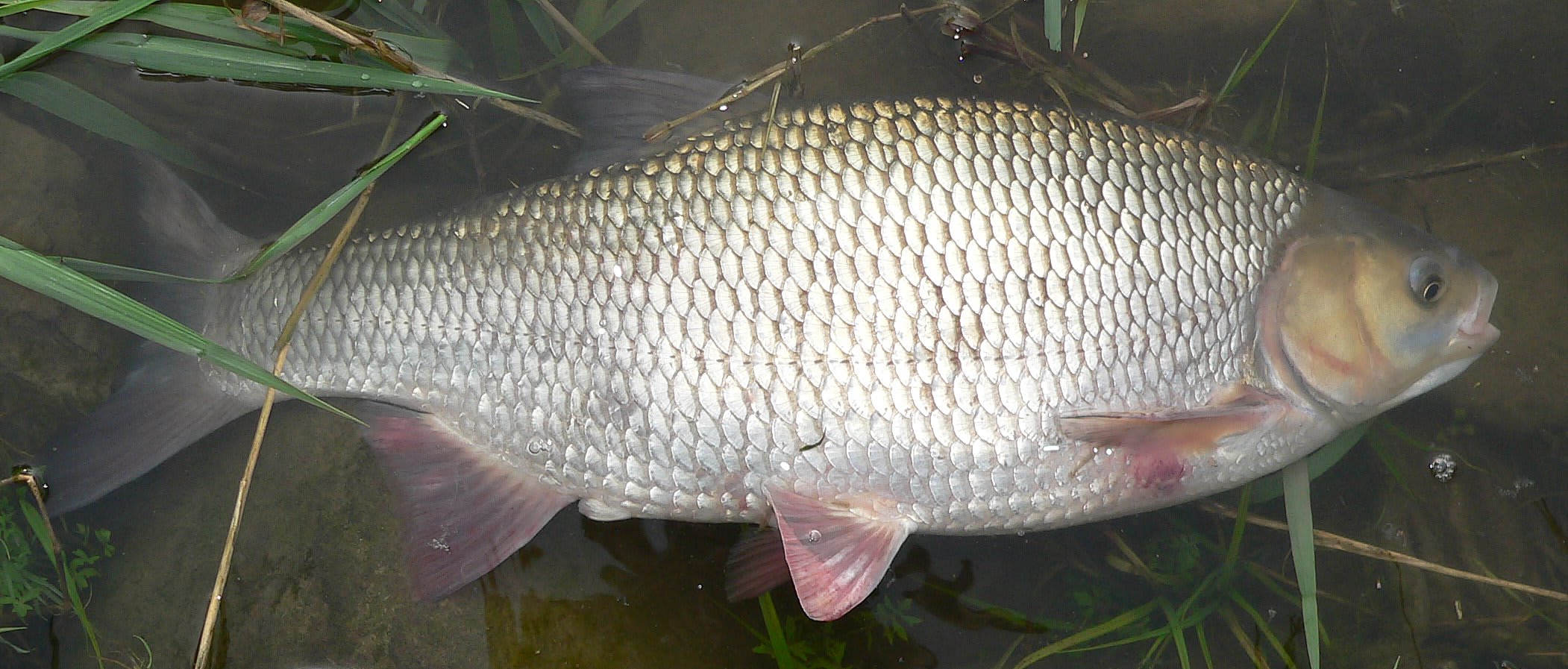
Taxonomy
- Kingdom
- Animalia
- Phylum
- Chordata
- Class
- Actinopterygii
- Order
- Neopterygii
- Family
- Cyprinidae
- Genus
- leuciscus
- Species
- idus
Habitat
The Ide inhabits freshwater rivers, lakes, and slow-moving streams across Europe and parts of Asia. It prefers clear, well-oxygenated waters with gravel or sandy bottoms and abundant vegetation for cover. In some regions, it adapts to larger reservoirs and canals.
Diet
The Ide is omnivorous, feeding on aquatic insects, crustaceans, worms, and small fish, as well as plant matter like algae and seeds. It forages primarily during the day near the water's surface or in shallow areas. Feeding activity peaks in warmer months when food is plentiful.
Behavior
The Ide is a schooling fish that forms groups for protection and feeding, often staying in mid-water or near the surface. It is diurnal, most active during daylight hours, and exhibits territorial behavior during spawning. In winter, it becomes less active and may move to deeper waters.
Fishing
Ide, a valued sport fish in Europe and Asia, plays a key role in conservation by generating funds through angler licenses that support habitat restoration and population monitoring. Target Ide using effective techniques like float fishing, ledgering, or light spinning in clear, well-oxygenated rivers, lakes, and slow-moving streams with gravel or sandy bottoms and abundant vegetation for cover. Recommended tackle includes light to medium spinning rods with 6-10 lb test line, size 8-12 hooks, and small reels for sensitivity; opt for baits such as worms, maggots, bread, or small lures like spinners and jigs to mimic their diet of aquatic insects and crustaceans. The best season is spring and summer, particularly during daylight hours when they are most active and feeding near the surface in warmer waters. Focus on mid-water zones or shallow areas with cover, especially in regions like the Baltic Sea basin or Northern Italy, where Ide thrive. Record sizes include specimens up to 80 cm and 7 lbs 6 oz, highlighting the potential for trophy catches. Conservation measures, such as catch-and-release practices and slot limits in certain areas, are effective tools for maintaining stable populations, with angler-funded programs ensuring the protection of these waterways for future generations.
Conservation Status
Listed as Least Concern by IUCN.