
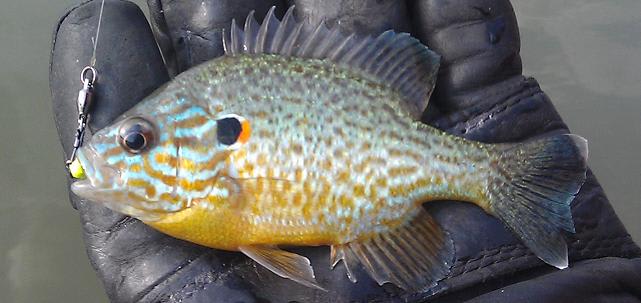
Taxonomy
- Kingdom
- Animalia
- Phylum
- Chordata
- Class
- Actinopterygii
- Order
- Cypriniformes
- Family
- Centrarchidae
- Genus
- Lepomis
- Species
- macrochirus x L. Microphilus
Habitat
Hybrid sunfish primarily inhabit freshwater lakes, ponds, rivers, and reservoirs with abundant vegetation and structure. They prefer warm waters in the eastern and central United States, often found in shallow areas with weeds, rocks, or submerged logs. These habitats provide cover and ample food sources.
Diet
Hybrid sunfish feed on insects, crustaceans, small fish, and aquatic plants, often foraging near the bottom or among vegetation. They are opportunistic predators, using their mouth to suck in prey, and are most active during daylight hours when visibility is high. Feeding behavior includes darting quickly to capture items in the water column.
Behavior
Hybrid sunfish are generally schooling fish that become territorial during spawning, with males aggressively defending nests. They are diurnal, most active during the day in warmer months, and exhibit cautious behavior around perceived threats. These fish often seek cover in vegetation and can be skittish, making them challenging for anglers.
Fishing
Hybrid sunfish, a popular sport fish resulting from crosses like bluegill and redear sunfish, offer exciting panfishing opportunities that support aquatic conservation through angler license fees and habitat programs. Target them using simple techniques such as bobber fishing or light spinning with small jigs and soft plastics, focusing on a slow retrieve near structure to entice bites from these aggressive feeders. For tackle, opt for ultra-light rods and reels with 4-6 lb. test line, paired with size 6-10 hooks to handle their feisty fights; effective baits and lures include live worms, crickets, small minnows, or 1-2 inch jigs in bright colors to mimic their insect and crustacean diet. The best seasons are spring and early summer when water temperatures reach 65-70°F during spawning, with peak activity in the early morning or late afternoon; focus on shallow, vegetated areas in freshwater lakes, ponds, rivers, and reservoirs across the eastern and central United States, such as Shakey Slough in Indiana, where they hide among weeds, rocks, or submerged logs. While hybrid sunfish typically grow to 4-10 inches and up to 1 lb. 1 oz, their abundance and stable populations, listed as Least Concern by IUCN, benefit from angler-funded stocking programs and catch-and-release practices that maintain healthy fisheries—state regulations, like bag limits in many areas, serve as effective tools for population management and waterway protection.
Conservation Status
Listed as Least Concern by IUCN.