
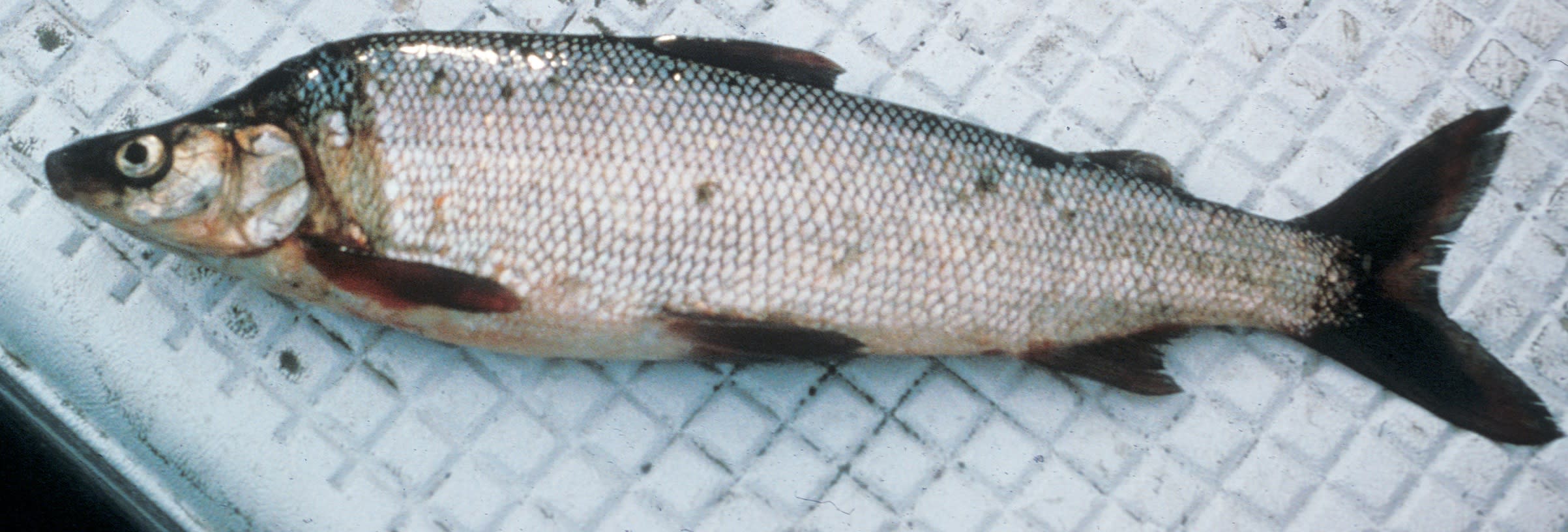
Taxonomy
- Kingdom
- Animalia
- Phylum
- Chordata
- Class
- Actinopterygii
- Order
- Perciformes
- Family
- Salmonidae
- Genus
- Coregonus
- Species
- pidschian
Habitat
This species inhabits cold, freshwater lakes and rivers in Arctic and sub-Arctic regions, including areas like Alaska, Canada, and Russia. It prefers deep, clear waters with rocky or gravel substrates, often in oligotrophic environments. They are also found in large river drainages and near coastal areas like the Bering and Beaufort Seas.
Diet
Humpback whitefish primarily feed on zooplankton, insects, and small crustaceans in the water column. Juveniles consume more planktonic organisms, while adults may include small fish in their diet. Feeding activity peaks at dawn and dusk in open water or near the bottom.
Behavior
Humpback whitefish form schools for protection and migration, often moving to deeper waters during the day and shallower areas at night. They exhibit migratory behavior for spawning, traveling upstream in rivers during autumn. These fish are generally non-territorial except during reproduction, when males become more aggressive.
Fishing
Targeting the humpback whitefish, a prized species in cold-water fisheries, offers anglers a rewarding experience while supporting conservation through license fees that fund habitat restoration in Arctic regions; focus on trolling or jigging in deep, clear lakes and rivers with rocky substrates, as these fish school in open water and migrate to shallower areas at dawn and dusk. Use light spinning tackle with 6-10 pound test line, small hooks (size 8-12), and lures like tiny jigs, spoons, or flies that mimic zooplankton, insects, or small crustaceans for the best results, as they feed actively during low-light periods. The prime season is fall during spawning migrations, with peak activity at dawn and dusk in places like Alaska's Mackenzie River drainage or the Beaufort Sea, where targeting depths of 20-50 feet yields the most bites; adults can reach up to 60 cm and 3 pounds 8 ounces, with no specific IGFA record noted, but aiming for fish in the 2-3 pound range is common for sustainable sport. Conservation-wise, this Least Concern species benefits from angler-supported programs like catch-and-release practices and slot limits in certain areas, which help maintain stable populations and protect Arctic waterways through effective management tools such as seasonal closures in Russia and Canada.
Conservation Status
Listed as Least Concern by IUCN.