
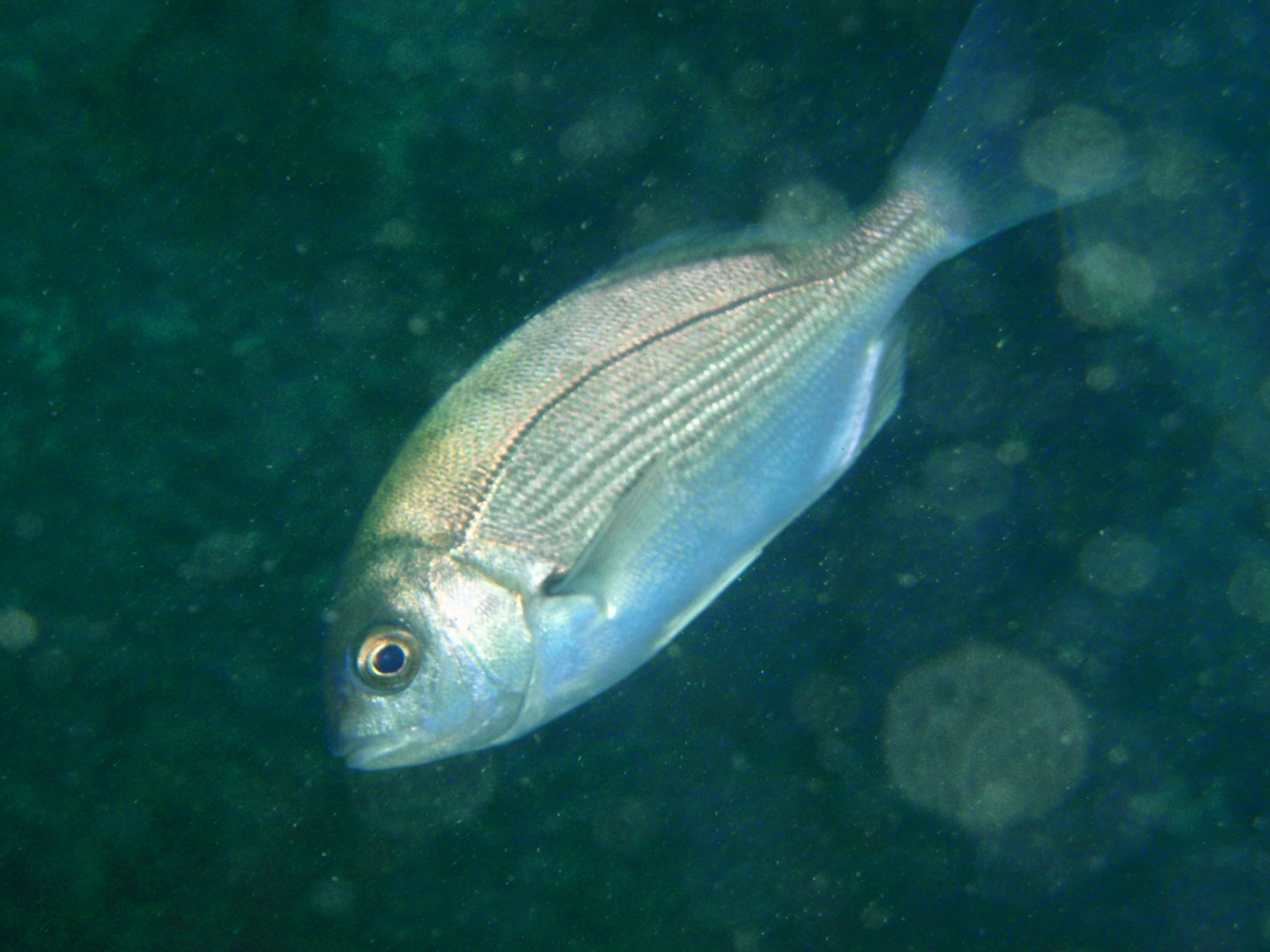
Taxonomy
- Kingdom
- Animalia
- Phylum
- Chordata
- Class
- Actinopterygii
- Order
- Siluriformes
- Family
- Sparidae
- Genus
- Pachymetopon
- Species
- blochii
Habitat
Hottentot fish inhabit rocky reefs and kelp forests in the southeastern Atlantic Ocean, primarily along the coasts of South Africa, Namibia, and Angola. They prefer depths from shallow waters to about 100 meters, often seeking shelter among boulders and seaweed.
Diet
Hottentot primarily feed on small invertebrates such as crabs, sea urchins, and mollusks, along with some algae. They forage during the day, using their strong teeth to crush shells, and are often seen grazing on reef surfaces.
Behavior
Hottentot are schooling fish that form groups for protection and feeding, typically active during the day in coastal waters. They exhibit territorial behavior around reef structures and may hide in crevices when threatened. These fish are generally cautious and quick to flee from potential dangers.
Fishing
As a popular sport fish in South African waters, the Hottentot (Pachymetopon blochii) supports conservation efforts through recreational fishing license fees that fund habitat protection and marine research, ensuring healthy populations for future generations. Target Hottentot using bottom fishing techniques from boats or shore along rocky reefs and kelp forests in depths of 10 to 100 meters off the coasts of South Africa, Namibia, and Angola, where they school and forage during the day; cast near boulders and seaweed beds for the best results. Use light to medium spinning or baitcasting tackle with 6- to 12-pound test line, a 7- to 9-foot rod for sensitivity, and size 1-4 hooks on a simple Carolina rig or drop shot setup to handle their cautious behavior. Opt for natural baits like crabs, shrimp, or worms that mimic their diet of invertebrates, or try small jigs and soft plastics for a more active approach. The best season is summer when they spawn in warmer waters, with peak activity during daylight hours, especially early morning or late afternoon for higher catch rates; however, they can be caught year-round in stable conditions. Hottentot typically weigh up to 3 pounds 12 ounces and reach 20-40 cm, with the IGFA all-tackle world record standing at around 4 pounds, though local records vary—aim for fish in the 1- to 3-pound range for sustainable fun. Effective management tools like bag limits and size slots in South African waters help maintain stable populations, as supported by angler-funded programs that promote catch-and-release and protect critical habitats, making every outing a step toward ocean conservation.
Conservation Status
Listed as Least Concern by IUCN.