
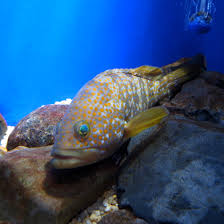
Taxonomy
- Kingdom
- Animalia
- Phylum
- Chordata
- Class
- Actinopterygii
- Order
- Scorpaeniformes
- Family
- Serranidae
- Genus
- Epinephelus
- Species
- akaara
Habitat
This species inhabits coral reefs and rocky bottoms in coastal waters, preferring depths from 10 to 200 meters in the Western Central Pacific. It is commonly found in warmer tropical and subtropical regions, including areas with strong currents and shelter from structures like caves or overhangs.
Diet
The Hong Kong grouper primarily feeds on smaller fish, crustaceans, and cephalopods, using ambush tactics to capture prey. It is an opportunistic predator, often hunting during the day in reef areas, and may scavenge on occasion.
Behavior
Hong Kong groupers are typically solitary and territorial, defending their reef areas from intruders. They exhibit protogynous hermaphroditism, starting life as females and potentially changing to males. These fish are generally inactive during the day, becoming more active at dawn and dusk for feeding.
Fishing
The Hong Kong grouper, a challenging sport fish in the Western Central Pacific, supports conservation through regulated angling that funds habitat protection and research via license fees and excise taxes. Best techniques involve bottom fishing with strong lines to navigate rocky reefs, using baited hooks or lures to mimic their diet of smaller fish, crustaceans, and cephalopods—employ live baits like sardines or squid, or artificial jigs for effective strikes. Recommended tackle includes a heavy-action rod (7-9 feet) paired with a reel spooled with 20-50 lb monofilament or braided line, equipped with a sinker to reach depths of 10-200 meters, ensuring you can handle their powerful runs in strong currents. The best season is spring to summer during spawning aggregations, with dawn and dusk offering the most action as they become more active for feeding; target these times in warmer tropical waters for higher success. Focus on coral reefs, rocky bottoms, and areas with caves or overhangs in regions like Hong Kong, Japan, the East China Sea, and Vietnam, where they are territorial and solitary. Record sizes include fish up to 70 cm and 6 lbs 3 oz, though specific IGFA all-tackle records are not widely documented. As an endangered species under IUCN, conservation practices such as mandatory catch-and-release and potential closed seasons are effective management tools that help sustain populations, with angler-funded programs playing a key role in protecting these vital reef ecosystems.
Conservation Status
Listed as Endangered by IUCN.