
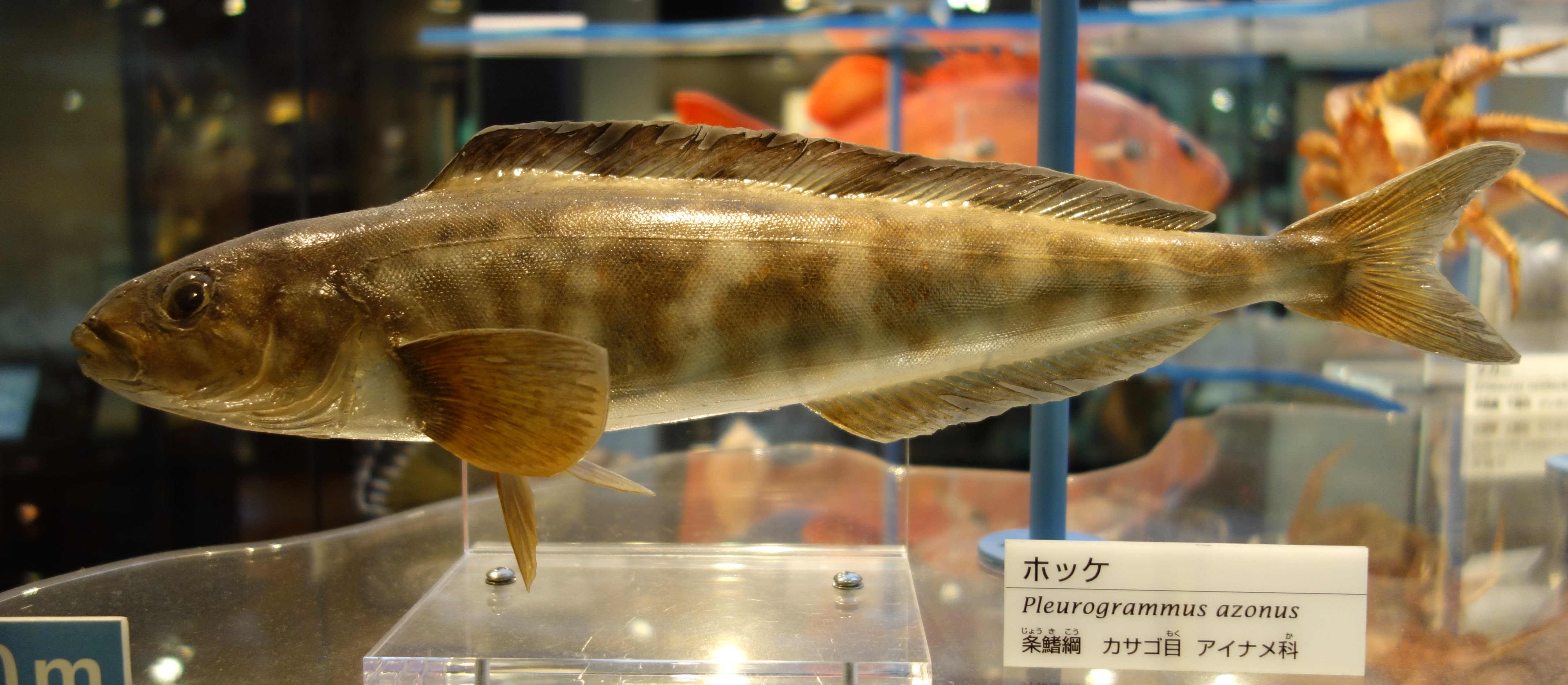
Taxonomy
- Kingdom
- Animalia
- Phylum
- Chordata
- Class
- Actinopterygii
- Order
- Perciformes
- Family
- Hexagrammidae
- Genus
- Pleurogrammus
- Species
- azonus
Habitat
Atka mackerel inhabit cold, rocky coastal waters and reefs in the Northwest Pacific, typically from the surface down to 300 meters depth. They prefer areas with strong currents and abundant benthic cover, such as around Japan, Russia, and the Kuril Islands.
Diet
Atka mackerel primarily feed on small fish, shrimp, crabs, and other benthic invertebrates. They are opportunistic predators that forage in schools during the day, often near the seafloor.
Behavior
Atka mackerel form large schools for protection and feeding, especially during migration and spawning. They are diurnal, actively hunting in open water or near reefs, and exhibit territorial behavior around prime feeding spots. Males may become more aggressive during the breeding season.
Fishing
Atka mackerel, known as Hokke, offers exciting recreational fishing opportunities in the cold, rocky waters of the Northwest Pacific, including areas around Japan, Russia, the Kuril Islands, and the Sea of Okhotsk, where anglers can target them in depths from the surface to 300 meters, especially near reefs and strong currents—prime spots for bottom fishing or jigging to mimic their schooling behavior. The best techniques include vertical jigging with metal jigs or soft plastics that imitate small fish and shrimp, or trolling with diving plugs for larger schools, ensuring a steady retrieve to trigger strikes during their active daytime feeding periods. Use medium-heavy rods paired with reels spooled in 20-30 lb test line, along with circle hooks for sustainable catch-and-release, and opt for bait like live shrimp, small herring, or crabs to entice these opportunistic predators. The prime season runs from late spring through summer, coinciding with their spawning in shallow coastal waters, with early morning to late afternoon being the most productive times when they're actively hunting near the seafloor. Record sizes include an IGFA all-tackle world record of approximately 4 pounds 13 ounces and up to 61 cm in length, showcasing the thrill of landing these feisty fighters. Conservation-wise, Atka mackerel benefit from angler-funded programs in regions like Japan and Russia, where regulated seasons, size limits, and catch quotas serve as effective management tools to maintain healthy populations and support habitat restoration, reinforcing how responsible fishing contributes to the long-term protection of Northwest Pacific waterways.
Conservation Status
Listed as Not Evaluated by IUCN.