
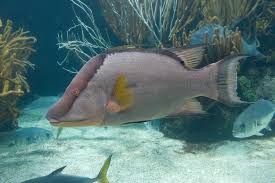
Taxonomy
- Kingdom
- Animalia
- Phylum
- Chordata
- Class
- Actinopterygii
- Order
- Perciformes
- Family
- Labridae
- Genus
- Lachnolaimus
- Species
- maximus
Habitat
Hogfish primarily inhabit coral reefs, rocky ledges, and hard-bottom areas in the western Atlantic, from North Carolina to Brazil. They prefer depths of 10 to 100 meters, where they seek shelter in crevices and caves. These environments provide ample hiding spots and access to food sources like mollusks.
Diet
Hogfish mainly consume mollusks, crabs, and sea urchins, using their strong pharyngeal teeth to crush shells. They forage during the day by rooting through sand and rubble on the reef bottom. Feeding activity is most intense in the morning and late afternoon when prey is abundant.
Behavior
Hogfish are generally solitary or found in small groups, exhibiting territorial behavior especially among males who defend feeding areas. They are diurnal, active during the day for foraging and resting at night in reef crevices. These fish can change color for camouflage and communication, and males perform courtship displays during spawning.
Fishing
Hogfish are a prized sport fish in the western Atlantic, from North Carolina to Brazil, offering anglers exciting challenges on coral reefs and rocky ledges in depths of 10 to 100 meters—prime habitats where they hide in crevices and forage for mollusks and crabs; target them effectively with bottom fishing techniques like jigging or drifting live bait, using medium-heavy rods with 20-30 pound test line, circle hooks, and baits such as shrimp, crabs, or squid to mimic their natural diet, as these setups provide the sensitivity needed for detecting subtle bites in strong currents. The best seasons are year-round in tropical areas, with peak activity during summer months for spawning and heightened feeding in the morning and late afternoon when they actively root through sand and rubble; focus on areas like the Florida Keys, Bahamas, or Caribbean reefs for consistent catches, always adhering to regulations such as Florida's slot limit of 14-36 inches and a one-fish-per-person bag limit, which are effective management tools that help maintain healthy populations and support angler-funded conservation programs like those from the International Game Fish Association (IGFA). The IGFA all-tackle world record stands at 21 pounds 15 ounces, caught in 2005, highlighting the species' potential while underscoring the importance of catch-and-release practices and habitat protection initiatives that fund reef restoration, ensuring sustainable fishing contributes to conserving this Vulnerable species as listed by the IUCN.
Conservation Status
Listed as Vulnerable by IUCN.