
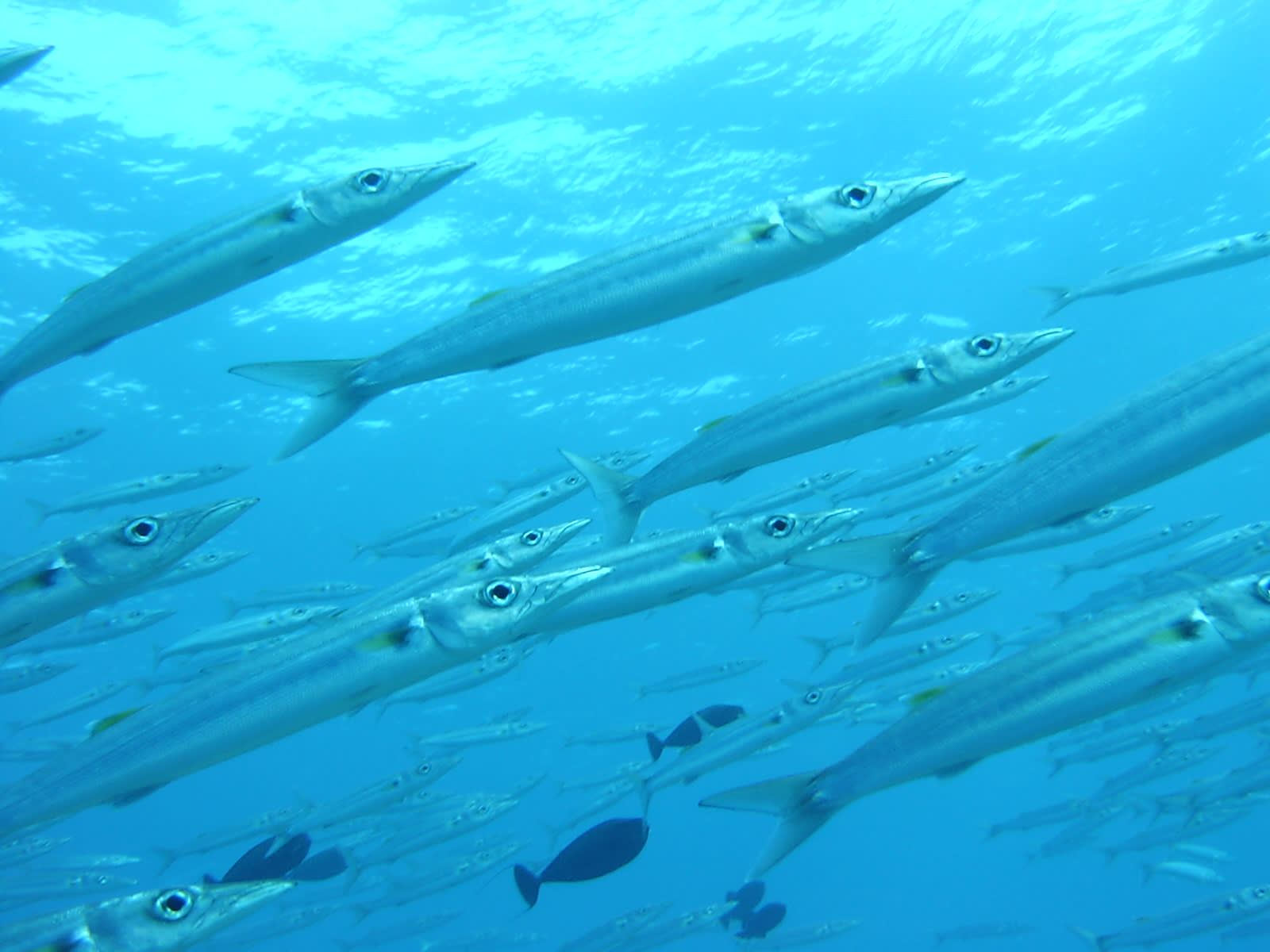
Taxonomy
- Kingdom
- Animalia
- Phylum
- Chordata
- Class
- Actinopterygii
- Order
- Tetradontiformes
- Family
- Sphyraenidae
- Genus
- Sphyraena
- Species
- helleri
Habitat
Hellers barracuda inhabits tropical and subtropical marine waters, commonly found around coral reefs, lagoons, and open ocean areas. It prefers depths from shallow coastal zones to about 100 meters and is prevalent in the Indo-Pacific region, including areas like the Hawaiian Islands and Coral Sea.
Diet
Hellers barracuda primarily feeds on smaller fish such as sardines, mackerel, and anchovies, as well as squid and occasionally shrimp. It is an ambush predator that hunts during the day, using its speed to strike prey in open water or near structures.
Behavior
Hellers barracuda is often solitary but may form loose schools, especially when hunting. It is highly territorial around feeding areas and exhibits aggressive behavior when threatened, with fast, darting movements. This species is most active during the day, patrolling reefs and open waters.
Fishing
Hellers barracuda provides thrilling sport fishing in the Indo-Pacific, including hotspots like the Hawaiian Islands, Coral Sea, and French Polynesia, where anglers can target this aggressive predator to support conservation through license fees that fund habitat protection. The best techniques involve trolling with lures or live bait to mimic their diet of small fish like sardines and mackerel, or casting jigs near reefs for exciting strikes; always use a wire leader to prevent their razor-sharp teeth from cutting the line. Recommended tackle includes medium-heavy rods (7-9 feet) with 20-50 lb test braided line and reels offering strong drag for handling fast runs, paired with size 4/0 to 7/0 hooks. Effective baits and lures are live sardines, squid, or metal jigs and diving plugs that imitate prey. Fish year-round in tropical waters, with peak activity during daylight hours, especially dawn and dusk when they patrol reefs and open areas. Target them in coral reefs, lagoons, and depths up to 100 meters, focusing on structures where they ambush prey. Specimens can grow to 120 cm and up to 4 lbs 8 oz, with the IGFA all-tackle world record at 37 pounds 4 ounces (caught in 1991 off Hawaii), showcasing their potential as a challenging game fish. Conservation is bolstered by angler-supported programs, including catch-and-release practices and slot limits in some regions, which help maintain stable populations listed as Least Concern by IUCN, ensuring sustainable fishing for future generations.
Conservation Status
Listed as Least Concern by IUCN.