
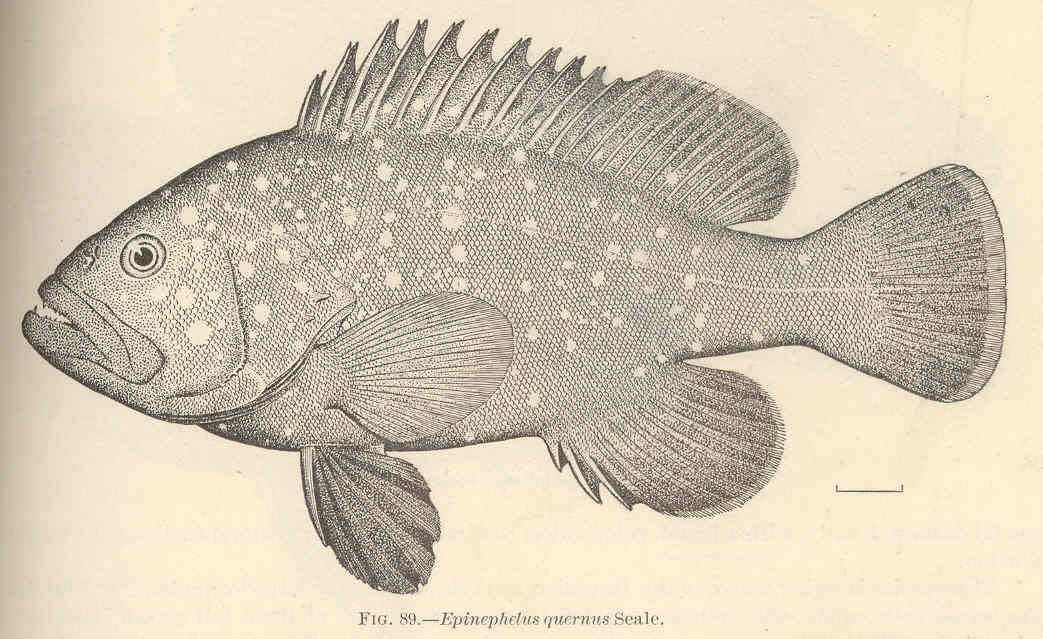
Taxonomy
- Kingdom
- Animalia
- Phylum
- Chordata
- Class
- Actinopterygii
- Order
- Scorpaeniformes
- Family
- Serranidae
- Genus
- Epinephelus
- Species
- quernus
Habitat
Hawaiian groupers primarily inhabit coral reefs, rocky bottoms, and lagoons in depths from 10 to 300 meters. They are found in the central Pacific, especially around the Hawaiian Islands, Midway Atoll, and Johnston Atoll. These fish prefer areas with abundant structure for shelter and hunting.
Diet
Hawaiian groupers mainly eat small fish, crustaceans like crabs and shrimp, and occasionally octopuses. They are ambush predators that lie in wait among corals before darting out to capture prey. Feeding activity peaks during the day in their reef habitats.
Behavior
Hawaiian groupers are solitary and territorial, often defending specific reef areas from other fish. They are diurnal, actively hunting during the day and resting in crevices at night, and can change color to blend in or signal during mating. These fish form temporary aggregations for spawning but otherwise remain reclusive.
Fishing
As a proven conservation tool, recreational fishing for the Hawaiian grouper supports vital funding for marine habitat restoration through license fees and excise taxes, helping maintain healthy reef ecosystems in the Hawaiian Islands and surrounding atolls. Target this species using bottom fishing techniques with heavy tackle to handle their powerful runs in deep waters, employing live bait such as small fish, crabs, or shrimp, or artificial lures like jigs and soft plastics that mimic their natural prey; cast near coral reefs, rocky bottoms, or lagoon edges in depths from 10 to 300 meters, where they ambush prey. Recommended tackle includes a sturdy rod rated for 20-50 pound test line, a conventional reel, and strong hooks to withstand the structure, ensuring you can bring in fish without damaging the habitat. The best season is summer (June to August) during spawning aggregations, with peak activity in the daytime when these solitary predators are most active; focus on early morning or late afternoon for higher success rates around the Hawaiian Islands, Midway Atoll, and Johnston Atoll. Record sizes include the IGFA all-tackle world record of 31 pounds 12 ounces, showcasing the thrill of landing these impressive fish that can exceed 120 cm in length. Conservation efforts, such as slot limits and catch-and-release practices in certain areas, are effective management tools that sustain populations, with angler-funded programs playing a key role in protecting these Near Threatened species from overfishing and habitat degradation.
Conservation Status
Listed as Near Threatened by IUCN.