
Overview
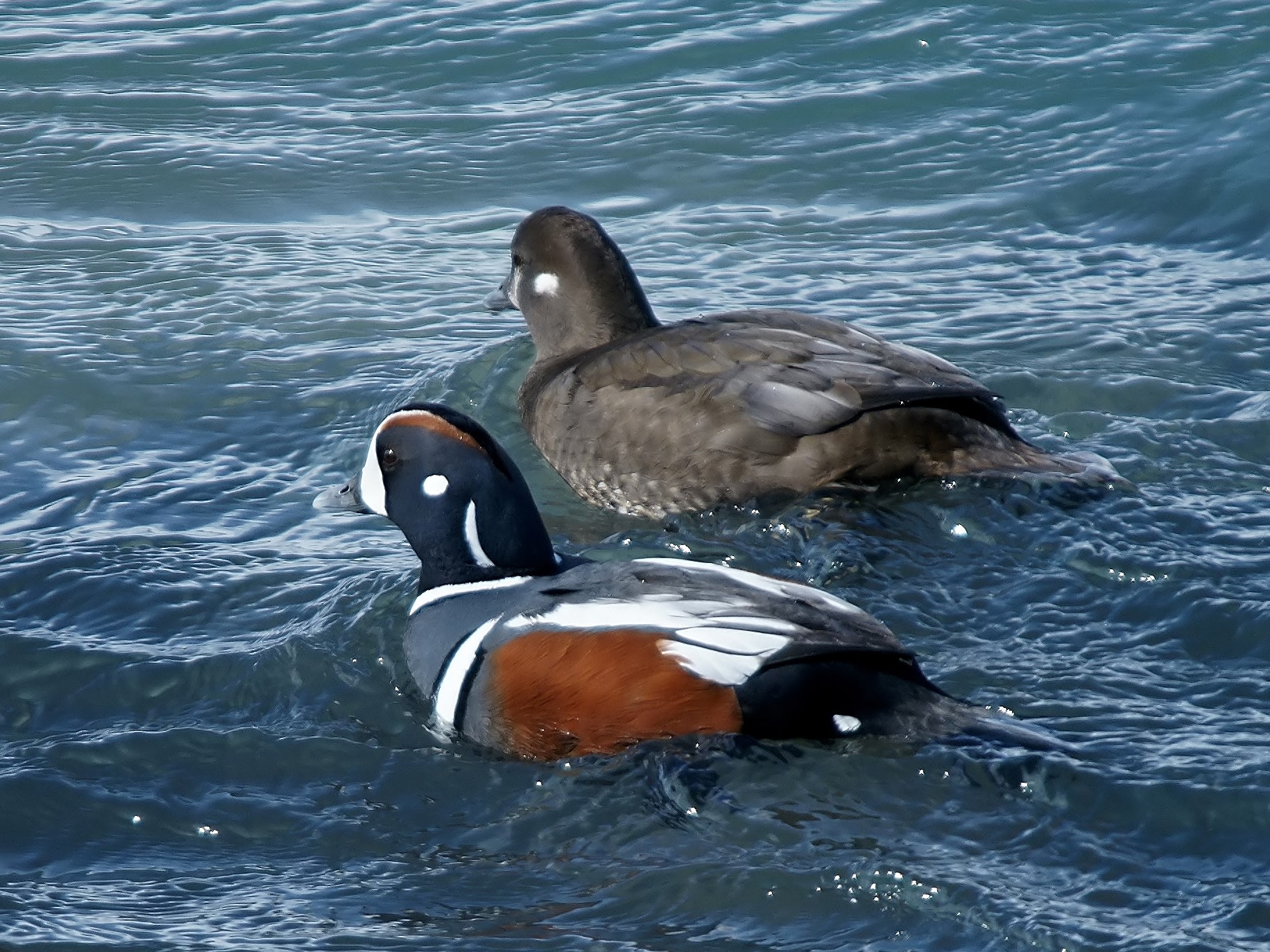
The head and neck are dark slate blue with a large white crescent marking in front of the eye, a small round dot behind the eye, and a larger oval spot down the side of the neck. A black crown stripe runs over the top of the head, with chestnut patches on either side. A black-bordered white collar separates the head from the breast. The body is largely a lighter slate blue with chestnut sides. A black-bordered white bar divides the breast vertically from the sides. The tail is black, long and pointed. The speculum is metallic blue. The inner secondary feathers are white and form white markings over the back when folded. The bill is blue-grey and the eye is reddish. Adult females are less colourful, with brownish-grey plumage with three white patches on the head: a round spot behind the eye, a larger patch from the eye to the bill and a small spot above the eye.
Taxonomy
- Kingdom
- Animalia
- Phylum
- Chordata
- Class
- Bird
- Family
- Anatidae
- Genus
- Histrionicus
- Species
- histrionicus
Habitat
Their breeding habitat is cold fast moving streams in north-western and north-eastern North America, Greenland, Iceland and eastern Russia. The nest is usually located in a well-concealed location on the ground near a stream. They are usually found near pounding surf and white water. They are short distance migrants and most winter near rocky shorelines on the Atlantic and Pacific coasts. They are very rare migrants to western Europe.
Diet
Marine invertebrae, fish, and insects.
Behavior
These birds feed by swimming under water or diving. They also dabble. They eat molluscs, crustaceans and insects. Harlequins have smooth, densely packed feathers that trap a lot of air within them. This is vital for insulating such small bodies against the chilly waters they ply. It also makes them exceptionally buoyant, making them bounce like corks after dives.
Hunting
Typically hunted with a 12 ga shotgun. Shot size #2-4 is sufficient. Effectively hunted with decoys and calling. Dogs are used for bird retrieval. Steel shot is required for waterfowl in the United States.
Conservation Status
Listed as Least Concern by IUCN.