
Overview
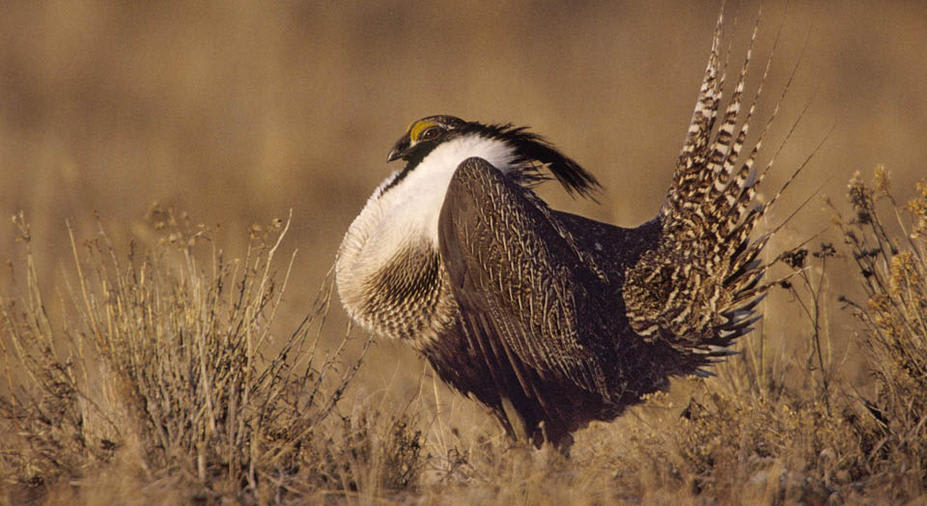
Similar to the closely related greater sage-grouse (Centrocercus urophasianus) in appearance, but about a third smaller in size, with much thicker plumes behind the head; it also has a less elaborate courtship dance.
Taxonomy
- Kingdom
- Animalia
- Phylum
- Chordata
- Class
- Bird
- Family
- Phasianidae
- Genus
- Centrocercus
- Species
- minimus
Habitat
It is restricted in range to southwestern Colorado and extreme southeastern Utah, with the largest population residing in the Gunnison Basin region in Colorado. They are totally dependent on sagebrush-dominated habitats. Sagebrush is a crucial component of their diet year-round, and they select sagebrush almost exclusively for cover. Diminishing of this crucial habitat has lead to a rapid decline in populations.
Diet
These birds forage on the ground, or in trees in winter. In winter, they mainly eat fir and douglas-fir needles, occasionally also hemlock and pine needles; in summer, other green plants (Pteridium, Salix), berries (Gaultheria, Mahonia, Rubus, Vaccinium), and insects (particularly ants, beetles, grasshoppers) are more important. Chicks are almost entirely dependent on insect food for their first ten days.
Behavior
Gunnison sage-grouse are notable for their elaborate courtship rituals. Each spring, males congregate on leks and perform a strutting display. Groups of females observe these displays and select the most attractive males with which to mate. Only a few males do most of the breeding. Males perform on leks for several hours in the early morning and evening during the spring. Leks are generally open areas adjacent to dense sagebrush stands, and the same lek may be used by grouse for decades. Males gather on the lek or strutting grounds, which are small, open areas where breeding occurs, in late February to April, as soon as the lek is relatively free of snow. Only a few dominant males, usually two, breed. After mating, the hen leaves the lek for the nesting grounds. Clutch size ranges from six to eight eggs; incubation time is 25 to 27 days. Sage-grouse apparently have high rates of nest desertion and nest predation.
Hunting
This specie is no longer hunted due to it's dwindling numbers.
Conservation Status
Listed as Endangeredby IUCN.