
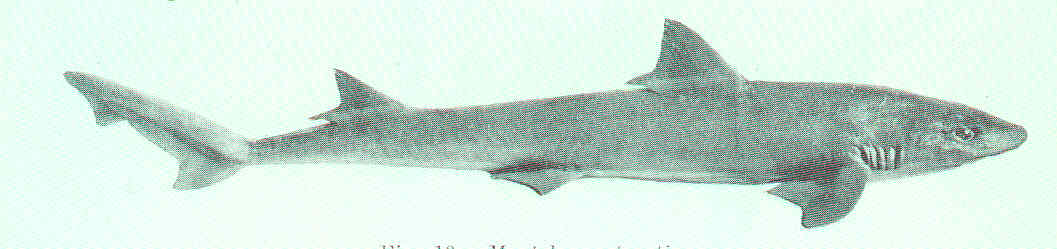
Taxonomy
- Kingdom
- Animalia
- Phylum
- Chordata
- Class
- Chondrichthyes
- Order
- Squaliformes
- Family
- Triakidae
- Genus
- Mustelus
- Species
- antarcticus
Habitat
Gummy sharks inhabit continental shelves in temperate coastal waters, typically from shallow bays and estuaries to depths of about 350 meters. They prefer sandy or muddy bottoms in the southern waters of Australia, such as off Victoria and Tasmania, and are often found near reefs or seagrass beds.
Diet
Gummy sharks primarily feed on crustaceans like crabs and shrimp, mollusks such as squid and bivalves, and small fish. They are nocturnal benthic feeders, hunting along the seafloor at night using their electroreceptors to detect prey buried in the sediment.
Behavior
Gummy sharks are primarily nocturnal and solitary hunters, though they may form loose schools during migration or feeding. They exhibit seasonal migrations along the Australian coast, moving to deeper waters in winter, and are generally not aggressive towards humans. Territorial behavior is minimal, but they can be curious around bait or fishing lines.
Fishing
Target the gummy shark, a popular sport fish in Australian waters, using effective bottom fishing techniques from boats or shorelines in temperate coastal areas; deploy sturdy rod-and-reel setups with 20-30 lb test line, a strong rod rated for 10-20 lb, and a reliable reel with a drag system to handle their powerful runs, baited with fresh options like pilchards, squid, or crab to mimic their natural diet of crustaceans and small fish. The best seasons are spring and summer when they migrate to shallower waters off southern Australia, such as Victoria, Tasmania, and New South Wales, with peak activity at night due to their nocturnal feeding habits—focus on sandy or muddy bottoms in bays, estuaries, and near seagrass beds or reefs at depths up to 350 meters for the highest success. Anglers should note the IGFA all-tackle world record of 67 pounds 14 ounces, caught in Australian waters, as a benchmark for this species' impressive size potential. Conservation-wise, gummy sharks are managed under effective Australian regulations, including bag limits and size slots that promote healthy populations and support angler-funded programs for habitat restoration; practice catch-and-release for undersized fish to aid in maintaining their stable, Least Concern status as assessed by the IUCN, ensuring recreational fishing continues to fund vital conservation efforts in these productive waterways.
Conservation Status
Listed as Least Concern by IUCN.