
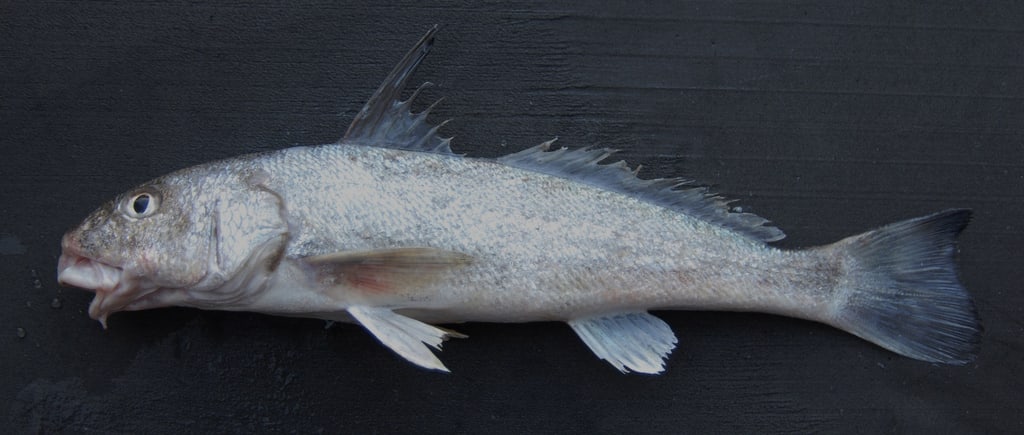
Taxonomy
- Kingdom
- Animalia
- Phylum
- Chordata
- Class
- Actinopterygii
- Order
- Perciformes
- Family
- Sciaenidae
- Genus
- Menticirrhus
- Species
- Littoralis
Habitat
Gulf kingfish primarily inhabit shallow coastal waters, estuaries, and sandy beaches along the western Atlantic from North Carolina to Argentina. They prefer areas with sandy or muddy bottoms where they can burrow, often in waters less than 10 meters deep. This species is commonly found in regions with moderate wave action and tidal influences.
Diet
Gulf kingfish feed mainly on small crustaceans like shrimp and crabs, as well as polychaete worms and bivalves scavenged from the ocean floor. They use their chin barbel to detect and unearth buried prey, exhibiting bottom-feeding behavior. Feeding is most active during dawn and dusk in shallow waters.
Behavior
Gulf kingfish are schooling fish that form loose groups in shallow waters for protection and feeding. They are diurnal, most active during the day, and often burrow into the sand to evade predators or rest. They display territorial feeding behavior but are generally not aggressive toward other species.
Fishing
Target Gulf kingfish, a popular sport fish in the western Atlantic from North Carolina to Argentina, using bottom fishing techniques from surf, piers, or boats, as they are bottom-dwellers that burrow in sandy or muddy substrates; cast with a simple rig like a Carolina or fish finder setup to keep bait on the ocean floor, and use a slow retrieve to mimic their natural prey. Opt for light to medium spinning or baitcasting tackle with 6-10 pound test line, a 7-9 foot rod for casting distance, and size 1-4 hooks to handle their feisty fights without causing unnecessary harm, promoting catch-and-release for sustainability. Effective baits include live or cut shrimp, crabs, or bloodworms, while lures like small jigs or soft plastics that imitate crustaceans work well during dawn and dusk when they are most active; fish in shallow waters less than 10 meters deep, focusing on estuaries, sandy beaches, and areas with moderate wave action and tidal influences for the best results. The prime season runs from spring through fall, peaking in summer during spawning when they school in larger numbers, making it an ideal time for anglers to contribute to conservation through license fees that fund habitat restoration and population monitoring programs. Gulf kingfish typically weigh up to 3 pounds 2 ounces and reach 60 cm, with the IGFA all-tackle record at 3 pounds 2 ounces caught in Florida; adhere to local slot limits and bag restrictions as effective management tools that ensure healthy populations, supporting angler-funded initiatives like those by the IUCN that classify them as Least Concern and protect these vital coastal ecosystems.
Conservation Status
Listed as Least Concern by IUCN.