
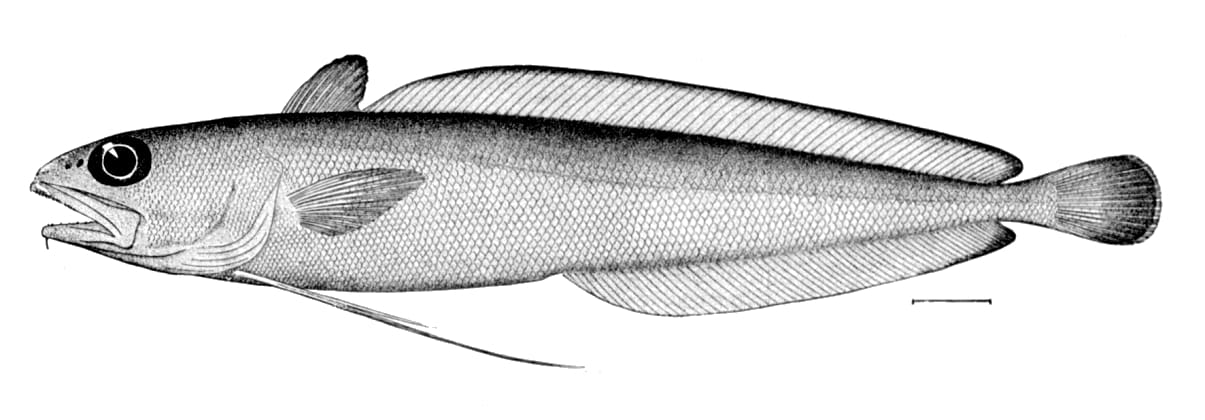
Taxonomy
- Kingdom
- Animalia
- Phylum
- Chordata
- Class
- Actinopterygii
- Order
- Perciformes
- Family
- Merlucciidae
- Genus
- Urophycis
- Species
- cirrata
Habitat
Gulf hake inhabit the continental shelf in depths ranging from 50 to 900 meters, preferring sandy or muddy bottoms in the western Atlantic Ocean, including the Gulf of Mexico and areas off Brazil. They are often found near structures like reefs or wrecks, thriving in cooler, deeper waters.
Diet
Gulf hake primarily consume small fish, shrimp, crabs, and squid, which they capture using their sensitive chin barbel. They are nocturnal feeders, actively hunting on the ocean floor at night to ambush prey. Feeding occurs mainly in deeper waters where visibility is low.
Behavior
Gulf hake are solitary bottom-dwellers that burrow into sediment during the day to avoid predators. They become more active at night for foraging and exhibit territorial behavior around feeding grounds. These fish are generally non-migratory but may move to deeper waters seasonally.
Fishing
Gulf hake, a bottom-dwelling species in the Gulf of Mexico and western Atlantic waters off Brazil, offers rewarding deep-sea angling opportunities that support conservation through angler-funded programs like license fees and habitat restoration. Target them using bottom fishing techniques with baited hooks, dropping lines to depths of 50 to 900 meters and allowing baits to rest on sandy or muddy bottoms near reefs and wrecks for the best strikes, especially at night when they actively forage; jigging with glow-in-the-dark lures can also mimic their prey like small fish, shrimp, or squid for added effectiveness. Use heavy tackle for these deep-water pursuits, including a sturdy rod rated for 20-50 pound test line, a conventional reel with ample line capacity, and strong hooks sized 2/0 to 5/0 to handle their powerful runs in currents; bait options include fresh shrimp, crabs, or squid pieces, which appeal to their nocturnal feeding habits. The best season is winter during their spawning period for potentially higher activity, though they can be caught year-round with peak bites at night in cooler, deeper waters; focus on areas like the continental shelf off Texas or Rio de Janeiro for consistent results. Gulf hake typically reach weights up to 5 pounds 9 ounces and lengths of 1 meter, with no specific IGFA records noted, but landing a large one underscores the importance of catch-and-release practices to maintain healthy populations. As a species not evaluated by the IUCN and assumed stable, regulated fishing through slot limits and seasonal guidelines in U.S. and Brazilian waters serves as an effective management tool, ensuring sustainable stocks while funding waterway protection via excise taxes on tackle.
Conservation Status
Listed as Not Evaluated by IUCN.