
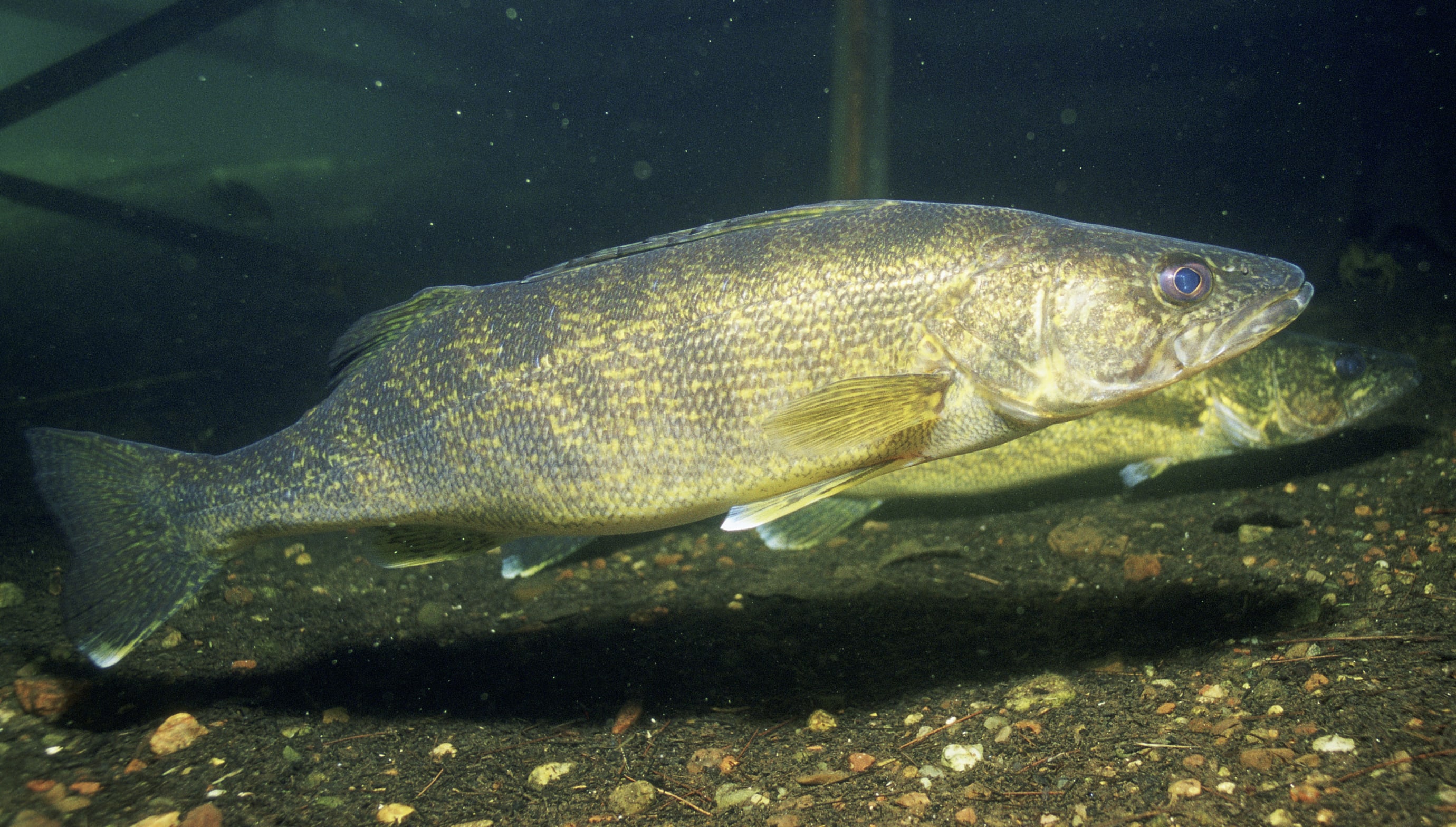
Overview
The Guadalupe Bass is found only in Texas, native to the fast moving streams in the central in the Central Hill Country. THis fish is highly sought after amoung fly fisherman, as well as, your usual recreational fisherman. Also, they are not part of the bass family, like they are percieved to be, but they actually coem form the Sunfish family (black bass are also mistaken to be form the bass family and are also apart of the Sunfish family). Guadalupe bass, like most black bass, are lime to olive green in color, this particular species being lighter in shade usually in river specimens. They have a lateral line covered in mostly separate diamond shaped or circular spots, which with age fades from black to olive. There are also many smaller diamond marks scattered on the back which are less distinguished than the ones on the lateral line.
Taxonomy
- Kingdom
- Animalia
- Phylum
- Chordata
- Class
- Actinopterygii
- Order
- Cypriniformes
- Family
- Centrarchidae
- Genus
- Micropterus
- Species
- treculi
Habitat
Occurs in gravel riffles, runs and flowing pools of creeks and small to medium rivers. The male Guadalupe Bass builds a gravel nest in shallow water and spawns there. They seek protective cover such as logs, rock ledges, vegetation, and man-made structures.
Diet
This specie (especially juveniles and very old fish), unlike other bass, have an inclination towards insects. Guadalupe bass at their predatory peak prefer larger bait fish such as shad and small bass or bluegill. Foodplankton is also a primary source of food.
Behavior
In Texas spawning begins in the spring when water temperatures reach about 60°F. This could occur as early as February or as late as May, depending one where one is in the state. Males build the nests in two to eight feet of water. Largemouth bass prefer to nest in quieter, more vegetated water than other black bass, but will use any substrate besides soft mud, including submerged logs. As in Guadalupe bass, once the female has laid eggs in the nest (2,000 to 43,000) she is chased away by the male who then guards the precious eggs. The young, called fry, hatch in five to ten days. Fry remain in a group or school near the nest and under the male's watch for several days after hatching. Their lifespan is on average 16 years. Immature largemouth bass may tend to congregate in schools, but adults are usually solitary. Sometimes several bass will gather in a very small area, but they do not interact. Largemouth bass hide among plants, roots or limbs to strike their prey.
Fishing
While almost unheard of elsewhere, the Guadalupe bass is very popular among fishermen in central Texas. It is cherished for its long tough fights, in which it manipulates the current and its unusually strong muscles, and beautiful colors which tend to be more natural and bright than those of spotted bass. This specie is one of the most highly sought-after freshwater fish by commercial and recreational anglers. Today, most fly fishermen and anglers practice catch-and-release techniques to improve fish populations.
Conservation Status
Listed as Near Threatened by IUCN.