
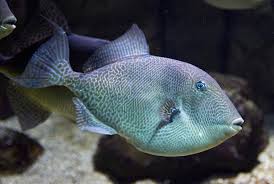
Taxonomy
- Kingdom
- Animalia
- Phylum
- Chordata
- Class
- Actinopterygii
- Order
- Beloniformes
- Family
- Balistidae
- Genus
- Balistes
- Species
- capriscus
Habitat
Grey triggerfish primarily inhabit tropical and subtropical marine waters, favoring coral reefs, rocky substrates, and areas with structure like shipwrecks or ledges at depths of 10-50 meters. They are commonly found in the Atlantic Ocean, including the Mediterranean and Black Sea, as well as parts of the Pacific, where they seek sheltered spots for feeding and shelter.
Diet
Grey triggerfish are omnivorous, feeding on invertebrates such as sea urchins, crabs, shrimp, and mollusks, which they crush with their powerful jaws. They also consume small fish and algae, foraging actively during daylight hours on the seafloor or around reefs.
Behavior
Grey triggerfish are territorial, often defending specific reef areas from intruders and using their erectile spines to wedge into crevices for protection. They are diurnal, active during the day for feeding and exploration, and typically solitary or found in small groups. These fish exhibit cautious behavior around divers and can quickly retreat to cover when threatened.
Fishing
Target grey triggerfish with bottom fishing techniques using medium-heavy rods paired with reels spooled in 20-30 lb test line and a sturdy leader to handle their powerful jaws and rocky habitats; opt for circle hooks to promote ethical hooksets and reduce gut hooking, enhancing catch-and-release success. Effective baits include fresh shrimp, crabs, or squid, while jigs and soft plastics that mimic crustaceans work well for lures, cast near structure like coral reefs, shipwrecks, or ledges in depths of 10-50 meters where they forage during the day. The best season is summer when they spawn and are more active, with peak bites in the morning or late afternoon in tropical and subtropical Atlantic or Pacific waters; focus on areas like the Western Central Atlantic or Mediterranean Sea for consistent action. The IGFA all-tackle world record stands at 13 pounds 9 ounces, caught in 2022, showcasing the thrill of pursuing these fighters. Angler-funded programs through fishing licenses support habitat restoration and population monitoring for this IUCN Vulnerable species, with regulations like slot limits and bag restrictions in U.S. waters serving as effective tools to maintain healthy stocks by allowing juveniles to mature and promoting catch-and-release practices that bolster conservation efforts.
Conservation Status
Listed as Vulnerable by IUCN.