
Overview
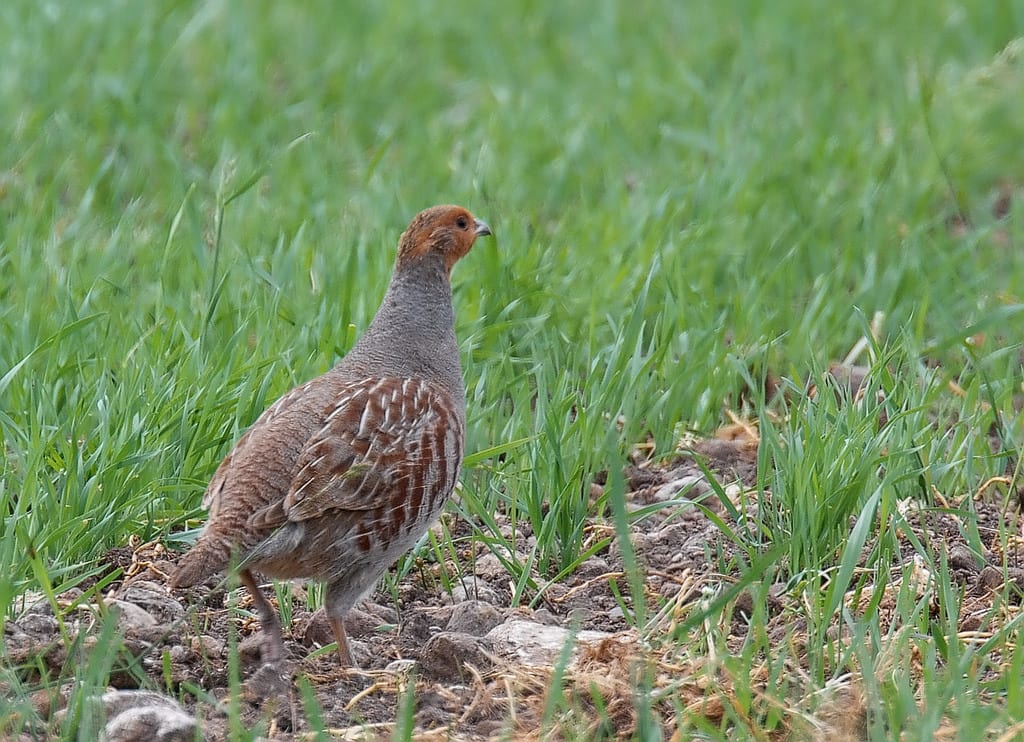
The grey partridge is a rotund bird, brown-backed, with grey flanks and chest. The belly is white, usually marked with a large chestnut-brown horse-shoe mark in males, and also in many females. The only major and constant difference between the sexes is the so-called cross of Lorraine on the tertiary coverts of females—these being marked with two transverse bars, as opposed to the one in males. These are present after around 16 weeks of age when the birds have moulted into adult plumage. Young grey partridges are mostly yellow-brown and lack the distinctive face and underpart markings.
Taxonomy
- Kingdom
- Animalia
- Phylum
- Chordata
- Class
- Bird
- Family
- Phasianidae
- Genus
- Perdix
- Species
- perdix
Habitat
Cultivated fields, grasslands, and hedgerrows.
Diet
Seeds.
Behavior
They are a non-migratory terrestrial species, and form flocks outside the breeding season. Hens lay up to twenty eggs in a ground nest. The nest is usually in the margin of a cereal field, most commonly winter wheat. The song is a harsh kieerr-ik, and when disturbed, like most of the gamebirds, it flies a short distance on rounded wings, often calling rick rick rick as it rises.
Hunting
A popular gamebird in vast areas of North America, it is commonly known as Hungarian partridge or just hun.
Conservation Status
Listed as Least Concern by IUCN.