
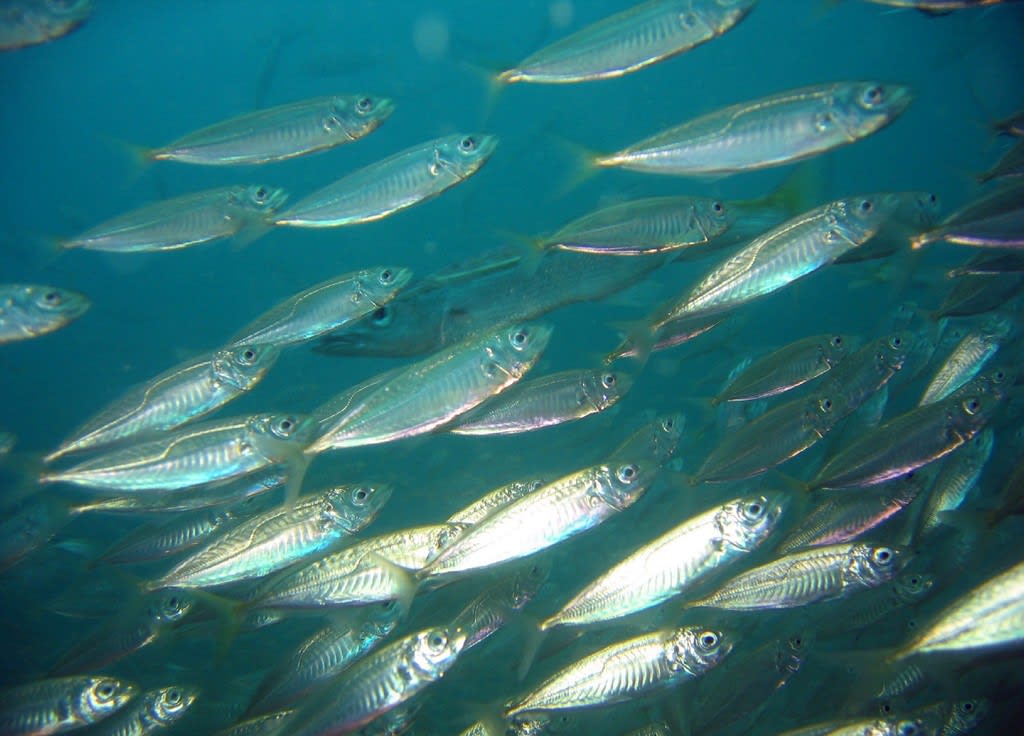
Taxonomy
- Kingdom
- Animalia
- Phylum
- Chordata
- Class
- Actinopterygii
- Order
- Perciformes
- Family
- Scombridae
- Genus
- Trachurus
- Species
- declivis
Habitat
This species inhabits pelagic waters over the continental shelf in the Southwest Pacific, including areas around New Zealand, Australia, and the Great Australian Bight. They prefer depths from 50 to 300 meters, often in cooler, open ocean environments with moderate currents.
Diet
Greenback horse mackerel primarily feed on small fish such as anchovies and sardines, as well as squid and crustaceans. They hunt in schools during the day, using their speed to chase and capture prey in open water. Feeding activity peaks in the morning and late afternoon.
Behavior
They form large, fast-moving schools for protection and feeding, often migrating seasonally to follow food sources. Greenback horse mackerel are diurnal, being most active during the day, and exhibit minimal territorial behavior due to their pelagic lifestyle. They are known for sudden, coordinated movements to evade predators.
Fishing
Targeting the Greenback horse mackerel in the Southwest Pacific, such as around New Zealand, Western Australia, New South Wales, Tasmania, and the Great Australian Bight, offers exciting recreational fishing that supports conservation through license fees and habitat programs; focus on pelagic waters over the continental shelf at depths of 50 to 300 meters, where these fast-swimming schooling fish are most abundant. Use trolling with metal jigs, spoons, or feathered lures that mimic small fish like anchovies and sardines, or opt for live bait such as small fish or squid rigged on light to medium spinning or trolling outfits with 10-20 lb test line and reels for quick retrieves to handle their speed and runs. The best season is summer during spawning migrations, with peak activity in the morning and late afternoon when they actively hunt in schools, making these times ideal for casting or drifting in open ocean currents. Anglers should aim for fish up to 60 cm and 1 lb 4 oz, with the largest recorded specimens in regional records emphasizing the thrill of the chase; always adhere to local regulations like bag limits or slot sizes as effective tools for maintaining stable populations, and practice catch-and-release to bolster angler-funded conservation efforts that protect these waters and ensure sustainable fisheries for future generations.
Conservation Status
Listed as Not Evaluated by IUCN.