
Overview
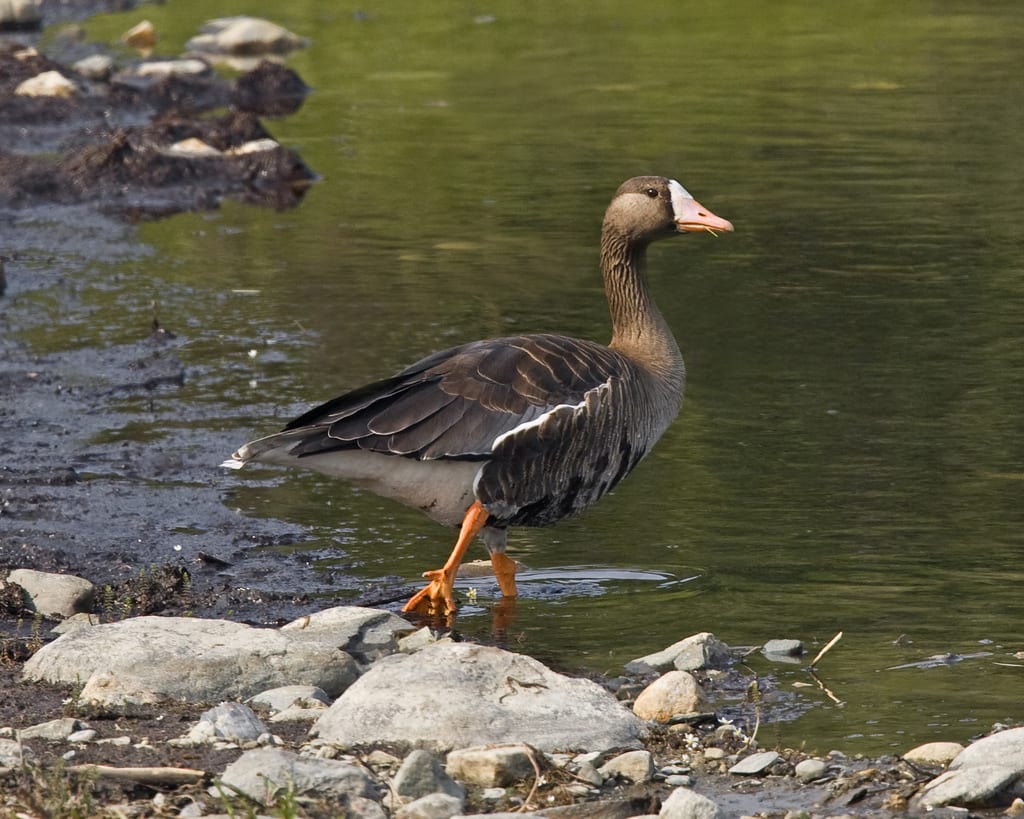
They have bright orange legs and mouse-coloured upper wing-coverts. They are smaller than greylag geese. As well as being larger than the lesser white-fronted goose, the greater white-fronted goose lacks the yellow eye-ring of that species, and the white facial blaze does not extend upwards so far as in lesser. The male is typical larger in size, both sexes are similar in appearance—greyish brown birds with light grey breasts dappled with dark brown to black blotches and bars. Both males and females also have a pinkish bill and orange legs and feet.
Taxonomy
- Kingdom
- Animalia
- Phylum
- Chordata
- Class
- Bird
- Family
- Anatidae
- Genus
- Anser
- Species
- albifrons
Habitat
Breeds in tundra. Winters in lakes, marshes, and agricultural fields.
Diet
Green vegetation and seeds. Agriculture crops are a favorite feeding area.
Behavior
Weather conditions are a key factor in the annual breeding success of white-fronted geese. In the Arctic, the window of opportunity for nesting, incubating eggs, and raising a brood to flight state is open briefly, for about three months. Arriving in late May or early June, white-fronted geese begin departing for fall staging areas in early September. This means that a delayed snowmelt or late spring storm can significantly reduce the birds' reproductive success.
Hunting
Typically hunted with a 12 ga shot. Shot size #2-4 is sufficient. Effectively hunted with decoys and calling.
Conservation Status
Listed as Least Concern by IUCN.