
Overview
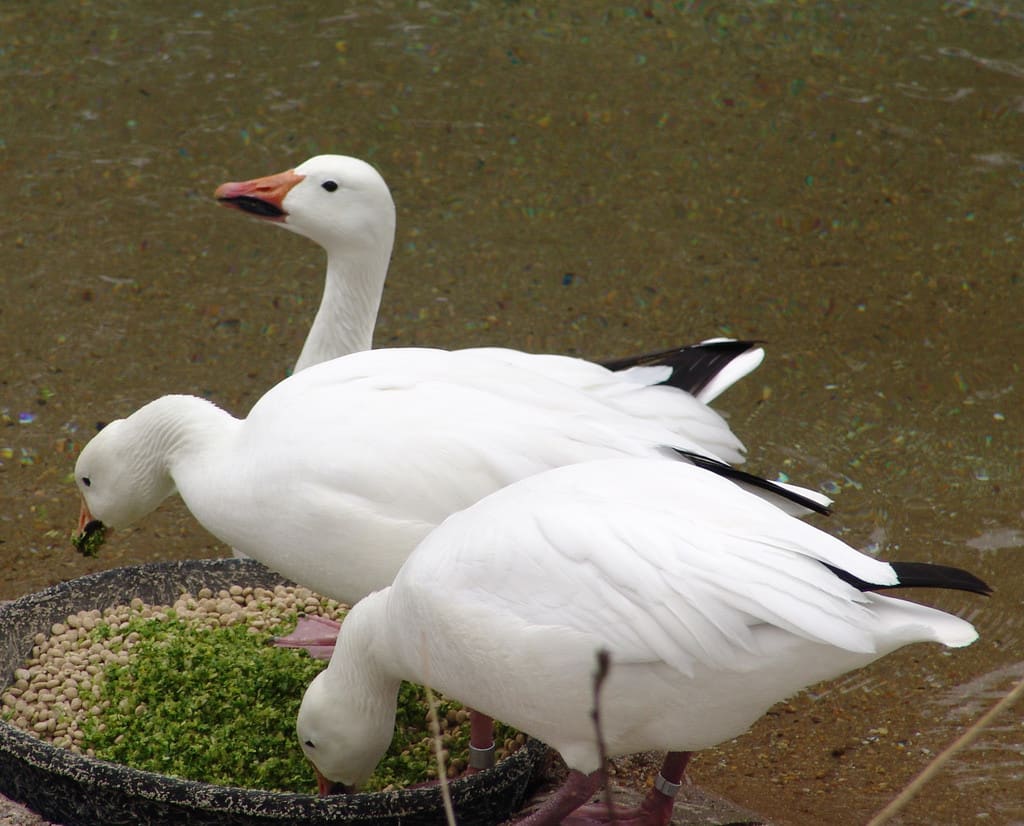
The snow goose has two color plumage morphs, white (snow) or gray/blue (blue), thus the common description as snows and blues. White-morph birds are white except for black wing tips, but blue-morph geese have bluish-grey plumage replacing the white except on the head, neck and tail tip. The immature blue phase is drab or slate-gray with little to no white on the head, neck, or belly. Both snow and blue phases have rose-red feet and legs, and pink bills with black tomia (cutting edges), giving them a black grin patch. The colors are not as bright on the feet, legs, and bill of immature birds. The head can be stained rusty-brown from minerals in the soil where they feed. They are very vocal and can often be heard from more than a mile away.
Taxonomy
- Kingdom
- Animalia
- Phylum
- Chordata
- Class
- Bird
- Family
- Anatidae
- Genus
- Anser
- Species
- caerulescens atlantica
Habitat
Across North America.
Diet
Grazes on grass and crops when available.
Behavior
Snow geese breed from late May to mid-August, but they leave their nesting areas and spend more than half the year on their migration to-and-from warmer wintering areas. During spring migration (the reverse migration), large flocks of snow geese fly very high and migrate in large numbers along narrow corridors, more than 3,000 mi (4,800 km) from traditional wintering areas to the tundra.
Hunting
Typically hunted with a 12 ga shot. Shot size #2-4 is sufficient. Effectively hunted with decoys and calling.
Conservation Status
Listed as Least Concern by IUCN.