
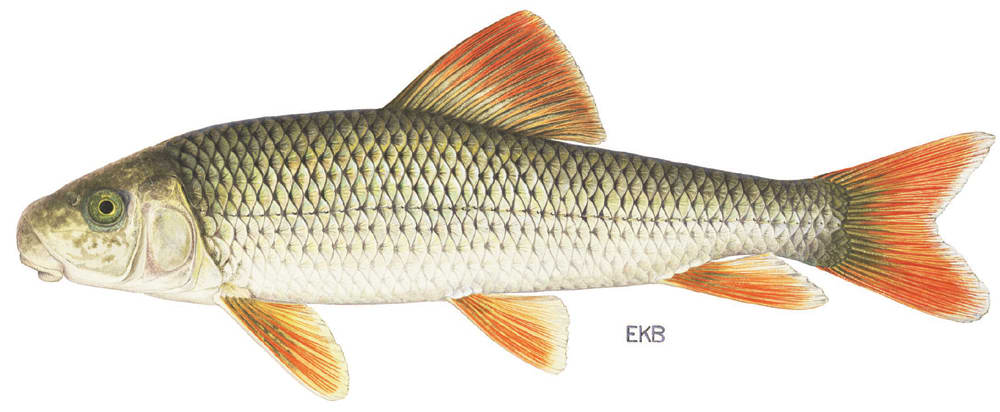
Taxonomy
- Kingdom
- Animalia
- Phylum
- Chordata
- Class
- Actinopterygii
- Order
- Clupeiformes
- Family
- Catostomidae
- Genus
- Moxostoma
- Species
- valenciennesi
Habitat
Greater redhorses primarily inhabit large rivers and lakes in the central and eastern United States and Canada, such as the Mississippi River basin and Great Lakes. They prefer clear, flowing waters with gravel or rocky substrates, often in deeper pools and runs. These fish avoid stagnant or heavily polluted areas, favoring habitats with moderate current for feeding and spawning.
Diet
Greater redhorses mainly consume aquatic insects, mollusks, and crustaceans scavenged from the river bottom using their specialized mouth. They also eat small fish and plant material when available. Feeding occurs primarily during the day, with increased activity in flowing waters at dawn and dusk.
Behavior
Greater redhorses are generally solitary but may form loose schools during migration or spawning. They are diurnal, actively foraging in streams and rivers during the day and resting in deeper waters at night. These fish exhibit migratory behavior in spring to upstream spawning areas and can be territorial around breeding sites. They are sensitive to water quality, often avoiding disturbed habitats.
Conservation Status
Listed as Least Concern by IUCN.