
Overview
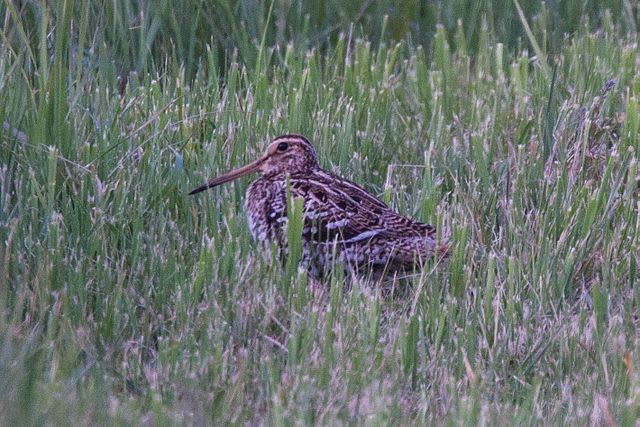
Adults are only slightly larger, but much bulkier, than the common snipe and have a shorter bill. The body is mottled brown on top and barred underneath. They have a dark stripe through the eye. The wings are broad, and a pale wingbar is visible in flight. The voice is described as a faint yeah. Mating display calls of groups can be heard at long distances (more than 300 m (330 yd)) and include a rising and falling series of chirping calls and accelerating clicking noises.
Taxonomy
- Kingdom
- Animalia
- Phylum
- Chordata
- Class
- Bird
- Family
- Charadriidae
- Genus
- Gallinago
- Species
- media
Habitat
Wetlands and muddy areas.
Diet
Primarily insects and earthworms, also plant material.
Behavior
The birds are noted for their fast, non-stop flying capabilities over huge distances. They can fly up to 97 km/h (60 mph), with researchers finding little evidence of wind assistance. Some have been recorded to fly non-stop for 84 hours over 6,760 km (4,200 mi). Their wings are not especially aerodynamic, lacking pointed tips, and they typically do not stop to feed despite having opportunities. The birds instead rely on stores of fat. At dusk during the breeding season, the males display at a lek (arena), standing erect with chest puffed and tail fanned out. They may jump into the air, and will produce a variety of rattles, clicks, buzzes and whistles while displaying. Three to four eggs are laid in a well-hidden nest on the ground. These birds forage in soft mud, probing or picking up food by sight. They are difficult to see, being well camouflaged in their habitat. When flushed from cover, they fly straight for a considerable distance before dropping back into vegetation.
Hunting
More information is needed.
Conservation Status
Listed as Near Threatened by IUCN.