
Taxonomy
- Kingdom
- Animalia
- Phylum
- Chordata
- Class
- Actinopterygii
- Order
- Cypriniformes
- Family
- Channidae
- Genus
- Channa
- Species
- marulius
Habitat
Great snakeheads primarily inhabit freshwater environments such as rivers, lakes, ponds, and swamps in tropical and subtropical regions of Asia. They prefer areas with dense vegetation, slow-moving or standing water, and have been introduced to parts of North America like Florida, where they adapt to similar warm, freshwater habitats.
Diet
Great snakeheads are carnivorous, feeding on fish, frogs, insects, crustaceans, and occasionally small birds or mammals. They are ambush predators that lie in wait among vegetation and strike quickly, often hunting during the day in shallow waters. Their feeding behavior is opportunistic, allowing them to thrive in various aquatic environments.
Behavior
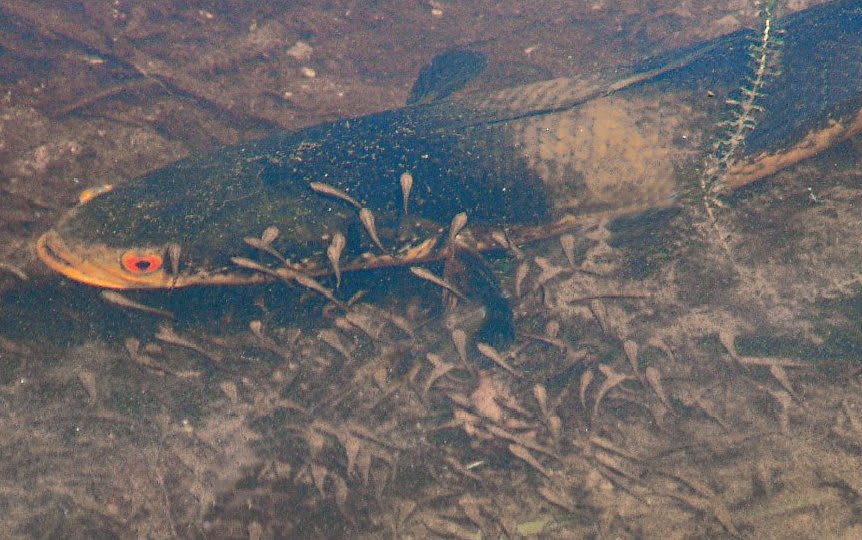
Great snakeheads are solitary and territorial, especially during breeding when they aggressively defend their nests. They are diurnal, active during the day for hunting and foraging, and exhibit parental care by guarding eggs and fry. These fish are known for their ability to breathe air and survive in low-oxygen waters, allowing them to move across land between water bodies.
Fishing
Target Great snakeheads, a hard-fighting invasive species in regions like Florida and native to Asian freshwater systems, using topwater techniques such as frog imitations or surface walkers to mimic their prey, or casting live baits like small fish and frogs near vegetation for effective strikes. Use medium-heavy baitcasting or spinning rods paired with 20-30 lb test monofilament or braided line, along with strong hooks and weedless rigs to navigate dense cover without snagging. The best season is during warmer months, particularly the rainy season in Asia for increased activity, with prime fishing times in the early morning or late afternoon when these diurnal predators are most active; in introduced areas like Florida, year-round opportunities exist in subtropical conditions. Focus on shallow, vegetated habitats such as rivers, lakes, ponds, and swamps with slow-moving water, where they ambush prey—always check local regulations for mandatory reporting of catches to aid management. Record sizes reach up to 15 pounds and 1.5 meters, highlighting their trophy potential, though IGFA records may vary by region. Conservation efforts benefit from angler-funded programs, as harvesting Great snakeheads in invasive zones like the U.S. helps control populations and protect native species, with regulations such as catch-and-remove policies serving as effective tools to maintain balanced ecosystems and support habitat restoration through license fees.
Conservation Status
Listed as Least Concern by IUCN.