
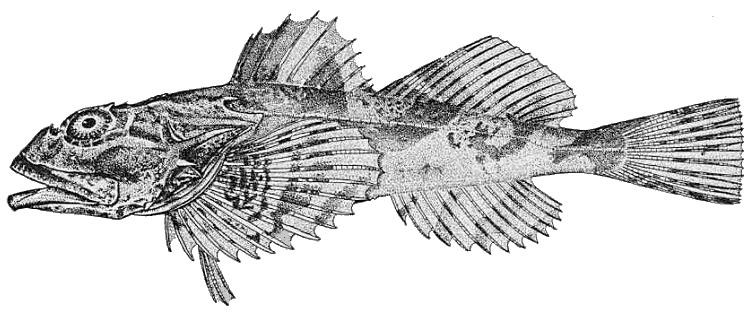
Taxonomy
- Kingdom
- Animalia
- Phylum
- Chordata
- Class
- Actinopterygii
- Order
- Istiophoriformes
- Family
- Cottidae
- Genus
- Myoxocephalus
- Species
- polyacanthocephalus
Habitat
Great Sculpin primarily inhabit cold, rocky or gravelly bottoms in the North Pacific Ocean, from shallow coastal waters to depths of about 200 meters. They prefer areas with strong currents and abundant cover, such as the Aleutian Islands, Bering Sea, and coasts of Alaska and British Columbia. These environments provide both food sources and protection from predators.
Diet
Great Sculpin feed mainly on small fish, crustaceans like shrimp and crabs, and benthic invertebrates such as worms and mollusks. They are opportunistic predators that hunt by ambushing prey on the ocean floor, often during nighttime or low-light conditions. Feeding occurs year-round but intensifies in summer when prey is more abundant.
Behavior
Great Sculpin are solitary fish that remain close to the seafloor, using their camouflage to avoid detection. They exhibit territorial behavior, defending small areas around rocks or crevices, and are primarily nocturnal, becoming more active at night for feeding. During the day, they often bury themselves partially in sediment or hide in crevices to conserve energy and evade predators.
Conservation Status
Listed as Not Evaluated by IUCN.