
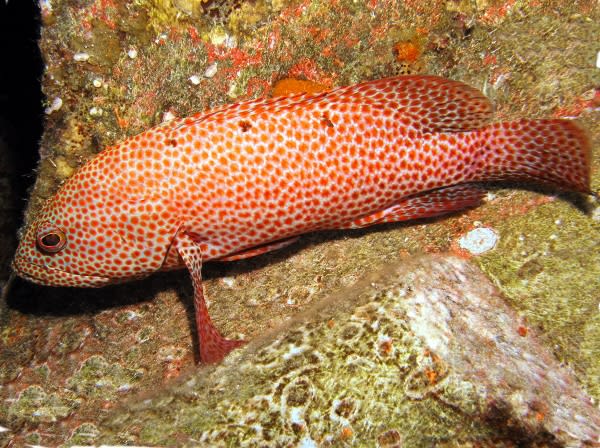
Taxonomy
- Kingdom
- Animalia
- Phylum
- Chordata
- Class
- Actinopterygii
- Order
- Scorpaeniformes
- Family
- Serranidae
- Genus
- Cephalopholis
- Species
- cruentata
Habitat
Graysby primarily inhabit coral reefs, rocky ledges, and areas with abundant cover in warm tropical waters. They are found in the western Atlantic Ocean, from North Carolina to Brazil, preferring depths of 10 to 50 meters where they can hide among structures. These environments provide protection and ample hunting opportunities.
Diet
Graysby feed on small fish, crustaceans such as crabs and shrimp, and occasionally octopuses. They are ambush predators that lie in wait among corals and strike quickly at prey, typically during daylight hours. Feeding activity peaks in the morning and late afternoon.
Behavior
Graysby are solitary and territorial, defending small areas of reef from intruders. They are diurnal, active during the day for hunting and resting at night in crevices. These fish exhibit color changes for camouflage and may form loose groups during spawning seasons.
Fishing
Target Graysby, a popular sport fish in the western Atlantic and Caribbean regions, using bottom fishing or jigging techniques around coral reefs and rocky ledges in depths of 10 to 50 meters, where they ambush prey like small fish and crustaceans—drop your line near structures and use a slow retrieve to entice strikes. For tackle, opt for light to medium spinning or conventional outfits with 10-20 pound test line, a sensitive rod for detecting subtle bites, and size 2-4 hooks to handle their up to 16-inch length and 2-pound 8-ounce weight; effective baits and lures include live shrimp, small crabs, or jigs mimicking baitfish to match their diet. The best season is summer during spawning, with peak activity in the morning and late afternoon when they are most aggressive, making these times ideal for productive outings that support conservation through license fees funding reef protection programs. Focus on habitats like the Florida Keys, Bahamas, or Belize for consistent catches, and always adhere to regulations such as bag limits and slot sizes as effective tools for maintaining healthy populations— for instance, many areas enforce catch-and-release for smaller fish to ensure sustainability. The IGFA all-tackle record stands at 3 pounds 1 ounce, highlighting the thrill of this species, while angler-supported initiatives like marine protected areas help preserve these vital ecosystems for future generations.
Conservation Status
Listed as Least Concern by IUCN.