
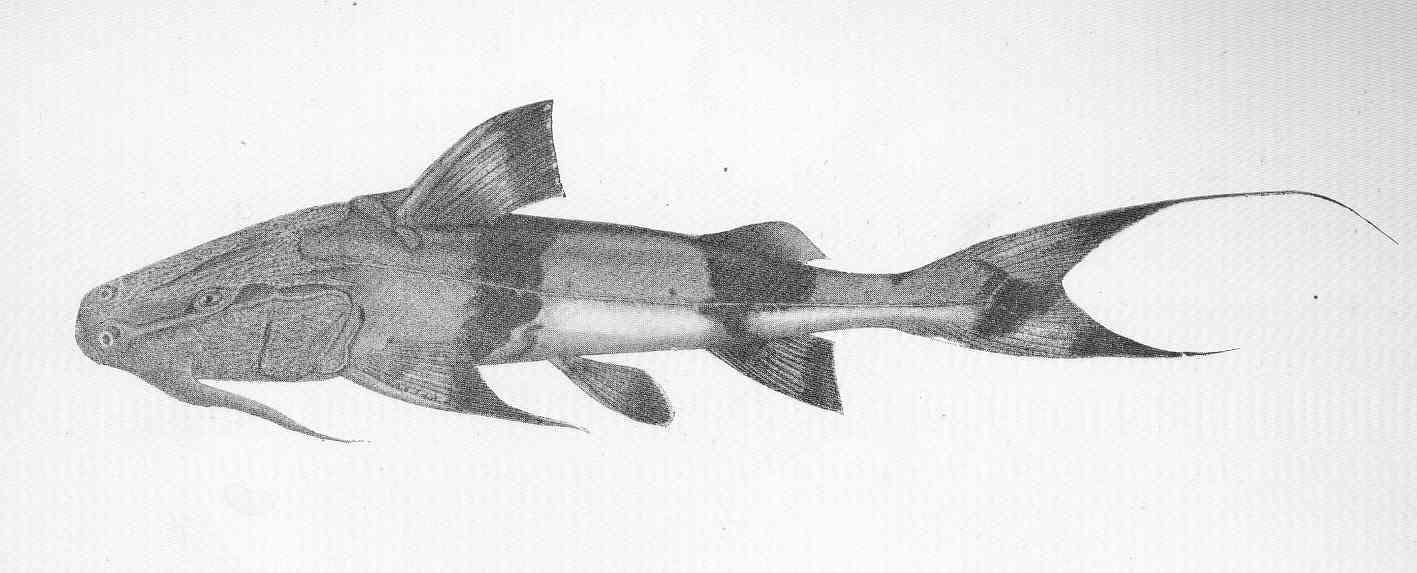
Taxonomy
- Kingdom
- Animalia
- Phylum
- Chordata
- Class
- Actinopterygii
- Order
- Siluriformes
- Family
- Sisoridae
- Genus
- Bagarius
- Species
- yarrelli
Habitat
Goonch primarily inhabit fast-flowing rivers and streams in South Asia, such as the Ganges, Brahmaputra, and Mekong basins, where they prefer rocky substrates and deep pools. These environments are typically in tropical and subtropical regions with varying water currents. They are less common in stagnant waters or lakes.
Diet
The Goonch is a carnivorous ambush predator that feeds on fish, frogs, birds, and occasionally small mammals like rodents. It hunts primarily at night in low-visibility waters, using its barbels to sense and capture prey. Feeding behavior is opportunistic, often involving quick strikes from hiding spots.
Behavior
Goonch are solitary and territorial fish, often hiding under rocks or in crevices during the day and becoming active hunters at night. They exhibit aggressive behavior when defending their territory or during feeding. This species is known for its powerful swimming and ability to navigate strong currents.
Fishing
For targeting the powerful Goonch, a prized sport fish in South Asia's fast-flowing rivers like the Ganges and Brahmaputra, use heavy-duty techniques such as bottom fishing with live bait or large lures to imitate their natural prey like fish, frogs, or small mammals, employing strong, ambush-style presentations in deep pools and rocky substrates. Recommended tackle includes heavy-action rods (8-12 feet), reels with 50-80 lb test braided lines for withstanding their aggressive runs, and large, sturdy hooks (size 8/0 or larger) to handle their robust mouths; pair this with live baits such as small fish or frogs, or vibration-heavy lures for nighttime strikes. The best season is during the monsoon months (June to September) when water levels rise, with peak activity at night in low-visibility conditions, making it ideal to fish after dusk in tropical, subtropical river systems. Focus on habitats with strong currents and rocky hides in countries like India, Nepal, and Bangladesh, where these fish thrive in depths over 10 feet. The IGFA all-tackle world record is 165 pounds 5 ounces, underscoring their impressive size potential. As a Near Threatened species, conservation through angler-funded programs—such as catch-and-release mandates and slot limits in certain areas—serves as an effective management tool to sustain populations, with license fees directly supporting habitat restoration and anti-overfishing efforts in these critical Asian waterways.
Conservation Status
Listed as Near Threatened by IUCN.