
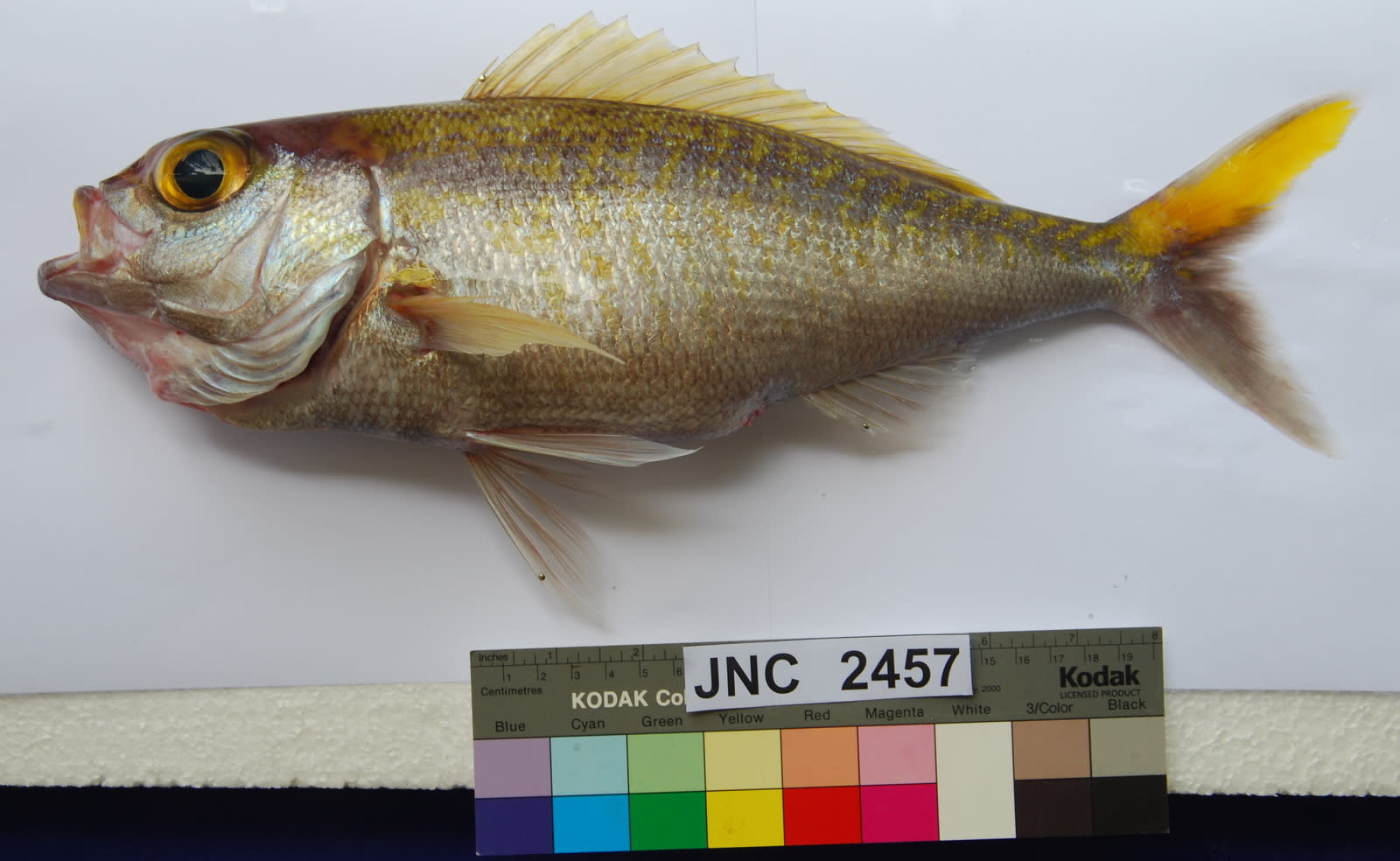
Taxonomy
- Kingdom
- Animalia
- Phylum
- Chordata
- Class
- Actinopterygii
- Order
- Perciformes
- Family
- Lutjanidae
- Genus
- Pristipomoides
- Species
- auricilla
Habitat
Goldflag jobfish primarily inhabit deep coral reefs and rocky substrates in the Indo-Pacific region, typically at depths of 50 to 400 meters. They prefer areas with strong currents and structure for cover, such as seamounts and drop-offs. These environments provide both shelter and access to prey.
Diet
Goldflag jobfish feed mainly on smaller fishes, crustaceans like shrimp and crabs, and cephalopods such as squid. They are nocturnal hunters, actively foraging at night over reefs and open bottoms. Their feeding behavior involves ambushing prey in low-light conditions.
Behavior
Goldflag jobfish are generally solitary or found in small loose groups, exhibiting nocturnal activity patterns to avoid daytime predators. They are territorial around feeding grounds and use the reef structure for cover. During the day, they remain relatively inactive, hiding in crevices or deeper waters.
Fishing
Anglers targeting the Goldflag jobfish, a prized snapper species in the Indo-Pacific, should focus on deep-sea bottom fishing techniques using heavy tackle to handle the depths of 50 to 400 meters, employing methods like vertical jigging or baited rigs dropped near seamounts and drop-offs where strong currents provide cover and prey. Recommended tackle includes a sturdy rod rated for 20-50 pound test line, a high-capacity reel with at least 300 yards of braided line, and strong hooks sized 4/0 to 7/0; for bait and lures, opt for live or cut bait such as small fish, shrimp, or squid, paired with metal jigs or flutter spoons to mimic their natural diet of smaller fishes and crustaceans. The best season is year-round in tropical waters, with peak activity and success rates during nighttime hours when these nocturnal hunters are most active; target them around dawn or dusk for optimal catches in areas like the Maldives, Australia, or American Samoa. Goldflag jobfish can reach up to 70 cm in length and weigh around 1 lb 4 oz, with IGFA records not specifically noted but comparable to other snappers in the region. Conservation-wise, as a Least Concern species per IUCN, sustainable practices like catch-and-release for undersized fish and adherence to local slot limits help maintain healthy populations, supported by angler-funded programs that protect coral reefs and promote habitat restoration through license fees and excise taxes.
Conservation Status
Listed as Least Concern by IUCN.