
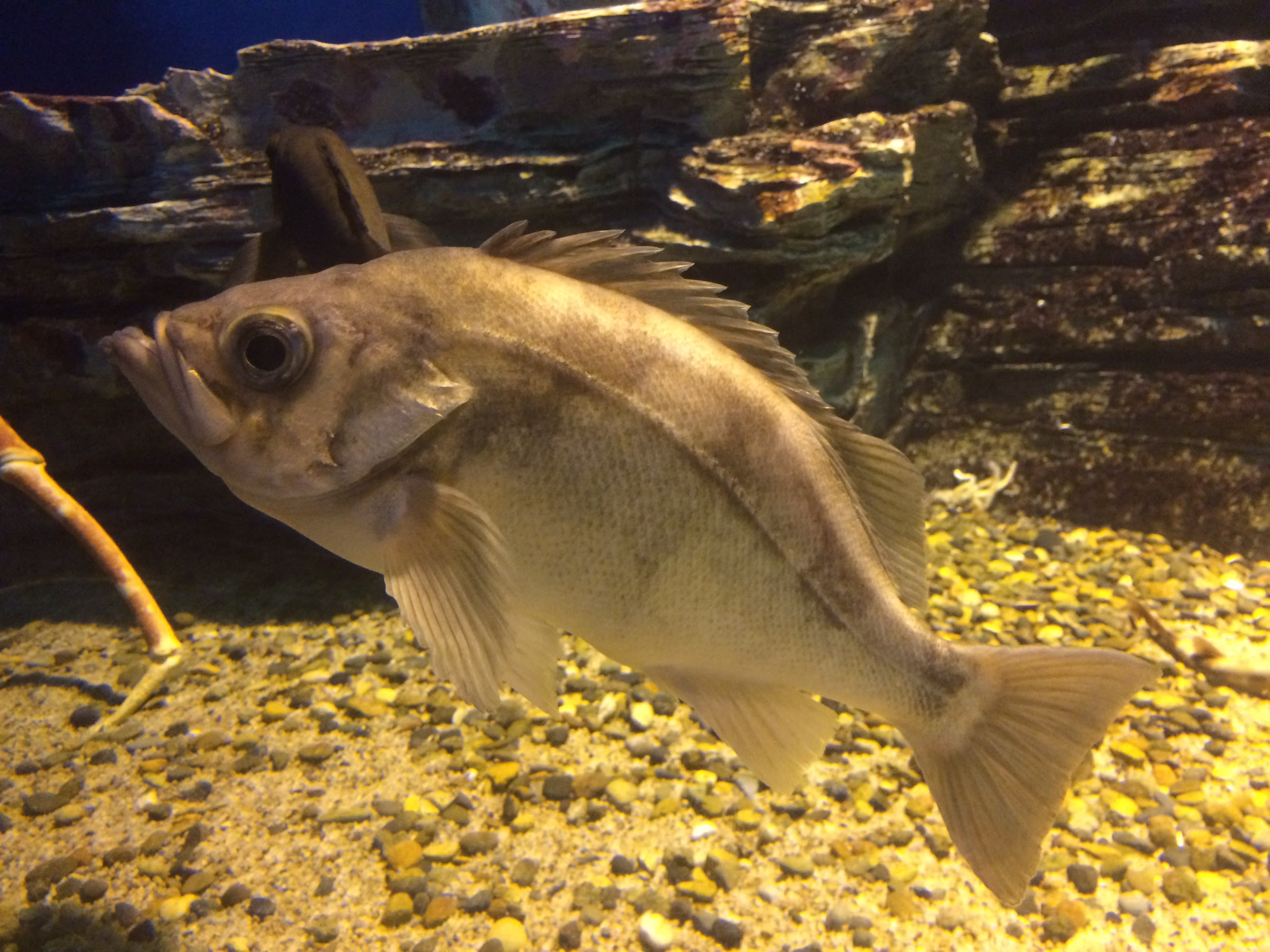
Taxonomy
- Kingdom
- Animalia
- Phylum
- Chordata
- Class
- Actinopterygii
- Order
- Salmoniformes
- Family
- Sebastidae
- Genus
- Sebastes
- Species
- thompsoni
Habitat
Goldeye rockfish inhabit the rocky reefs and submarine structures of the Northwest Pacific Ocean, particularly around Japan in areas like Miyagi and Oshika. They prefer depths from 50 to 300 meters, where cooler waters and abundant cover provide protection from predators. This species avoids open waters, sticking to complex benthic environments.
Diet
Goldeye rockfish primarily feed on small fish, shrimp, and other crustaceans, using ambush tactics in rocky habitats. They are opportunistic predators, often foraging during dawn and dusk when prey is most active. Feeding behavior includes quick strikes from concealed positions among rocks.
Behavior
Goldeye rockfish are generally solitary or form loose aggregations around reefs, exhibiting territorial behavior to defend feeding areas. They are diurnal, actively hunting during the day and seeking shelter at night in crevices. This species shows cautious swimming patterns to avoid detection, making them elusive in their environment.
Fishing
Targeting Goldeye rockfish in the Northwest Pacific Ocean, particularly around Japan's Miyagi and Oshika regions or the Ciceros Strait, offers anglers a rewarding deep-water challenge that supports conservation through license fees and excise taxes funding habitat protection; focus on bottom fishing techniques like vertical jigging or bait fishing with heavy tackle to reach depths of 50-300 meters on rocky reefs and submarine structures, where these fish ambush prey. Use sturdy rods rated for 20-50 pound test line, paired with conventional reels and strong monofilament or braided lines to handle the rocky terrain, and opt for bait such as shrimp, small fish, or crustacean-imitating lures to mimic their diet of shrimp and small fish for effective strikes, especially during dawn and dusk when they are most active. The best seasons are spring and summer when water temperatures stabilize and fish are more responsive, though winter reproduction periods may have specific regulations to ensure population health. Seek out complex benthic environments with cover for protection, as Goldeye rockfish are solitary and territorial, making precise targeting essential for success. Record sizes include specimens up to 60 cm in length and 2 pounds 6 ounces, with no official IGFA record noted, highlighting the need for careful handling to support sustainable fisheries. Conservation efforts, including angler-funded programs for stock assessments and habitat restoration, help maintain stable populations despite potential fishing pressure, with effective management tools like catch limits promoting healthy waterways and the species' elusive nature encouraging catch-and-release practices.
Conservation Status
Listed as Not Evaluated by IUCN.