
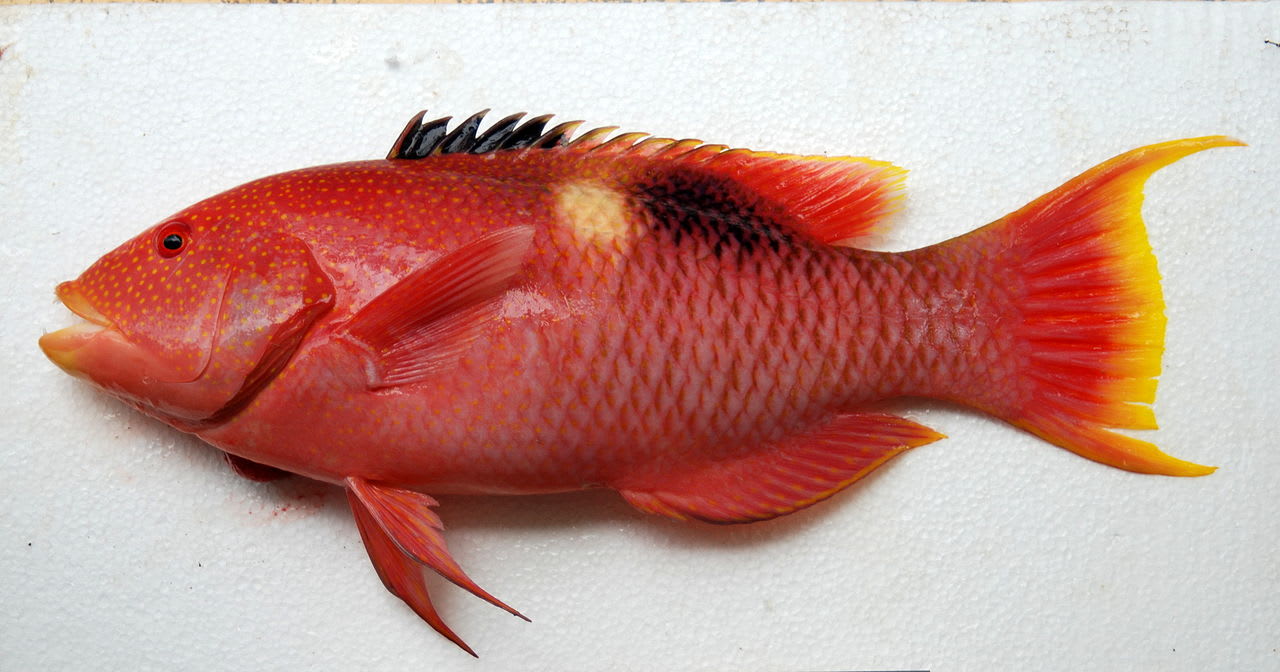
Taxonomy
- Kingdom
- Animalia
- Phylum
- Chordata
- Class
- Actinopterygii
- Order
- Perciformes
- Family
- Labridae
- Genus
- Bodianus
- Species
- perditio
Habitat
Golden-spot hogfish primarily inhabit coral reefs and rocky substrates in the Indo-Pacific region, favoring depths from 5 to 50 meters. They prefer areas with abundant coral cover, such as lagoons and seaward reefs, and are commonly found in warm tropical waters around Australia, Madagascar, and French Polynesia.
Diet
This species feeds mainly on small invertebrates like crustaceans, mollusks, and echinoderms, which it crushes with its powerful teeth. They are active diurnal hunters, patrolling territories during the day to forage for food. Feeding behavior includes ambushing prey hidden in coral crevices.
Behavior
Golden-spot hogfish are primarily solitary or found in pairs, exhibiting territorial behavior by defending specific reef areas from intruders. They are diurnal, active during the day for feeding and social interactions, and may engage in cleaning symbiosis with other fish species. This species is known for its agility in navigating complex coral structures.
Fishing
The Golden-spot hogfish is a rewarding target for recreational anglers in the Indo-Pacific, particularly in coral-rich waters around Australia, Madagascar, French Polynesia, and other regions, where it supports sustainable fishing practices that fund conservation efforts through license fees and habitat programs. Best techniques include bottom fishing with bait or light jigging to mimic their prey like crustaceans, using medium-light spinning or baitcasting rods with 10-20 lb test line, circle hooks (size 2-6), and baits such as live shrimp, crabs, or soft plastic lures that imitate small invertebrates for effective strikes. The prime season runs from late spring through summer in warmer months when they are most active, with dawn and dusk offering the best bite times due to their diurnal feeding habits. Target them in coral reefs, lagoons, and rocky substrates at depths of 5 to 50 meters, focusing on areas with abundant cover where they patrol for food—approach cautiously to avoid spooking them in clear tropical waters. These fish can reach up to 5 lbs 4 oz and 16 inches, though specific IGFA records are limited; anglers can aim for personal bests while adhering to local regulations, which promote healthy populations through measures like size limits and catch-and-release, ensuring the species remains stable and Least Concern as per IUCN assessments.
Conservation Status
Listed as Least Concern by IUCN.