
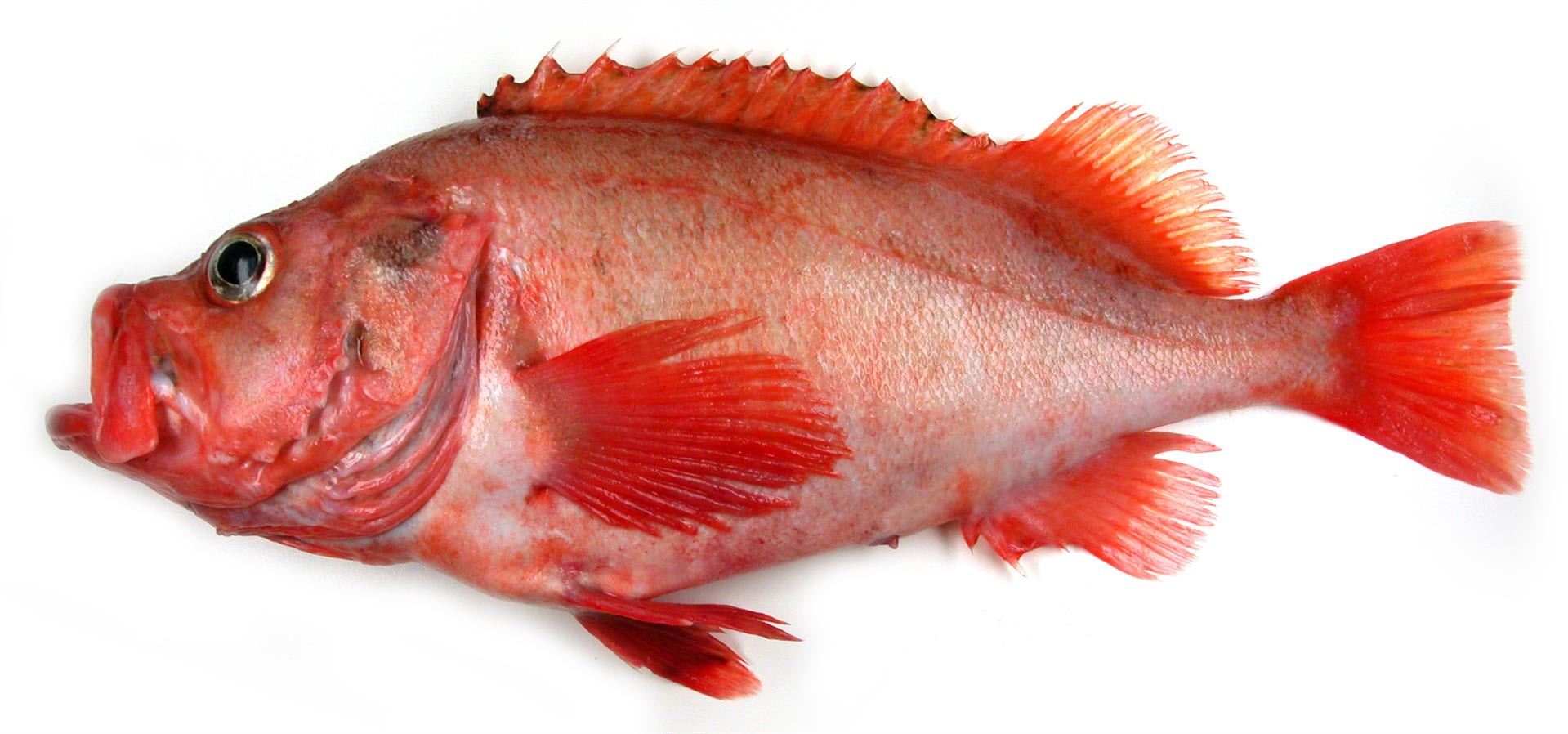
Taxonomy
- Kingdom
- Animalia
- Phylum
- Chordata
- Class
- Actinopterygii
- Order
- Salmoniformes
- Family
- Sebastidae
- Genus
- Sebastes
- Species
- norvegicus
Habitat
Golden redfish primarily inhabit deep waters of the North Atlantic, from the continental shelf to depths of up to 1000 meters, often on rocky or muddy substrates. They prefer cold, temperate waters and are commonly found in areas like the Barents Sea, off Norway, and around Iceland and Greenland. These fish avoid shallow coastal areas, staying in offshore environments.
Diet
Golden redfish are carnivorous, feeding mainly on small fish such as sand eels and capelin, as well as crustaceans like shrimp and crabs. They hunt opportunistically near the seafloor or in the water column, using ambush tactics. Feeding activity peaks at dusk and dawn when prey is more abundant.
Behavior
Golden redfish are generally solitary and territorial, often staying close to the bottom in deep waters to avoid predators. They exhibit slow, deliberate swimming patterns and are not highly migratory, though they may move seasonally with water temperatures. These fish can form loose aggregations around food sources but are otherwise inactive during the day.
Fishing
Anglers targeting golden redfish in the deep waters of the North Atlantic can rely on bottom fishing or vertical jigging techniques to effectively reach these bottom-dwelling fish at depths up to 1000 meters, using strong, controlled retrieves to mimic prey. Recommended tackle includes heavy-duty rods (7-9 feet) paired with high-capacity reels spooled with 50-80 lb braided line, along with large sinkers or downriggers for deep presentations, and stout hooks to handle their robust mouths; opt for lures like metal jigs, soft plastics imitating shrimp or small fish, or natural baits such as shrimp, crabs, and sand eels to match their carnivorous diet. The best seasons are late spring through summer when water temperatures rise and feeding activity peaks, with optimal times at dusk and dawn when they actively hunt in the water column; avoid winter mating periods to support population stability. Focus on cold, temperate habitats like the Barents Sea, off Norway, Iceland, Greenland, or the Kanin Banks, targeting rocky or muddy substrates on the continental shelf where they form loose aggregations. Record sizes include fish up to 1 meter in length and weighing 26 lbs 12 oz, with IGFA all-tackle records recognizing even larger specimens for this species. As a key recreational fish, golden redfish benefit from angler-funded conservation programs that promote catch-and-release practices and regulated harvests, helping maintain stable populations through effective management tools like size limits and monitoring, ensuring these deep-water fisheries continue to support aquatic habitat restoration in the Atlantic.
Conservation Status
Listed as Not Evaluated by IUCN.