
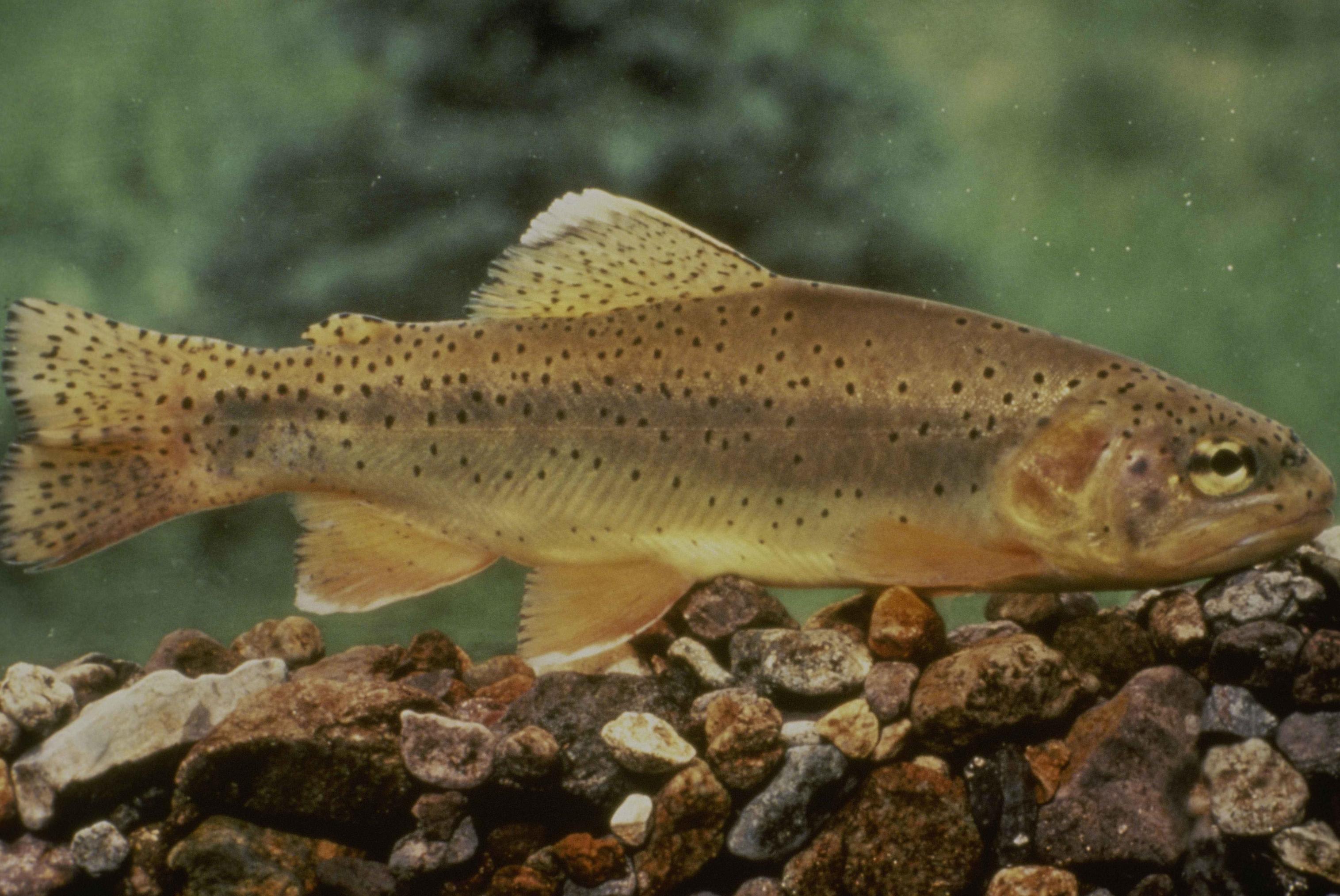
Taxonomy
- Kingdom
- Animalia
- Phylum
- Chordata
- Class
- Actinopterygii
- Order
- Perciformes
- Family
- Salmonidae
- Genus
- Oncorhynchus
- Species
- gilae
Habitat
Gila trout primarily inhabit clear, cold streams and rivers in the mountainous regions of the Gila River basin in New Mexico and Arizona. They prefer habitats with rocky substrates, moderate currents, and ample cover from boulders or overhanging vegetation. These fish are found at elevations between 1,500 and 2,500 meters, avoiding warmer or polluted waters.
Diet
Gila trout feed mainly on aquatic insects such as mayflies, caddisflies, and midges, as well as small crustaceans and occasionally minnows or other small fish. They are opportunistic ambush predators, hiding in stream crevices and striking at prey that drifts by. Feeding activity peaks during dawn and dusk when insects are most abundant.
Behavior
Gila trout are generally solitary and territorial, particularly in defending prime feeding spots in streams. They are most active in cooler water temperatures, often resting in deeper pools during the day and foraging in riffles at night. These fish exhibit migratory behavior upstream for spawning and are sensitive to disturbances, quickly seeking cover.
Fishing
Gila trout provide a rewarding fly-fishing experience in the clear, cold streams and rivers of the Gila River basin in New Mexico and Arizona, particularly at elevations between 1,500 and 2,500 meters where rocky substrates, moderate currents, and cover from boulders create ideal ambush spots; target riffles, pools, and runs with precise presentations to mimic their diet of aquatic insects like mayflies and caddisflies. Use light tackle such as a 4-6 weight fly rod with a 9-foot leader, focusing on techniques like nymphing, dry-fly fishing, or stripping small streamers to entice strikes from these opportunistic predators, with best results during dawn and dusk when feeding peaks. The prime season is spring and early summer when water temperatures are around 10°C, aligning with their spawning activity, but always check local regulations for open dates. Record sizes include fish up to 22 inches and 3 pounds 7 ounces, highlighting the potential for trophy catches in restored habitats. As an endangered species, Gila trout fishing is effectively managed through catch-and-release only policies and limited access in designated areas, which are proven conservation tools that protect populations, support stocking programs, and ensure angler fees contribute to habitat restoration, making every outing a step toward aquatic conservation success.
Conservation Status
Listed as Endangered by IUCN.