
Overview
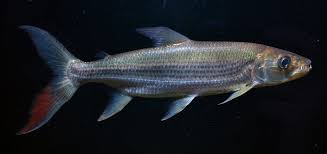
It is overall silvery in color with no conspicuous stripes. A few broad stripes may show up under the scales after death. It has fourteen or more teeth in the upper jaw and very short gill rakers, less than one third the length of the gill filaments. Its ferocious appearance gives ample indication of its predatory habits.
Taxonomy
- Kingdom
- Animalia
- Phylum
- Chordata
- Class
- Actinopterygii
- Order
- Cypriniformes
- Family
- Characidae
- Genus
- Hydrocynus
- Species
- goliath
Habitat
Giant tigerfish primarily inhabit large, fast-flowing rivers and deep lakes in central Africa, such as the Congo River basin and Lake Tanganyika. They prefer rocky substrates and areas with strong currents that provide cover and abundant prey. These environments are typically warm, with water temperatures ranging from 24-30°C.
Diet
Giant tigerfish mainly consume other fish species like cichlids, characins, and smaller catfish, which they capture with swift, powerful attacks. They exhibit ambush feeding behavior, often hunting in groups or alone during low-light periods like dawn and dusk. Their diet may occasionally include crustaceans, frogs, or even birds that venture into the water.
Behavior
Giant tigerfish are often solitary but may form loose schools during feeding or migration, displaying aggressive and territorial behavior especially in prime habitats. They are primarily nocturnal or crepuscular, actively hunting at dawn and dusk with explosive bursts of speed and powerful jumps. These fish are known for their curiosity and wariness around disturbances, making them challenging to approach.
Fishing
This strong fighter is one of the great freshwater game fish species. It jumps repeatedly when hooked, will take almost any kind of bait, including artificial and is powerful even when taken on heavy tackle. A wire leader is essential due to the sharp teeth.
Conservation Status
Listed as Least Concern by IUCN.