
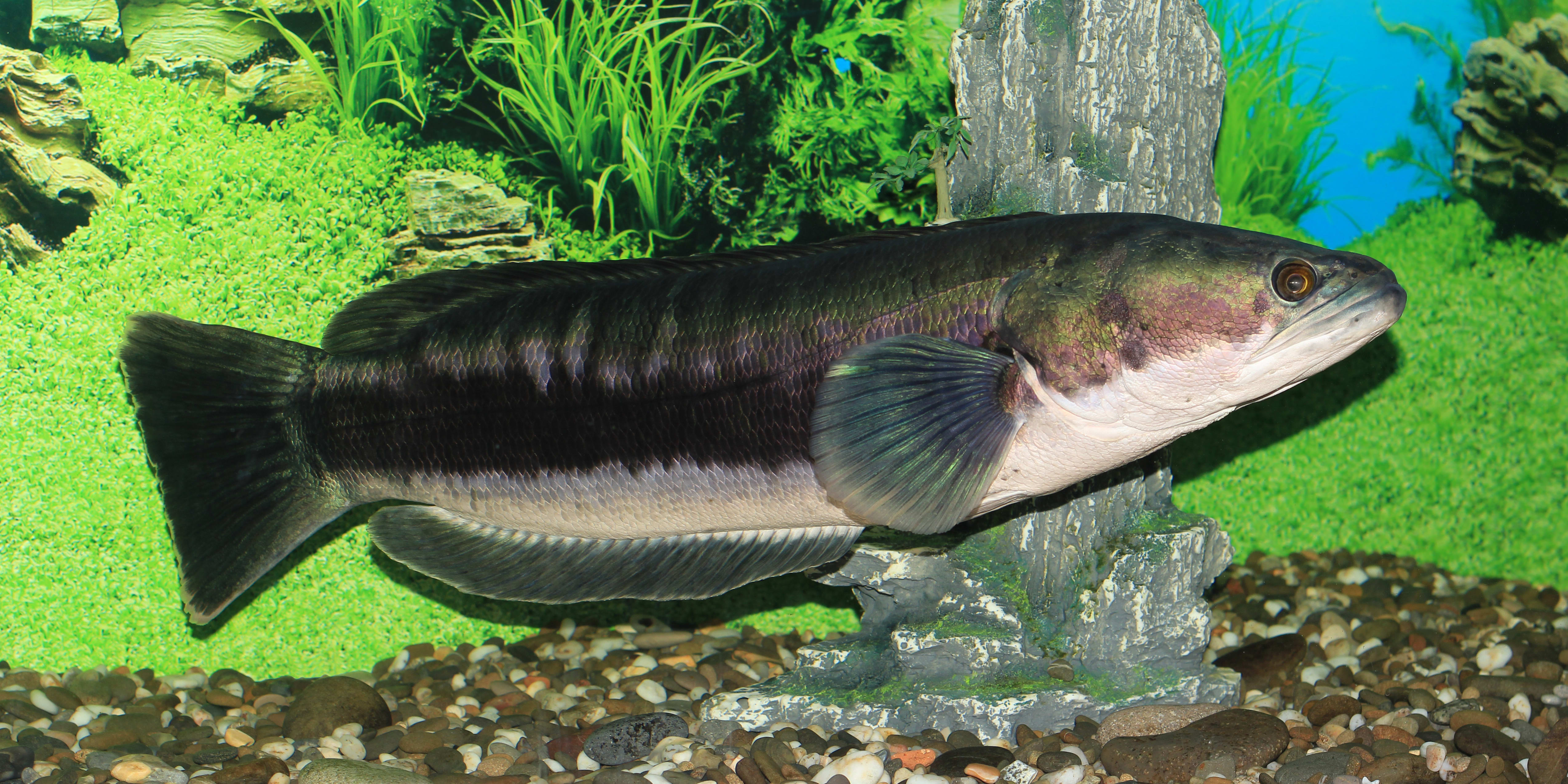
Taxonomy
- Kingdom
- Animalia
- Phylum
- Chordata
- Class
- Actinopterygii
- Order
- Cypriniformes
- Family
- Channidae
- Genus
- Channa
- Species
- micropeltes
Habitat
Giant snakeheads primarily inhabit freshwater environments in Southeast Asia, such as rivers, lakes, swamps, and flooded rice fields with abundant vegetation. They prefer warm, slow-moving or stagnant waters with plenty of cover, and have been introduced to regions like parts of North America where they adapt to similar habitats.
Diet
Giant snakeheads are carnivorous, feeding on fish, frogs, insects, crustaceans, and occasionally small birds or mammals. They use an ambush strategy, hiding in vegetation and striking quickly at prey, with feeding most active during the day.
Behavior
Giant snakeheads are solitary and highly territorial, aggressively defending their space from other fish or intruders. They are diurnal, active during the day, and can breathe atmospheric air to survive in low-oxygen waters. During breeding, they exhibit parental care by building nests and guarding eggs and fry.
Fishing
Giant snakeheads provide thrilling sport fishing in their native Southeast Asian waters and introduced areas like parts of North America, where targeted angling helps control invasive populations and bolsters conservation efforts through license fees that fund habitat management. Employ aggressive topwater techniques such as walking the dog with surface lures or casting heavy jigs into vegetation to mimic their ambush predation style, ensuring quick hooksets to handle their explosive strikes. Use medium-heavy rods paired with baitcasting reels spooled with 20-30 lb test line and strong, oversized hooks for their powerful fights; effective baits and lures include live minnows, frogs, or topwater plugs and spinnerbaits that imitate their diet of fish and insects. The prime season runs from May to September during warmer, rainy periods when they are most active, with best bites in the early morning or late afternoon daylight hours. Target them in freshwater habitats like slow-moving rivers, lakes, swamps, and vegetated flooded areas in regions such as Thailand, Cambodia, Malaysia, or introduced U.S. spots, focusing on areas with abundant cover for ambushes. The IGFA all-tackle world record is 29 pounds, 12 ounces, caught in Thailand, highlighting their impressive size potential. Conservation-wise, adhere to local regulations like catch-and-release or harvest limits as effective tools for managing populations and protecting ecosystems, with angler-supported programs in invasive areas helping restore native biodiversity through excise taxes and stocking initiatives.
Conservation Status
Listed as Least Concern by IUCN.