
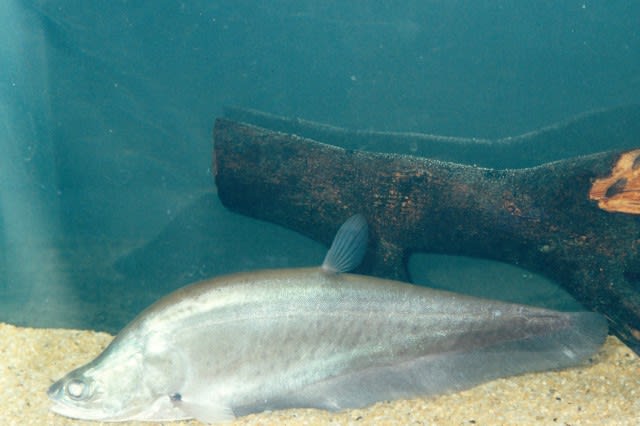
Taxonomy
- Kingdom
- Animalia
- Phylum
- Chordata
- Class
- Actinopterygii
- Order
- Perciformes
- Family
- Notopteridae
- Genus
- Chitala
- Species
- lopis
Habitat
This fish inhabits large rivers, lakes, and floodplains in tropical freshwater environments of Southeast Asia, preferring slow-moving or stagnant waters with plenty of vegetation for cover. It is commonly found in the Mekong and Chao Phraya basins, as well as in areas like Sumatra and Borneo, where it thrives in warm waters with muddy or sandy substrates.
Diet
The giant featherback is a carnivorous predator that primarily feeds on smaller fish, crustaceans, and insects. It hunts nocturnally, ambushing prey in murky waters using its sensitive lateral line to detect movements, and typically forages near the bottom or among vegetation.
Behavior
Giant featherbacks are primarily nocturnal, spending days hiding in submerged vegetation or under logs and becoming active hunters at night. They are solitary and territorial, defending their space aggressively against intruders, and they exhibit quick, darting movements when threatened or pursuing prey.
Fishing
Anglers targeting the giant featherback, a prized sport fish in Southeast Asia's tropical waterways, should focus on nocturnal angling techniques to match its predatory, ambush-style hunting; use bottom fishing with live bait or lures that mimic small fish, crustaceans, or insects, casting near submerged vegetation, logs, or structures in slow-moving rivers and floodplains for the best results. Recommended tackle includes a medium-heavy rod with a strong spinning reel, 20-30 pound test line, and sturdy hooks to handle its aggressive strikes and potential runs up to 21 pounds; effective baits and lures are live minnows, shrimp, or crankbaits that create vibration in murky waters. The best season aligns with the rainy months from May to August when fish are more active during spawning, with prime fishing times at night under low light conditions to leverage their nocturnal behavior. Target habitats in the Mekong and Chao Phraya basins, as well as lakes and floodplains in Cambodia, Thailand, Malaysia, Indonesia, and Borneo, where warm, stagnant waters with muddy substrates provide ideal cover—always respect local regulations as effective management tools that sustain populations. The IGFA all-tackle world record stands at 21 pounds 11 ounces, highlighting the thrill of this species for recreational anglers. Through license fees and catch-and-release practices, fishing for giant featherbacks supports conservation efforts, including habitat restoration in these biodiverse regions, ensuring healthy populations and protecting Southeast Asia's aquatic ecosystems for future generations.
Conservation Status
Listed as Least Concern by IUCN.