
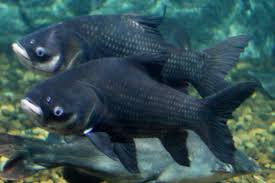
Taxonomy
- Kingdom
- Animalia
- Phylum
- Chordata
- Class
- Actinopterygii
- Order
- Labriformes
- Family
- Cyprinidae
- Genus
- Catlocarpio
- Species
- siamensis
Habitat
Giant barbs inhabit large river systems and floodplains in Southeast Asia, particularly the Mekong and Chao Phraya basins. They prefer deep, slow-moving waters with muddy substrates and abundant vegetation. These areas provide cover and food sources in countries like Cambodia, Thailand, and Laos.
Diet
Giant barbs primarily feed on algae, aquatic plants, and detritus scraped from the river bottom. They use their barbels to locate food and are mainly bottom-feeders, with increased activity during the wet season when food is more plentiful.
Behavior
Giant barbs are migratory fish that travel upstream during the rainy season to spawn, often forming large schools in deeper river sections. They are generally nocturnal or crepuscular, feeding actively at dawn and dusk, and exhibit territorial behavior around spawning grounds. These fish are known for their powerful swimming abilities in fast currents.
Fishing
Target the giant barb, a powerful sport fish in Southeast Asia's major river systems, using bottom fishing techniques with baits that mimic their natural diet of algae and detritus; cast weighted rigs with hooks baited in plant matter, worms, or dough balls to the river bottom in deep, slow-moving waters with muddy substrates and vegetation, found in the Mekong and Chao Phraya basins in countries like Cambodia, Thailand, and Laos. Use heavy-duty tackle including stout rods (8-10 feet), strong lines (50-80 lb test), and large hooks (size 4/0 to 8/0) to handle their impressive size and strength, ensuring you have a reliable reel with a strong drag system for potential runs in currents. The best season is during the monsoon months from May to August when they migrate and feed more actively, with prime times at dawn and dusk when they exhibit crepuscular behavior; focus on areas with abundant cover like submerged vegetation or deeper pools for higher success. Record sizes include an IGFA all-tackle world record of 134 pounds 7 ounces, showcasing the thrill of angling for this species. As a critically endangered fish with a population under 250 mature individuals, adhere to strict regulations such as catch-and-release only in many areas, which serve as effective management tools to maintain healthy populations and support conservation efforts; recreational fishing in regulated zones funds habitat restoration through license fees and excise taxes, helping protect these vital waterways and ensuring the giant barb's survival for future generations.
Conservation Status
Listed as Critically Endangered by IUCN.